


Why Is Microsoft Stock Surging Today? Azure Growth Hits 43% as MSFT Targets $560 Next



AI Podcast


Microsoft shares rallied following a strong fiscal fourth-quarter performance, where revenue of $90 billion and adjusted earnings of $4.74 per share surpassed analyst estimates. Growth is underpinned by a 43% surge in Azure revenue and a record $678 billion commercial backlog, signaling robust enterprise demand for AI. While heavy infrastructure spending pressured free cash flow and gross margins, the company’s strategic shift remains intact. Despite weakness in traditional consumer segments, Wall Street maintains a bullish outlook. Key performance drivers for investors include sustained Azure momentum, the effective monetization of Copilot, and the conversion rate of the substantial backlog.

TradingKey - Microsoft (NASDAQ: MSFT) extended its rally on Monday, rising some 4.7% to near $487 as it nears its record high of $553.72. The stock has climbed almost 22% in the last week, with a record-breaking one-day jump last Thursday that put approximately $450 billion into Microsoft's market value.
The rally comes after Microsoft fell over 20% earlier this year following concerns about the software industry. Now investors are looking to the company's artificial intelligence and cloud operations to maintain solid growth.
Microsoft Delivers Another Strong Quarter
Microsoft's fiscal fourth-quarter earnings beat Wall Street estimates by a wide margin. The company generated $90 billion in revenue, an 18% increase from a year ago and greater than estimates of $87.6 billion. Adjusted earnings of $4.74 a share beat the $4.24 consensus estimate.
The most significant feature was Azure. Microsoft's cloud revenue was 43% year over year, up from 40% in the last quarter and ahead of analyst estimates.
Microsoft's biggest problem is not finding customers, but meeting their demand for AI services, Chief Financial Officer Amy Hood said.
Massive Backlog Reflects Strong Enterprise Demand
Microsoft also said its commercial backlog jumped sharply to $678 billion, up from the year-ago level by 84%. It was a significant increase driven by a diverse mix of enterprise customers, not just OpenAI, said the management. It reduced investor worries that Microsoft relies too heavily on one partner for its AI line of business.
About 30% of the backlog, or about $203 billion, is projected to turn to revenue in the next 12 months, leaving Microsoft with excellent visibility into sales.
Despite its high investments in AI infrastructure, Microsoft's backlog-to-investment ratio remains one of the best when compared with its cloud competitors, suggesting that the demand for its products is robust.
AI Spending Remains a Priority
In the quarter, Microsoft invested heavily in its AI infrastructure. Capital expenditures increased 69% on an annual basis to $41 billion. The company's capital spending forecast for 2026 was originally lower than anticipated, but it said the adjustment was largely because of accounting reclassifications, not because of decreased investment.
The company also anticipates capital expenditures will be more than $50 billion in the current quarter, continuing a trend of higher spending in fiscal 2027.
Such investments had a negative impact on the short-term profitability. Free cash flow fell 23 percent to $19.6 billion, and Microsoft Cloud's gross margin dropped to 65 percent due to increased spending on infrastructure.
Copilot Adoption Continues to Grow
Microsoft's AI assistant, Microsoft 365 Copilot, is continuing to make a strong showing. Paid Microsoft 365 Copilot seats increased to more than 30 million, up from over 20 million in the previous quarter. The company also said that it has seen quicker uptake of more expensive plans, but hasn't shared standalone revenue from Copilot yet.
Separately, the steel maker, ArcelorMittal, said it will keep building on Azure and other capabilities, including Microsoft Fabric, Purview and Foundry, which are all part of Microsoft's AI ecosystem, as it continues to expand.
Some Weakness Remains
Not every business performed well. The company's long-dominant Windows OEM and Devices segment saw a 7% drop, while Xbox content and services revenue dropped 10%, continuing to show weakness in the company's traditional consumer businesses.
The firm also revealed that it has $329.1 billion in future data-center lease commitments, highlighting the scope of its current investment in the AI infrastructure space.
Meanwhile, Microsoft's stock price is back up, trading at about 27 times earnings, slightly above the market average, so investors should continue to look for execution.
What Analysts Expect Next
Wall Street continues to be massively bullish on Microsoft. Analysts currently have 62 Buy, three Hold and an equal number of Sell ratings on the stock, according to WSJ data.
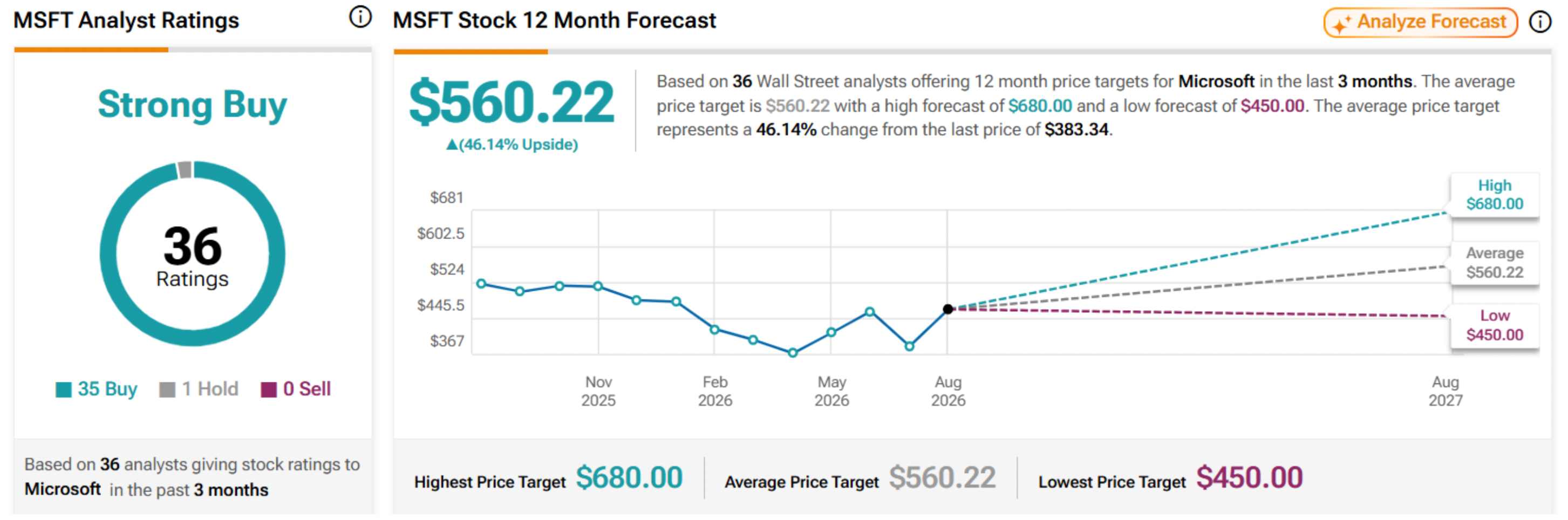
Image Source: tipranks
The median price target is around $560, with some price targets ranging from $400 to $870. In future, the investor will monitor the sustainability of Azure's growth, how well Microsoft is able to monetize Copilot, and the speed at which its huge backlog turns into money.
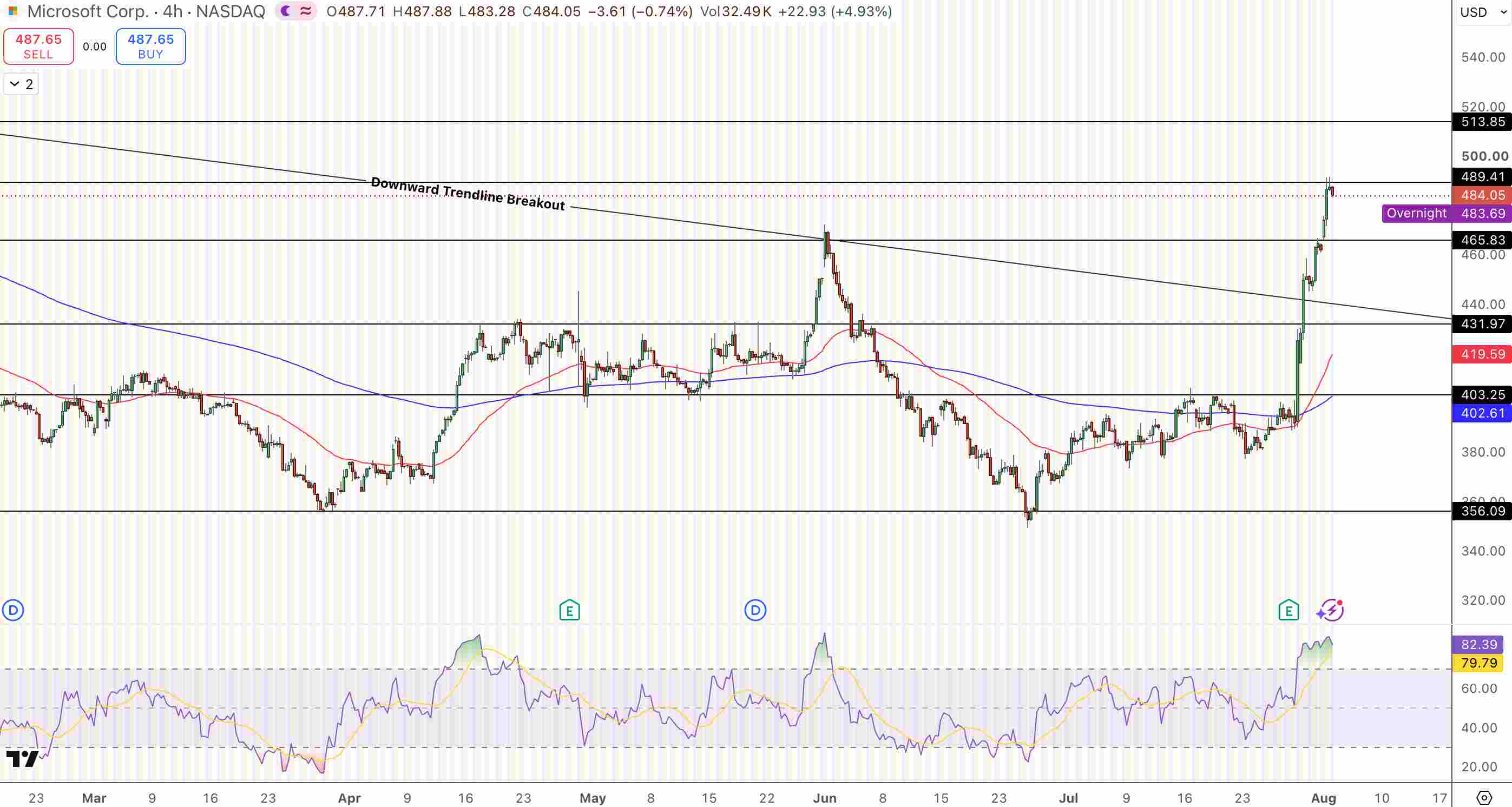
Microsoft Stocks Price Chart - Source: Tradingview
After such a strong rally, some short-term consolidation would be normal, but Microsoft's cloud and AI businesses continue to provide a strong foundation for long-term growth.
Bottom Line
Microsoft's latest earnings reinforced its leadership in cloud computing and artificial intelligence. Strong Azure growth, a record commercial backlog, and rising Copilot adoption continue to strengthen the company's long-term outlook. While heavy AI investment is weighing on free cash flow and the stock has rallied sharply, enterprise demand remains robust. Investors should watch Azure's growth trajectory, Copilot monetization, and backlog conversion, as these factors will likely determine whether Microsoft's momentum can continue.
FAQs
Q1: Why is Microsoft stock rising?
Microsoft shares rallied after beating Q4 earnings expectations, driven by 43% Azure growth, strong AI demand, and better-than-expected profitability
Q2: What should investors watch next for Microsoft?
Investors should monitor Azure's growth, Copilot monetization, AI infrastructure spending, and how quickly Microsoft's $678 billion backlog converts into revenue.
Recommended Articles









Comments (0)
Click the $ button, enter the symbol, and select to link a stock, ETF, or other ticker.