


EasyJet Shares Surge 14%, Apollo’s $7.7 Billion Bid Disrupts British Budget Airline



AI Podcast


Apollo Global Management has launched a £5.7 billion takeover bid for easyJet at 715 pence per share, surpassing Castlelake’s previous proposal. The board now favors Apollo’s offer, citing superior valuation and potential for flexible capital allocation toward fleet modernization. Despite financial headwinds, including a widened net loss of £377 million, easyJet’s valuable airport slots and modern fleet remain key attractions. With regulatory hurdles regarding EU control pending, both firms face early August deadlines to formalize bids. The deal’s success hinges on shareholder approval, particularly from major stakeholders like founder Sir Stelios Haji-Ioannou.
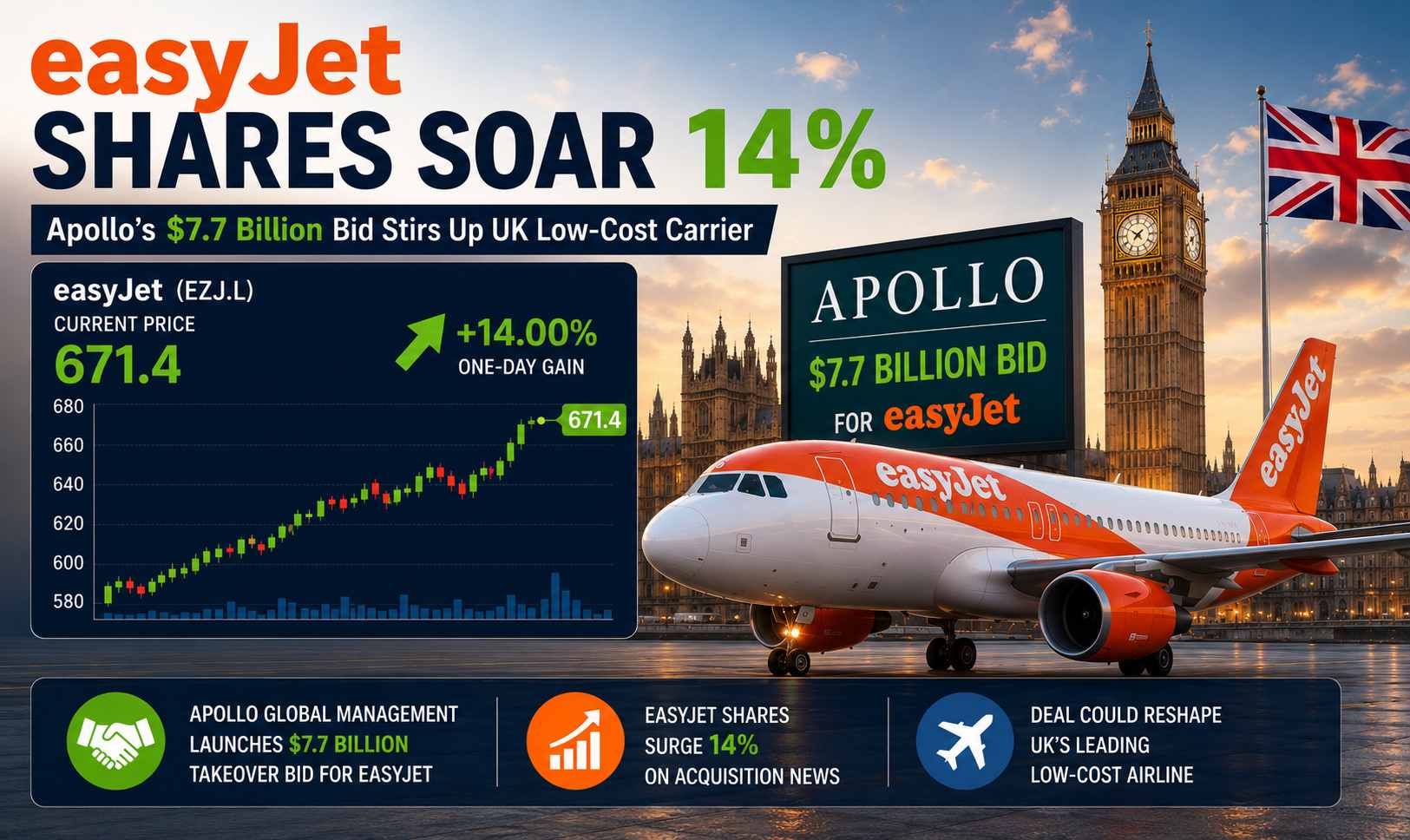
TradingKey - The takeover battle for easyJet has taken a dramatic turn in just one week. US private equity giant Apollo Global Management ( APO) emerged with a £5.7 billion bid, leapfrogging Castlelake, which had previously reached an agreement in principle, and intensifying the bidding war for Europe's second-largest budget carrier.
easyJet announced in a statement on Friday that it has reached an agreement in principle on a 715 pence-per-share cash takeover offer from Apollo. This price is about 3.6% higher than Castlelake's latest offer of 690 pence per share, valuing easyJet's fully diluted share capital at approximately £5.7 billion (equivalent to about $7.7 billion). Boosted by the news, easyJet's shares surged about 14% in early trading Friday, reaching a four-year high.
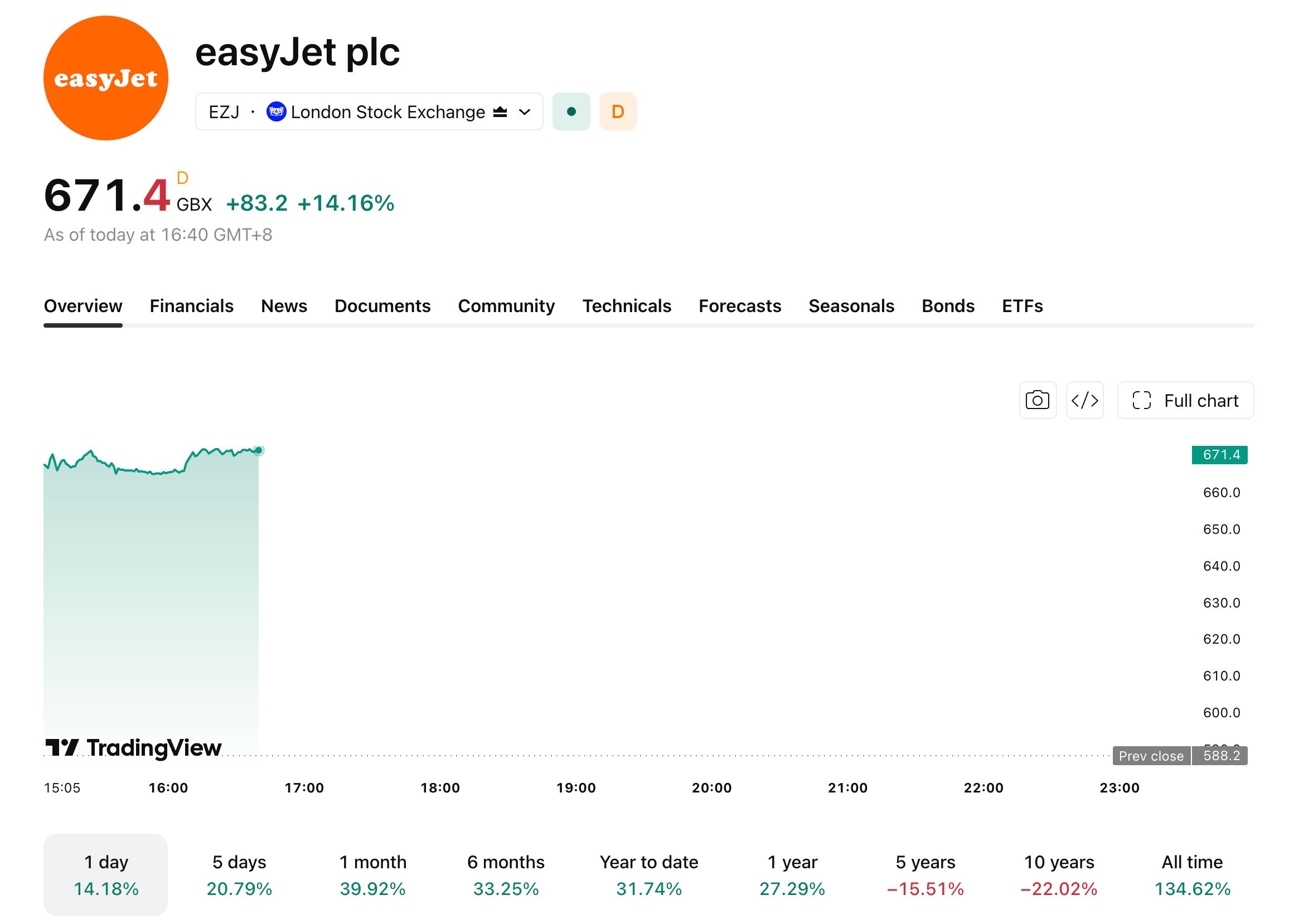
[Source: TradingView]
Just days ago, easyJet had accepted Castlelake's fifth proposal at 690 pence per share. Under that plan, the 31-year-old British budget carrier would delist, with US private equity leading the fleet modernization and expansion of its holiday business. However, Apollo's sudden entry disrupted the original plan. The board of easyJet stated that, given Apollo's superior offer, it no longer recommends shareholders accept Castlelake's takeover bid.
Apollo stated in its announcement that a privatized structure would provide easyJet with access to incremental capital to support longer-term strategic planning. Apollo emphasized its belief that easyJet's existing low-cost operating model has significant growth potential, and plans to accelerate its development through fleet upgrades—a costly task for any airline, whereas private equity capital can provide more flexible resource allocation.
In addition, Apollo stated that it will take all necessary measures to meet regulatory requirements that European airlines must be controlled by EU entities, and committed to preserving the easyJet brand. Castlelake had previously attempted to satisfy the "EU control" rule by bringing in two Irish airline executives, whereas Apollo's plan remains to be seen.
Under UK takeover rules, Apollo must announce a firm intention to make an offer or walk away by August 7, while Castlelake's deadline is August 3. This means the two US private equity giants will battle it out over the coming weeks.
Market analysts pointed out that easyJet has long been viewed as a takeover target, with a depressed post-pandemic stock price combined with soaring fuel costs driven by Middle East conflicts putting pressure on its finances. In the fiscal half-year ending at the end of March, the company's net loss was £377 million, widening by 27% year-on-year. However, its core assets remain scarce: a fleet of modern Airbus A320-family aircraft, order books for hundreds of planes, and scarce peak takeoff and landing slots at key hub airports in London, Milan, and Geneva.
Of note, easyJet founder Sir Stelios Haji-Ioannou and his family still hold approximately 15% of the company's shares. Although he has not made a public statement, market rumors suggest he may be inclined to accept a "jaw-dropping" offer. Whether the deal will ultimately go through depends heavily on the attitude of the major shareholders.
This content was translated using AI and reviewed for clarity. It is for informational purposes only.
Recommended Articles









Comments (0)
Click the $ button, enter the symbol, and select to link a stock, ETF, or other ticker.