


Century IPO 4 Times Oversubscribed. SpaceX Hits $250 Billion, Analysts Sound Alarm: Beware Facebook-Style Break Below IPO Price Curse



AI Podcast


SpaceX's IPO is attracting over $250 billion in demand, targeting a $1.77 trillion valuation. The company's "aerospace + AI" architecture includes Starship launches, Starlink, orbital computing, terrestrial AI compute, and chip manufacturing, with Starlink projected to generate $11.4 billion in 2025 revenue. However, analysts warn of IPO risks, citing historical underperformance of large listings. Intrinsic value estimates range from $1.3 trillion to $780 billion, significantly below the IPO valuation, with concerns centered on the AI business's nascent stage and uncertain monetization.
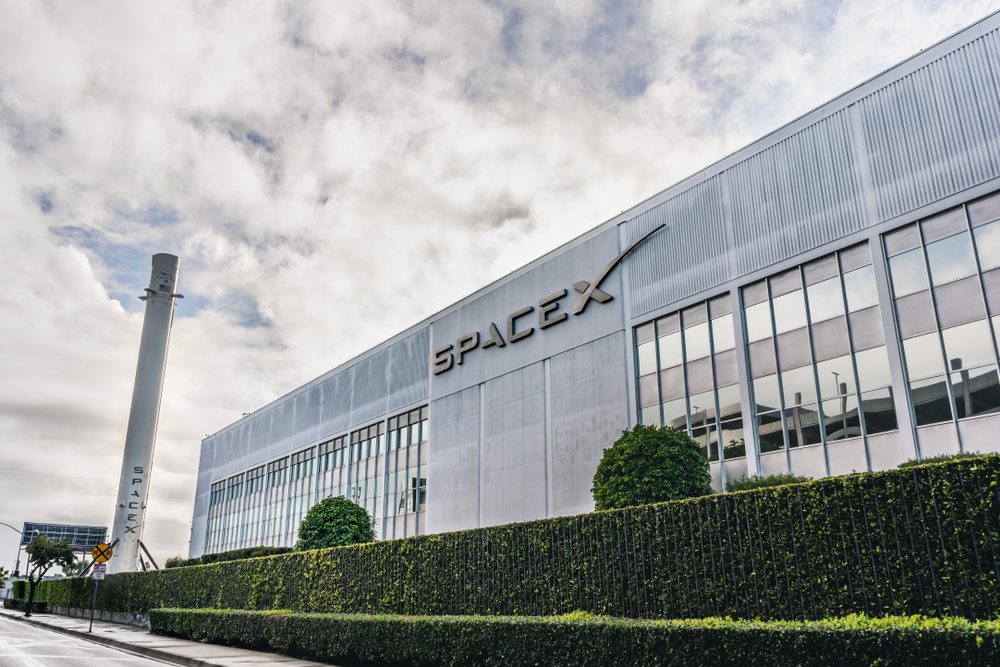
TradingKey - The initial public offering (IPO) of Space Exploration Technologies Corp. (SpaceX), led by the world's richest man Elon Musk, is sparking an unprecedented frenzy in capital markets.
According to sources, as of Tuesday, the IPO has attracted over $250 billion in subscription demand, far exceeding the $75 billion the company plans to raise, representing an oversubscription rate of 3.5 to 4 times. This figure not only sets a new historical record for global capital markets but also highlights investors' fervent pursuit of SpaceX's "aerospace + AI" business empire.
Currently, SpaceX is still in the roadshow and marketing phase, but market demand has shown explosive growth. Some large institutional investors have submitted subscription orders worth billions of dollars, while more long-term investment institutions are expected to enter in the later stages of the IPO process as per convention. Musk himself has personally participated in Zoom meetings with potential investors to introduce the company's long-term development strategy.
The IPO plans to issue 555.6 million Class A common shares at a price of $135 per share, corresponding to a valuation of approximately $1.77 trillion. This is poised to surpass the record set by Saudi Aramco in 2019 and become the largest IPO in global history.
Departing from traditional large-scale IPOs, SpaceX has innovatively opened up as much as 30% of the offering to retail investors. This move not only breaks traditional Wall Street conventions but also amplifies cross-market capital linkage effects through broad public participation.
Despite recent market volatility, SpaceX remains the most closely watched investment target in global capital markets, thanks to its unique business matrix and grand future vision.
SpaceX CFO Details Five-Pillar Business Architecture
Meanwhile, CFO Bret Johnsen systematically presented the company’s "Space Infrastructure + AI Compute" five-in-one business architecture to investors for the first time. In an in-depth conversation with prominent investor Gavin Baker, Johnsen detailed the synergistic logic across five core sectors: Starship launches, Starlink satellite internet, orbital computing, terrestrial AI compute, and in-house chip manufacturing.
First, Starship will deploy third-generation Starlink satellites on a massive scale, further solidifying SpaceX’s dominant position in the global satellite internet market. Starlink’s controllable and maneuverable satellites now account for 75% of the world’s total in-orbit capacity, with a user base exceeding 10.3 million and 2025 revenue reaching $11.4 billion, a 50% year-on-year increase.
The steady cash flow from Starlink will provide robust capital backing for the orbital computing project, which plans to deploy distributed data centers in low Earth orbit (LEO). By utilizing space-based solar power and natural radiative cooling, the project aims to bypass the energy and land resource limitations currently facing terrestrial data centers.
At the same time, terrestrial data centers will pioneer the commercialization of AI compute models. SpaceX has completed the Colossus supercomputing center, which features large-scale deployments of high-end Nvidia GB200 and GB300 AI chips, establishing the world’s first gigawatt-class AI training cluster.
Finally, Terafab, the in-house chip manufacturing business, will safeguard the large-scale expansion of the entire ecosystem from the supply chain side, reducing dependency on external chip vendors.
Johnsen characterized this complex business architecture as an "interlocking and synergistic" organic whole, while highlighting the strategic importance of open collaboration.
He further noted that all of SpaceX’s business segments are open to the market: competitors can procure SpaceX launch services, Starlink serves users globally, terrestrial AI compute capacity is available for lease, and even the Grok chatbot is open for access.
Starlink’s Cash Flow and Space Computing: How SpaceX Supports Its 1.77 Trillion Valuation?
Over the past three years, the company has leveraged breakthroughs in reusable rocket technology to capture the vast majority of the global orbital transport market, completely restructuring the cost architecture of commercial space launches.
Through its first-stage recovery and reuse technology, the Falcon 9 rocket has reduced the per-unit payload launch cost from the industry average of $18,500/kg to $2,700/kg, while the Starship's full-vehicle reuse technology aims for a target cost reduction of over 99%, requiring only $150/kg to deliver payloads into Low Earth Orbit.
This disruptive cost advantage has allowed SpaceX to execute launch missions at a frequency far exceeding that of its competitors, completing 165 launches in 2025—several times the combined total of all other aerospace enterprises worldwide.
In the satellite internet sector, the Starlink project has emerged as a "cash cow" for SpaceX; its commercial success not only validates the feasibility of the Low Earth Orbit (LEO) satellite communication model but also establishes the world's largest space communication infrastructure.
As of the first quarter of 2026, the number of Starlink satellites in orbit has exceeded 12,000, with its controllable maneuverable satellites accounting for 75% of the global total. Covering 164 countries and regions, its user base has surpassed 10.3 million. In 2025, the Starlink business generated $11.4 billion in revenue, a 50% year-over-year increase, with an adjusted EBITDA of $7.2 billion and a profit margin reaching 63%.
Through continuous technological iterations, Starlink has reduced communication costs to $0.20 per Mbps per month. While providing inclusive services to the 3 billion people worldwide who are not yet connected, it has also built a solid network foundation for future space-based computing infrastructure.
What truly propelled SpaceX's valuation past $1.77 trillion is its ambitious strategic layout and technical barriers within the artificial intelligence sector.
Through the full acquisition of xAI in 2025, SpaceX has constructed a complete commercial closed-loop of "aerospace infrastructure + AI computing power + large models." The company's Colossus supercomputing data center, equipped with high-end Nvidia GB200 and GB300 AI chips, features the world's first gigawatt-scale AI training cluster. Supported by a gigawatt-scale Megapack energy storage station, this large-scale hardware deployment has formed the core barrier for the company's computing power.
Leveraging Starship's low-cost launch capabilities, SpaceX also plans to deploy a distributed AI computing network in Low Earth Orbit, utilizing space-based solar power and natural radiative cooling to solve the pain points of power supply and cooling resource constraints faced by terrestrial data centers. This unique technological path makes SpaceX the only company in the industry currently capable of deploying space-based distributed computing, with its AI business's addressable market estimated by Wall Street investment banks to exceed $20 trillion.
The growth of SpaceX's market capitalization is nothing short of a capital market miracle; at the end of 2024, the company's private market valuation was just $350 billion. A mere 18 months later, its IPO valuation jumped to $1.77 trillion, representing an increase of over 400%.
Trillion-Dollar Valuation Bubble? Analysts Warn of SpaceX IPO Risks
However, many analysts warn that behind SpaceX's seemingly brilliant IPO lie deep-seated risks masked by market frenzy.
A research team led by Truist Co-Chief Investment Officer Keith Lerner analyzed the performance of the 30 most recent large-scale IPOs, showing that these companies saw their average returns drop by 9% in both the six and twelve months following their listings. Among them, Lyft ( LYFT ), Coinbase ( COIN ), Robinhood ( HOOD ), Rivian ( RIVN) and other companies saw their stock prices plunge by more than 50%.
Lerner specifically cited the painful lesson of Facebook's 2012 IPO, when the social media giant entered the capital markets with a $104 billion valuation, but its advertising business model had not yet been fully proven, ultimately leading the stock to break below its IPO price on the first day and drop a cumulative 32% over the following year.
Lerner warned that SpaceX's massive offering size and unprecedented retail participation could trigger significant market volatility in the early stages of listing, and that investors should remain cautious.
Furthermore, Aswath Damodaran, a professor at NYU's Stern School of Business known as the "Dean of Valuation," concluded through rigorous modeling that SpaceX's intrinsic value is approximately $1.3 trillion—well below its target IPO valuation of $1.77 trillion.
He noted that the core of the valuation discrepancy lies in differing assessments of the AI business. In its IPO filing, SpaceX projected that the AI-related market could reach $26 trillion, accounting for the lion's share of its estimated $28.5 trillion total market opportunity.
However, Damodaran believes this projection is overly aggressive. He argues the AI industry is still in a rapid development phase with significant uncertainties surrounding business models, profitability, and long-term growth trajectories. Specifically, generative AI still has a long way to go before establishing a stable and sustainable profit model.
He emphasized that SpaceX's AI business is the company's least mature segment and furthest from profitability, currently relying primarily on products like xAI and the Grok chatbot, with no clear monetization model yet in place.
By contrast, Morningstar holds a more conservative view of SpaceX. Analyst Nicolas Owens used a discounted cash flow model to estimate the company's fair value at just $780 billion, less than half of its target IPO valuation.
Morningstar's valuation is primarily based on SpaceX's strong performance in its launch and connectivity businesses. In 2025, SpaceX captured 83% of the global commercial satellite launch market and reduced per-launch costs by over 95%; the Starlink business is projected to see 50% revenue growth in 2025, reaching $11.3 billion, with operating profit exceeding $4.4 billion.
However, Morningstar believes SpaceX's economic moat is narrow. While the company enjoys cost advantages in reusable rockets and massive Starlink deployment, the AI business drags down overall performance. Prospects and objectives in this segment, such as orbital data centers, face extreme uncertainty.
Regarding orbital data centers, Morningstar provided three simulation scenarios. In the most optimistic case, SpaceX could create $1.3 trillion in market value, but the probability of failure is as high as 43%, which would result in losses exceeding $81 billion.
Owens suggests that investors wait until the lock-up period for private investors expires before trading SpaceX shares, as increased selling pressure at that time will bring the stock price back to a more reasonable valuation range, providing a larger margin of safety than at the IPO.
This content was translated using AI and reviewed for clarity. It is for informational purposes only.
Recommended Articles





Comments (0)
Click the $ button, enter the symbol, and select to link a stock, ETF, or other ticker.