


Samsung Beat Fails to Lift Korean Stocks as Kospi Falls Over 1%; Nikkei 225 Rises as SK Hynix Slumps 5%



AI Podcast


On July 30, Japanese and South Korean markets diverged, with the Nikkei 225 rising 0.71%. The KOSPI initially surged over 5% following Samsung Electronics’ Q2 2026 earnings, which showed a 1,813.8% surge in operating profit. However, heavy selling pressure in tech, including a 5.64% drop in SK Hynix, erased gains, leaving the KOSPI down 1.23%. This volatility reflects broader market caution, as recent record swings and successive circuit breakers underscore deepening investor uncertainty despite strong corporate fundamentals. Capital remains sensitive to profit-taking and potential safe-haven shifts, highlighting elevated risks in the regional tech sector.
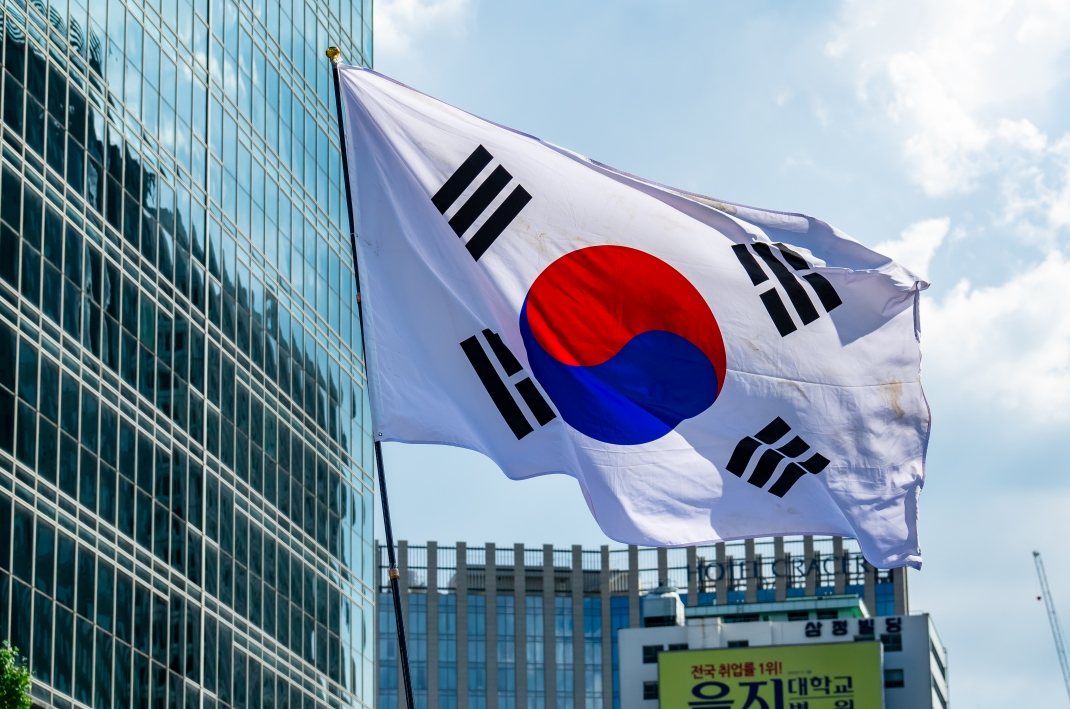
TradingKey - On July 30, Japanese and South Korean stock markets continued to diverge at the close. SK Hynix fell over 5%, Samsung slid nearly 1%, and Kioxia rose nearly 3%.
South Korean stocks climbed before retracing, with the Korea Composite Stock Price Index (KOSPI) surging over 5% in morning trade to hit a high of 5,976 points, nearing the 6,000-point threshold again. However, selling pressure re-emerged in the afternoon, causing the index to reverse its gains and close down 1.23% at 5,593.56 points.
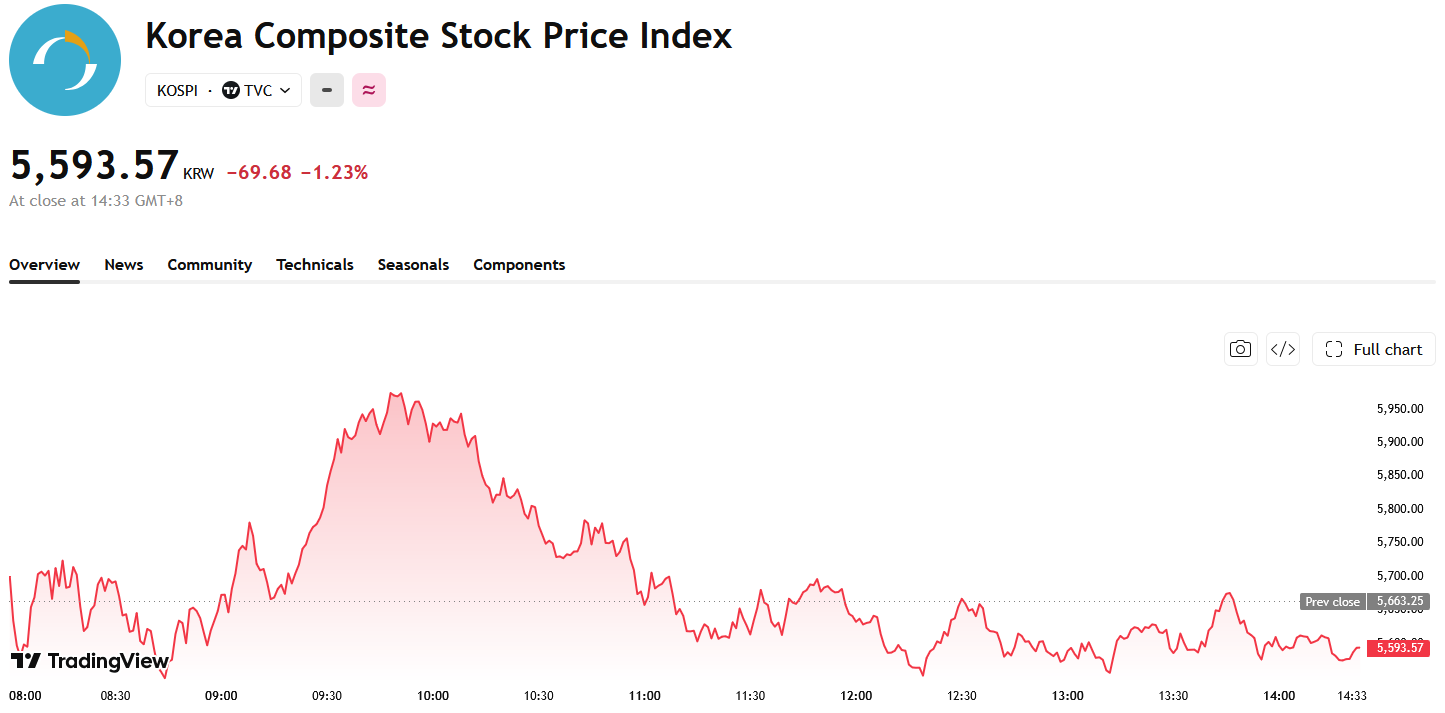
Source: TradingView
The Nikkei 225 Index, meanwhile, closed up 0.71% at 61,867.43 points.
Heavyweight tech stocks remained weak, dragging down South Korean stocks and cutting short their rebound. SK Hynix closed down 5.64% at 1,322,000 won (about $920), while Samsung Electronics ticked down 0.72% to close at 207,000 won.
Kioxia bucked the trend to rise 2.92%, closing at 39,500 yen (about $241), while SoftBank Group fell 2.51% to close at 4,622 yen (about $28).
The biggest intraday focus came from Samsung Electronics' newly released earnings. The company's Q2 2026 financial report showed that operating profit surged 1,813.8% year-on-year to 89.49 trillion won, significantly beating market expectations.
Boosted by the strong earnings report, Samsung Electronics' shares jumped over 7% intraday, lifting the KOSPI index rapidly and pushing the South Korean stock market's maximum gain past 5% as market sentiment briefly warmed up.
However, the positive earnings failed to reverse the overall cautious sentiment in the market. As profit-taking and safe-haven flows took back dominance, South Korean stocks continued to decline in the afternoon, with the index not only giving back all of its gains but ultimately closing in the red again.
The recent sharp volatility in South Korean stocks has also become a focus of global capital markets. Within just a few weeks, the KOSPI pulled back sharply from its all-time highs, triggering multiple circuit breakers in succession and setting a record for high volatility rarely seen in the South Korean stock market in recent years.
This content was translated using AI and reviewed for clarity. It is for informational purposes only.
Recommended Articles








Comments (0)
Click the $ button, enter the symbol, and select to link a stock, ETF, or other ticker.