


Samsung First to Deliver HBM4E Samples, Accelerating Pursuit of SK Hynix in AI Memory Market



Samsung Electronics announced it has begun shipping industry-first 12-stack HBM4E samples, a move that drove its shares up nearly 6% and set a new record high. The samples offer a 20% performance improvement over HBM4 with 48GB capacity and 16 Gbps pin speeds. This preemptive sample delivery allows Samsung to potentially overtake SK Hynix, which is expected to supply HBM4E samples in late 2026. Analysts predict Samsung's lead will pressure Micron and SK Hynix, as both are slated for HBM4E mass production in 2027. Samsung’s positioning in next-generation memory solutions, particularly for NVIDIA’s upcoming platform, is seen as a significant catalyst.
TradingKey - During Asian trading hours on May 29, Samsung Electronics announced it has begun shipping the industry's first 12-layer stacked HBM4E samples to global customers. The news drove the company's share price up nearly 6% intraday, as market expectations rose regarding its ability to close the gap with SK Hynix in the AI memory market.
As of 11:33 a.m. Seoul time, Samsung Electronics shares were up 4.01% at 311,500 won, reaching a new record high. The Korea Composite Stock Price Index (KOSPI) rose approximately 2.3% during the same period.
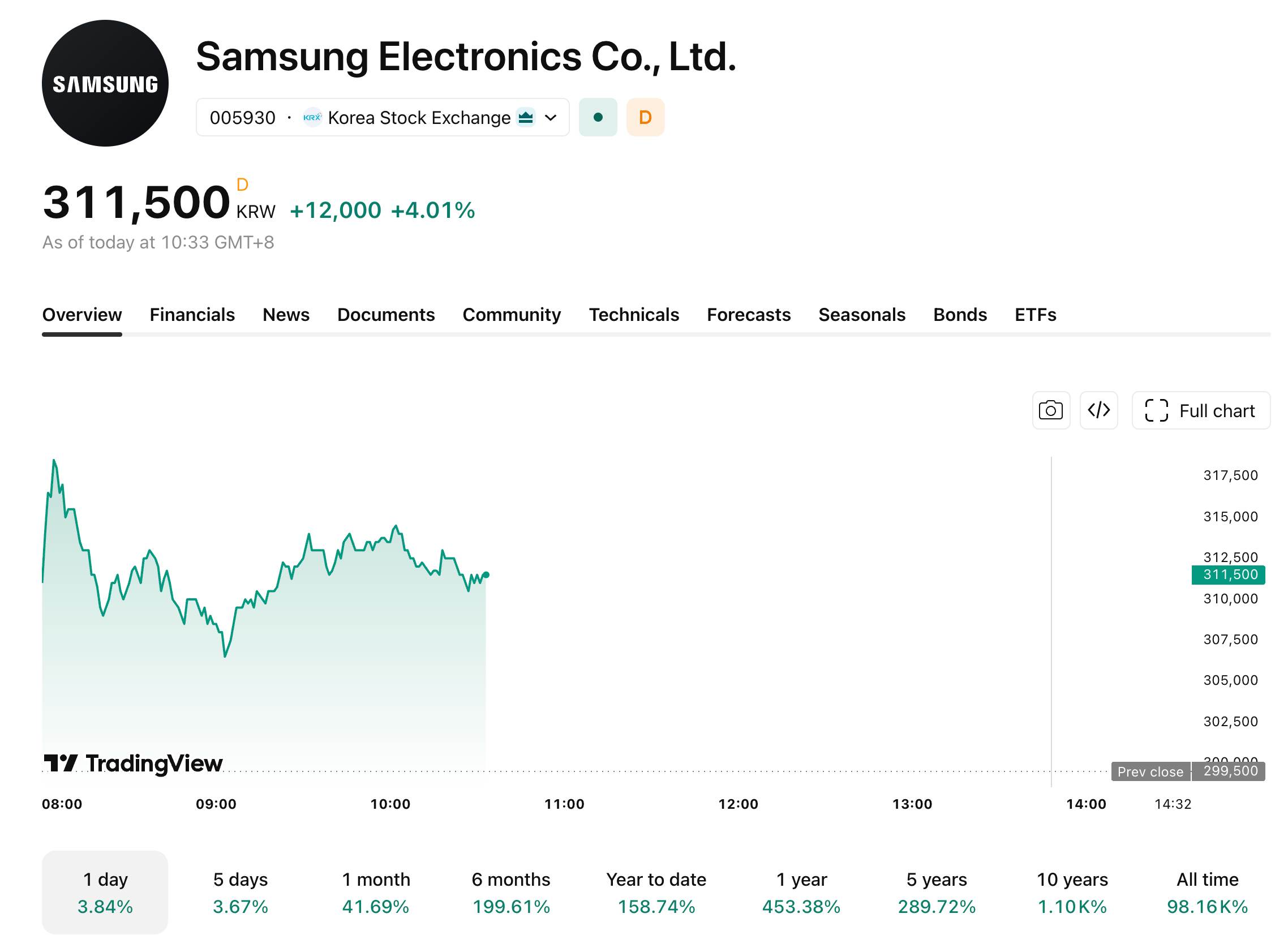
[Source: TradingView]
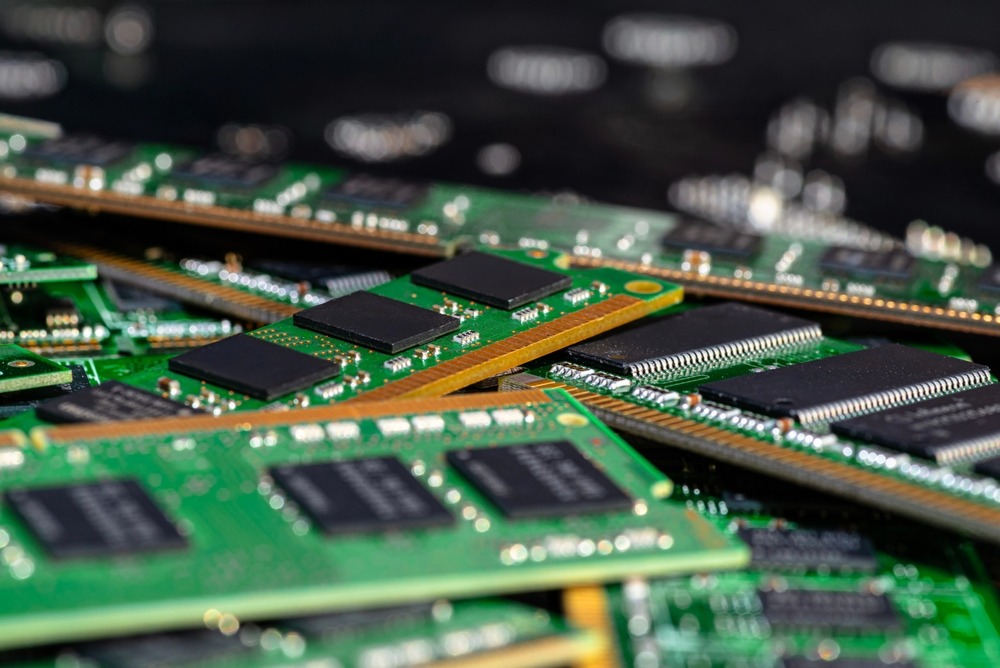
Samsung stated that the HBM4E (High Bandwidth Memory) samples utilize a 12-layer stack with a capacity of 48 gigabytes (GB). The pin speed is stable at 14 gigabits per second (Gbps), with the potential to scale to 16 Gbps—a more than 20% improvement over the mass-produced HBM4—with memory bandwidth reaching 3.6 terabytes per second (TB/s) per stack. The company also plans to launch 32GB (8-layer) and 64GB (16-layer) versions.
"Following the successful mass production of HBM4, Samsung has once again demonstrated its unique technological advantage with HBM4E," said Sang-Joon Hwang, Executive Vice President and Head of Memory Product & Technology at Samsung Electronics, in a statement.
During the HBM3E era, SK Hynix dominated with a first-mover advantage, while Samsung lagged behind its rival due to strategic technical errors and low manufacturing yields. It was not until September 2025 that Samsung's 12-layer HBM3E products passed NVIDIA's testing, allowing it to begin catching up with its competitors' progress.
Since taking the lead in mass-producing HBM4 in February this year, Samsung has forged ahead by delivering HBM4E samples first, effectively breaking the long-standing first-mover advantage held by SK Hynix. According to industry analysis, SK Hynix is expected to supply HBM4E samples in the second half of 2026, with mass production planned for 2027.
Analysts pointed out that this will place significant pressure on the time windows of Micron and SK Hynix, both of which are not expected to enter the HBM4E mass production phase until 2027. This suggests that Samsung's current lead could mark the beginning of a dramatic shift in the memory industry landscape.
On May 28, KB Securities significantly raised its target price for Samsung Electronics from 450,000 won to 530,000 won, noting that NVIDIA’s upcoming Vera Rubin AI platform will increase the cost share of memory to 25%. With its positioning in next-generation memory solutions, Samsung is poised to be one of the primary beneficiaries.
From being a laggard in the HBM3E era to leading in HBM4 mass production and now being the first to deliver HBM4E samples, Samsung's technical integration and manufacturing capabilities have improved significantly. However, SK Hynix's customer base and capacity reserves remain solid. Whether Samsung can translate its first-mover advantage into sustained market share will depend on its HBM4E production yields by year-end and the progress of its integration into NVIDIA’s Vera Rubin platform. While short-term stock gains partially reflect this optimism, future performance will depend on sample validation results.
Overnight gains in the U.S. semiconductor sector and a reprieve in Middle East geopolitical risks also boosted overall sentiment in the South Korean stock market. The Nasdaq Composite closed up 0.91% on Thursday, AMD and ARM rose 4.55% and 10.76%, respectively.
This content was translated using AI and reviewed for clarity. It is for informational purposes only.
Recommended Articles







Comments (0)
Click the $ button, enter the symbol, and select to link a stock, ETF, or other ticker.