


Japan and South Korea Stocks Close Lower; Kospi Drops 0.6%, SK Hynix Falls Nearly 5%, SoftBank Falls Over 2%



AI Podcast


On August 7, the Nikkei 225 and KOSPI indices declined by 0.12% and 0.60%, respectively, amid broad pressure on tech shares like SK Hynix and SoftBank. To enhance competitiveness, the Korea Exchange will introduce after-hours ETF trading from September 14, excluding leveraged products to mitigate volatility risks. Despite current market pessimism, Goldman Sachs maintains a bullish outlook on the memory chip sector, citing persistent DRAM supply shortages potentially lasting through 2030. Analysts argue that current valuations fail to reflect strong industry fundamentals, suggesting that recent price volatility has amplified concerns beyond objective market realities.

TradingKey - On August 7, Japanese and South Korean stock markets closed lower, with the Nikkei 225 Index closing down 0.12% at 65,606.71 points, and South Korea's benchmark KOSPI index falling 0.60% to close at 6,258.71 points.
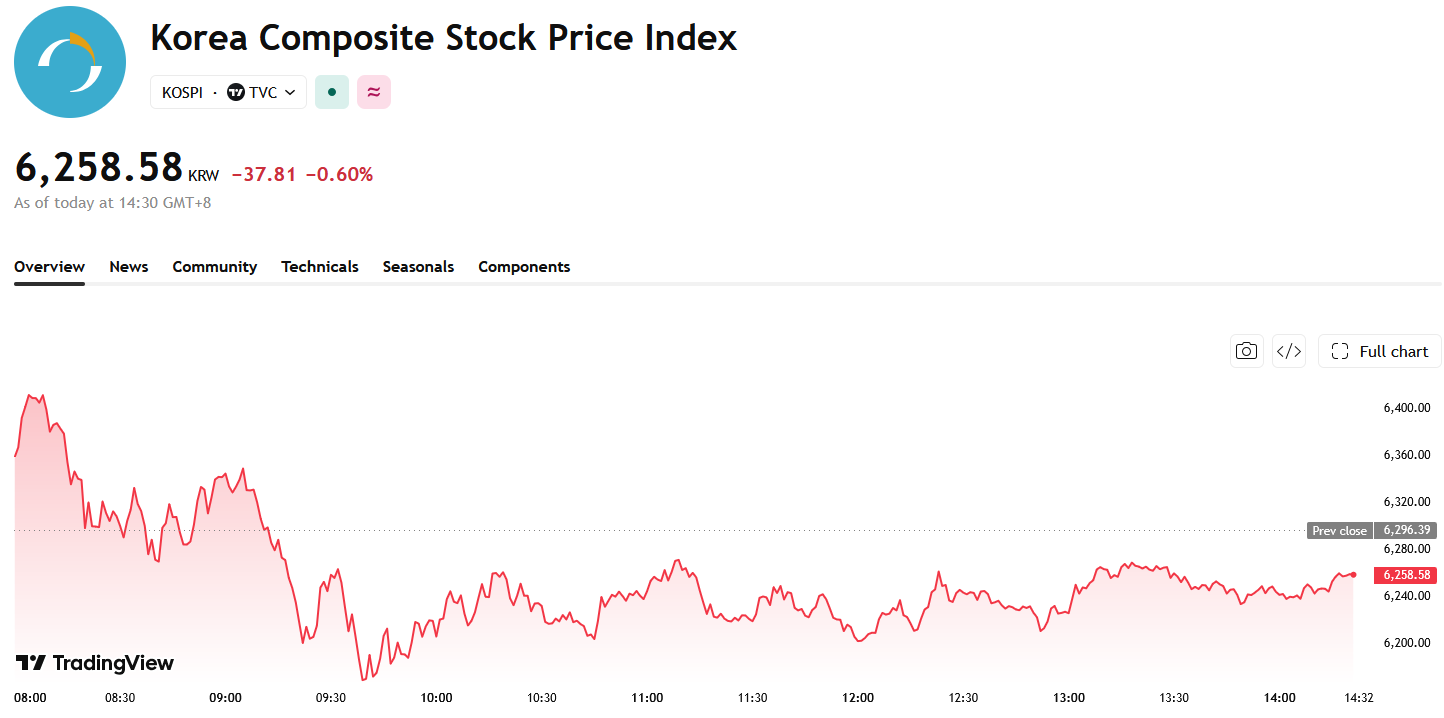
Source: TradingView
Among individual stocks, SK Hynix closed down 4.88% at 1,422,000 won (approximately $1,004), extending its recent volatile trend, while Samsung Electronics edged up 0.22% to close at 231,000 won.
Japanese tech stocks were generally under pressure, with Kioxia falling 2.07% to close at 47,730 yen (approximately $301), and SoftBank Group dropping 2.51% to close at 5,552 yen.
The Korea Exchange (KRX) announced that starting September 14, it will open ETF trading during after-hours sessions (16:00 to 20:00) to boost market competitiveness and address challenges from the alternative trading system Nextrade and 24-hour crypto asset trading platforms.
However, due to concerns over the risk of product prices deviating from net asset value (NAV), single-stock leveraged ETFs will be temporarily excluded from after-hours trading, indicating that regulators remain cautious about highly leveraged products.
Regarding institutional views, Goldman Sachs ( GS) remains bullish on South Korea's memory chip sector, arguing that recent sharp stock price fluctuations have made market expectations for the industry's prospects overly pessimistic. According to the latest report by Goldman Sachs Asia (Seoul) trader Justin Park, cited by Zhuifeng Trading Desk, current valuations of memory chipmakers do not fully reflect the true state of industry fundamentals, and market concerns over the sustainability of the memory cycle have been significantly amplified.
Goldman Sachs pointed out that the memory industry is still in a tight supply phase, and the supply-demand imbalance in the DRAM market is expected to persist for a long time, with supply shortages potentially extending even to 2030, which will continue to support product prices and manufacturers' profitability.
This content was translated using AI and reviewed for clarity. It is for informational purposes only.
Recommended Articles









Comments (0)
Click the $ button, enter the symbol, and select to link a stock, ETF, or other ticker.