


Samsung and SK Hynix Weigh Chinese Equipment Amid US Export Risks as AMEC Joins Evaluation Lists



AI Podcast


Samsung and SK Hynix are reportedly evaluating etching equipment from China’s AMEC to mitigate supply chain risks amid evolving US export controls. While companies aim to secure maintenance capabilities for Chinese production lines, Samsung has formally denied these reports. Despite the uncertainty, the move reflects a strategic shift as geopolitical tensions threaten reliance on Western suppliers. Chinese equipment providers are narrowing the technology gap with international peers, offering significant price advantages. Integrating domestic equipment remains a critical contingency plan for memory manufacturers to ensure operational continuity in their Chinese facilities as regulatory scrutiny intensifies.
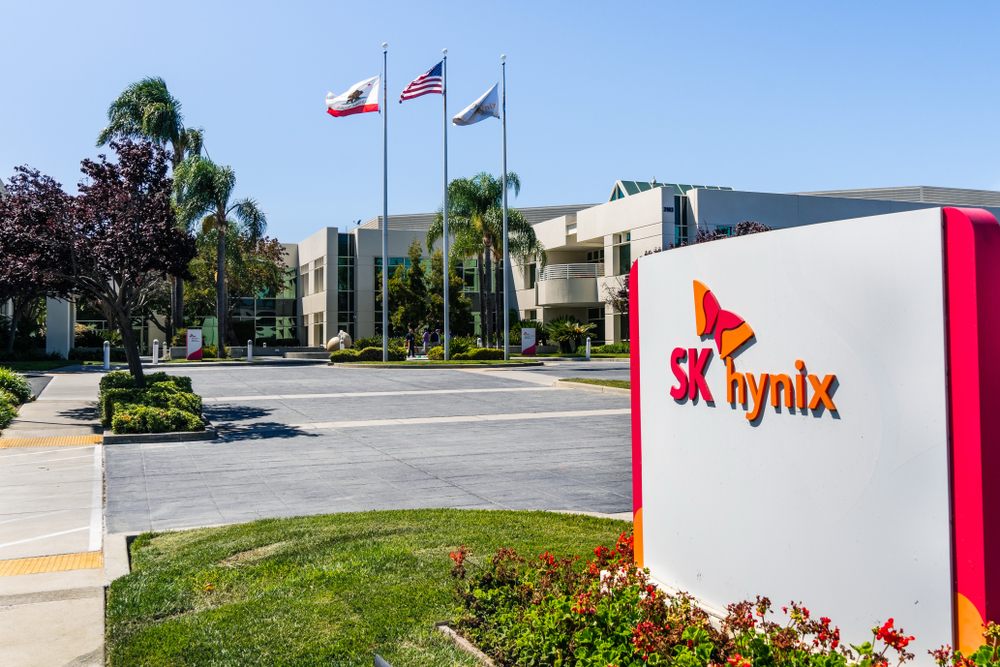
TradingKey - Samsung Electronics and SK Hynix have been evaluating etching equipment from Chinese semiconductor equipment maker AMEC in recent years, according to sources cited by Reuters, primarily to secure more supply chain options for their production bases in China to mitigate risks from potential further tightening of US export controls in the future.
According to people familiar with the matter, the two memory chip giants began testing AMEC's equipment about two years ago. At that time, US semiconductor restrictions on China were continuing to escalate, and there was significant uncertainty over whether Samsung and SK Hynix could secure a long-term, stable supply of US wafer fabrication equipment; therefore, the two companies began to proactively plan alternative options.
Although the testing has not yet progressed to formal integration into production lines and no large-scale procurement decisions have been made, entering the verification systems of world-leading memory chip makers is significant in itself for AMEC. This not only means its product technology has gained preliminary recognition from international customers but is also expected to boost its competitiveness in the global semiconductor equipment market.
However, Samsung subsequently responded to Reuters, denying the claims and stating that the company has neither tested AMEC's equipment at its Chinese plants nor planned to use such equipment.
Despite a recent correction in their stock prices, SK Hynix's year-to-date gain still exceeds 150%, and Samsung Electronics' cumulative gain has also surpassed 100%.
Chinese Equipment Manufacturers Set for Validation Opportunities
The United States has continuously strengthened its export restrictions on advanced semiconductor equipment in recent years. Although the US Department of Commerce placed Samsung and SK Hynix's factories in China on the "Validated End-User (VEU)" list in 2023, allowing them to procure certain controlled equipment without applying for individual licenses, this eligibility was canceled in 2025. Subsequently, the US shifted to issuing licenses on an annual basis to the two companies, allowing them to continue importing some semiconductor manufacturing equipment for their Chinese factories.
However, industry insiders worry that the scope of future US restrictions may expand further, not only involving the procurement of new equipment but also extending to the maintenance, parts replacement, and subsequent upgrades of existing Western equipment. Therefore, establishing a local Chinese equipment supply system in advance is regarded as an important preparation to mitigate supply chain risks.
Sources pointed out that the primary purpose of Samsung and SK Hynix currently evaluating Chinese suppliers is not to expand the capacity of their Chinese factories, but to ensure that existing production lines still possess the capability for continuous maintenance and upgrades under extreme circumstances.
Currently, Samsung's Xi'an NAND flash factory, as well as SK Hynix's Wuxi DRAM factory and Dalian NAND factory, still widely use etching equipment from companies such as Applied Materials and Lam Research of the United States.
In the view of the industry, if AMEC's products are ultimately adopted by Samsung or SK Hynix, it will serve as an important case of Chinese semiconductor equipment companies opening up international markets. In recent years, although domestic equipment manufacturers still lag behind leading international enterprises in fields such as advanced lithography, they have gradually narrowed the technology gap in segments like etching, thin-film deposition, cleaning, and CMP, while continuously increasing their market share by virtue of more competitive price advantages.
Dan Hutcheson, Vice President of TechInsights, stated that the selling price of similar equipment from Chinese manufacturers is generally about 20% to 30% lower than that of their international competitors, offering a highly apparent cost-performance advantage. In addition, leading Chinese memory chip companies, including YMTC, have adopted AMEC's equipment in batches, which further bolsters international customers' confidence in the maturity and reliability of its products, representing another key reason why Samsung and SK Hynix are willing to conduct equipment validation.
This content was translated using AI and reviewed for clarity. It is for informational purposes only.
Recommended Articles







Comments (0)
Click the $ button, enter the symbol, and select to link a stock, ETF, or other ticker.