


Samsung Electronics and SK Hynix May Rebound as South Korea Leveraged ETF Liquidation Wave Nears End, JPMorgan Says



AI Podcast


JPMorgan indicates that forced deleveraging from leveraged ETFs in South Korea is subsiding, easing passive selling pressure on the KOSPI. This correction was primarily liquidity-driven rather than fundamental. With semiconductor demand—particularly for high-bandwidth memory—remaining robust due to AI infrastructure expansion, leading firms like SK Hynix and Samsung Electronics are positioned for recovery. As market sentiment stabilizes, investors are expected to pivot back toward corporate profitability and global tech capital expenditure trends. While potential geopolitical risks and economic slowdowns remain, the easing of technical selling supports a positive outlook for the broader global semiconductor supply chain.
TradingKey - The latest research report from JPMorgan points out that the massive deleveraging transactions triggered by leveraged ETFs in the South Korean market are nearing their end. As passive selling pressure gradually eases, the South Korean stock market is expected to experience a phased recovery, with tech stocks and the semiconductor sector likely to be the primary beneficiaries of the rebound.
The report points out that the South Korean stock market has fluctuated wildly this year, with many investors amplifying their exposure to South Korean tech stocks and the KOSPI index through leveraged ETFs. However, the recent rapid market correction triggered forced position reductions and rebalancing mechanisms for some leveraged products, resulting in a concentrated release of a large amount of passive selling, which further amplified the market's decline. As most leveraged positions have completed adjustment, the additional selling pressure from future ETF rebalancing is expected to weaken significantly.
JPMorgan believes that this round of market correction is driven more by capital flow factors rather than a significant deterioration in the fundamentals of South Korean corporations. Investment in artificial intelligence infrastructure continues to advance, global demand for memory chips keeps growing, and with high-bandwidth memory (HBM) in short supply, the long-term earnings outlook for leading South Korean semiconductor companies remains solid.
Recently, share prices of SK Hynix and Samsung Electronics have both experienced significant volatility. However, JPMorgan believes that as the impact of ETF deleveraging gradually fades, the market will refocus on fundamental factors such as corporate profitability, AI-related demand, and global tech capital expenditures. If global cloud service providers continue to expand investments in AI data centers, South Korean memory chip companies are still expected to benefit.
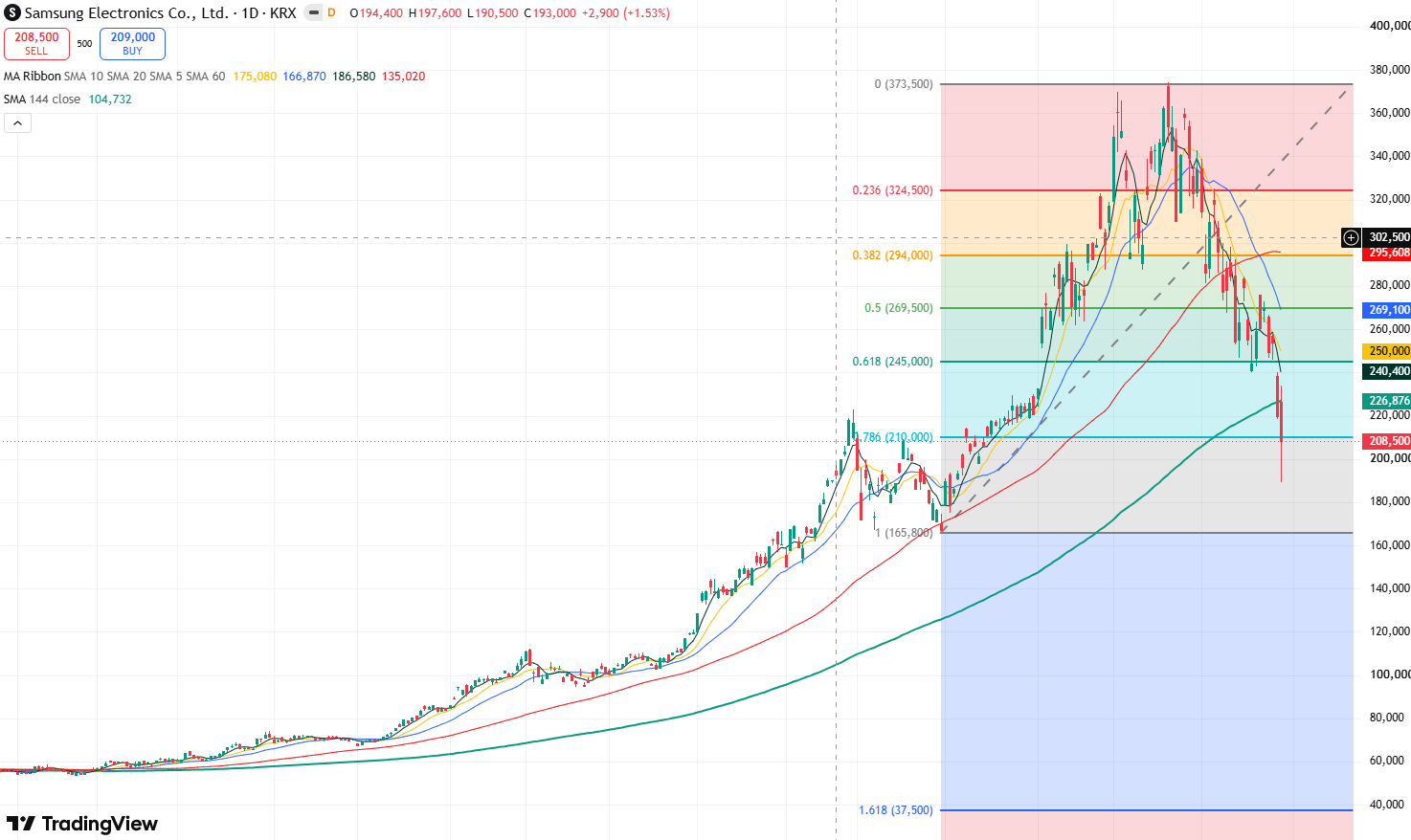
Samsung Electronics Daily Share Price Chart, Source: TradingView
Analysts point out that the South Korean stock market occupies an important position in the global semiconductor supply chain. An improvement in market sentiment is not only expected to help the KOSPI index stabilize but also likely to boost the performance of the global chip sector. As for US stocks, Micron Technology ( MU ), Nvidia ( NVDA ), Broadcom ( AVGO) and other companies in the AI supply chain are also expected to benefit from the recovery in market risk appetite. However, if global economic growth slows or geopolitical risks heat up again, the semiconductor sector could still face some volatility.
This content was translated using AI and reviewed for clarity. It is for informational purposes only.
Recommended Articles






Comments (0)
Click the $ button, enter the symbol, and select to link a stock, ETF, or other ticker.