


South Korea Stock Market Slide Intensifies: KOSPI Plunges Nearly 6%, Tumbles 30% From June High, SK Hynix and Samsung Both Slump



AI Podcast


On July 24, Japanese and South Korean markets faced a significant tech-led sell-off. The KOSPI plunged 5.72%, while the Nikkei 225 fell 2.73%, driven by Middle East geopolitical risks and local reallocation. Regulatory pressure exacerbated the decline as South Korea’s Financial Services Commission tightened deposit requirements for leveraged ETFs, effective July 31. This shift, combined with retail investors migrating toward high-leverage CFDs—where holdings in Samsung and SK Hynix have surged—heightens market volatility. Analysts suggest this deleveraging cycle and portfolio rebalancing may continue to weigh on semiconductor heavyweights in the near term.
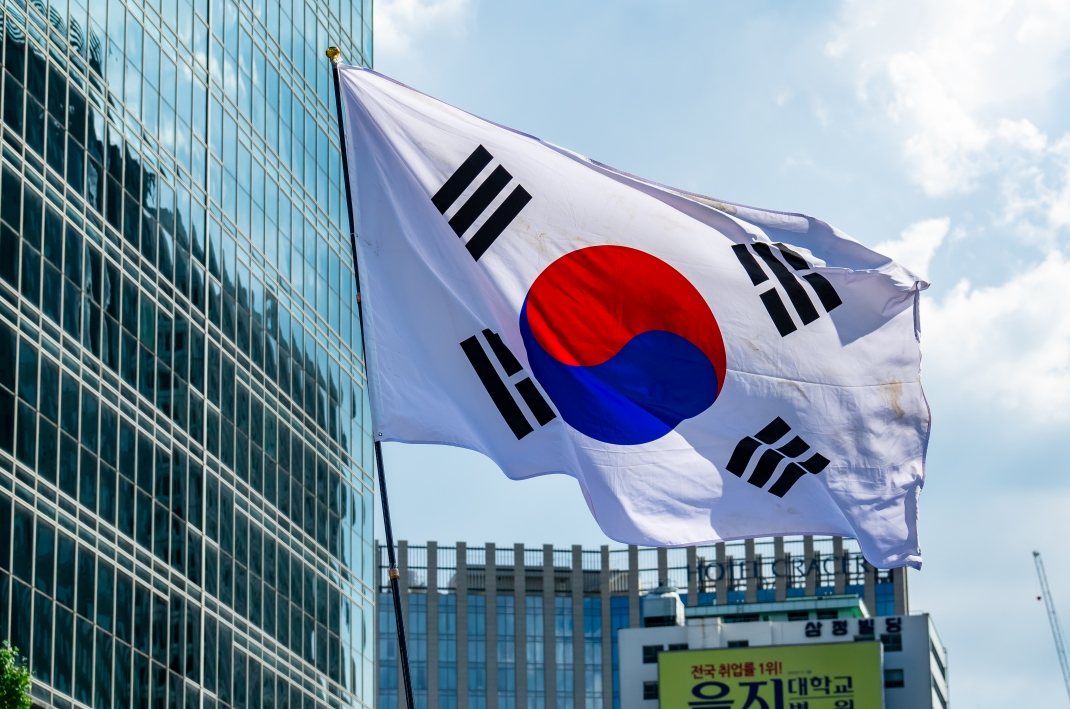
TradingKey - On July 24, Japanese and South Korean stock markets both tumbled, with SoftBank, Kioxia, SK Hynix, and Samsung all posting sharp declines.
The South Korea Composite Stock Price Index (KOSPI) plunged 5.72% to close at 6,690.62 points, down nearly 30% from its June high, after briefly triggering a "Sidecar" mechanism during intraday trading to suspend program selling; the Nikkei 225 Index fell 2.73% to close at 64,611.15 points, with a single-day drop of over 1,800 points.
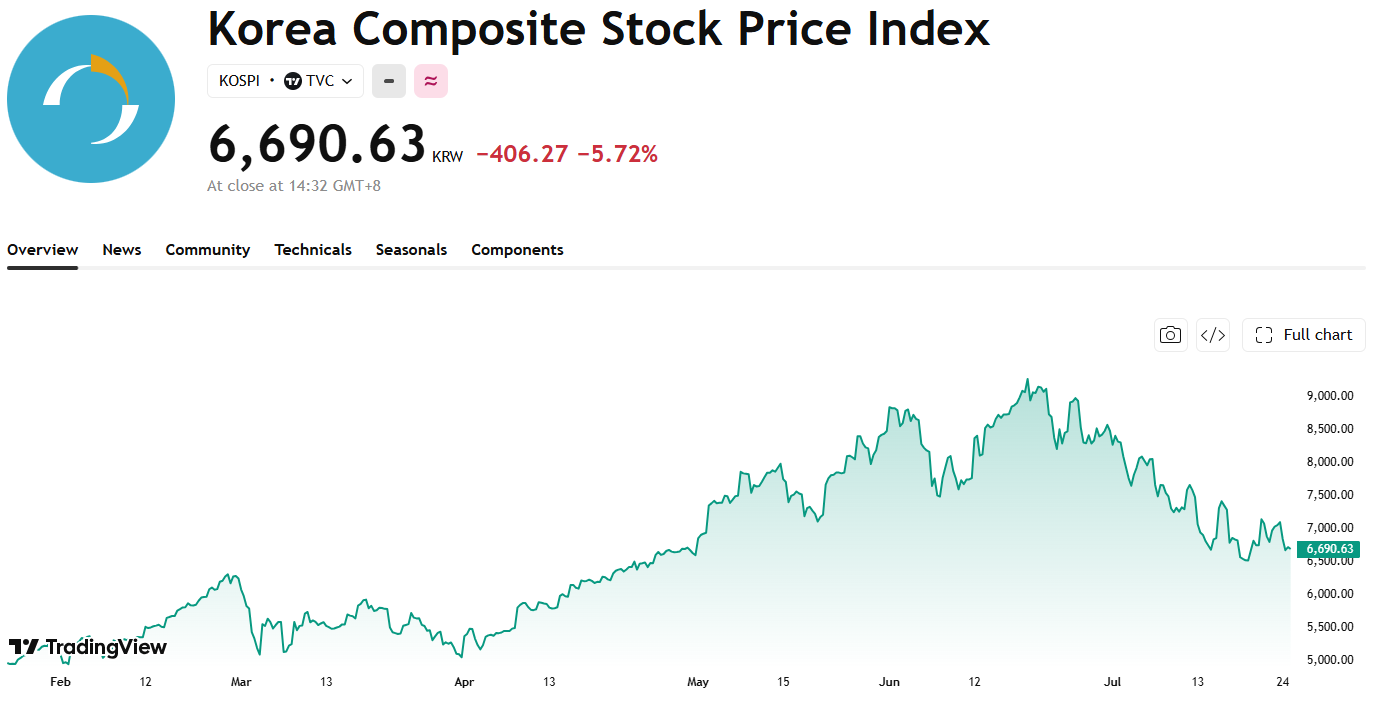
Source: TradingView
A wave of market sell-offs swept through the technology sector, with SK Hynix closing down 8.33% and Samsung Electronics falling 7.59%; Japanese chip giant Kioxia saw its stock price plummet 9.49%, while SoftBank Group dropped 7.06%.
Shawn Oh, head of South Korean cash equities at NH Investment & Securities, pointed out that geopolitical tensions in the Middle East triggered investor risk aversion, while local funds' concentrated reduction of tech holdings ahead of the weekend amplified downward market pressure. Roy Lim, a trader at Samsung Securities, revealed that some Asian hedge funds are selling shares of Samsung Electronics and SK Hynix to reallocate to the new shares of China's ChangXin Technology, which are set to list on July 27.
Meanwhile, the South Korean market is facing the shock of tightening regulatory policies. On July 24, South Korea's Financial Services Commission announced that it will significantly raise the cash deposit requirements for retail investors trading single-stock leveraged ETFs from 10 million won to 30 million won, and stocks, ETFs, and bonds will no longer count toward the minimum deposit, with the implementation date of the new rules moved up from August to July 31. This policy adjustment directly impacts the leveraged trading capability of South Korean retail investors, while such leveraged ETFs are highly tied to heavyweight stocks like Samsung Electronics and SK Hynix, accounting for over 70% of the South Korean stock market's trading volume.
Data show that South Korean retail investors are turning to high-risk derivatives such as contracts for difference (CFDs) following the regulatory tightening of leveraged ETFs. According to data from the Korea Financial Investment Association, CFD holdings of SK Hynix soared by 2,500% over the past year to 235 billion won, while those of Samsung Electronics grew fivefold; such products offer a maximum leverage ratio of up to 2.5 times, which could continue to amplify market volatility in the future.
This content was translated using AI and reviewed for clarity. It is for informational purposes only.
Recommended Articles







Comments (0)
Click the $ button, enter the symbol, and select to link a stock, ETF, or other ticker.