


Japan and South Korea Stocks Revenge Surge: Kospi Jumps 7%, SK Hynix Surges Over 9%, Samsung, Kioxia and SoftBank Broad Short Squeeze



AI Podcast


Japanese and South Korean equity markets surged on July 15, rebounding from recent volatility. The KOSPI climbed 6.98% as SK Hynix and Samsung Electronics rallied, while the Nikkei 225 rose 1.36%. The recovery was driven by U.S. June CPI data falling to 3.5%, easing concerns regarding aggressive Federal Reserve rate hikes. While technical overselling and capital reallocation support current gains, the sustainability of this rally remains contingent upon upcoming Q2 earnings from ASML and testimony from Fed Chairman Warsh, which will determine the potential for a medium-to-long-term market reversal.

TradingKey - Japanese and South Korean stock markets staged a powerful rebound, with the KOSPI Index surging nearly 7% and the Nikkei 225 steadily recovering, while SK Hynix jumped over 9%, and Samsung Electronics, Kioxia, and SoftBank followed suit.
During the Asian session on July 15, after experiencing intense volatility and a market shakeout over the previous two days, Japanese and South Korean stock markets both gapped sharply higher. The KOSPI Index jumped 6.98% at the open, reclaiming the 7,000-point mark to temporarily trade at 7,335.47 points; Samsung Electronics rose 5.89% to temporarily trade at 278,500 KRW; SK Hynix surged 9.41%, returning to the 2 million mark and temporarily trading at 2,093,000 KRW.
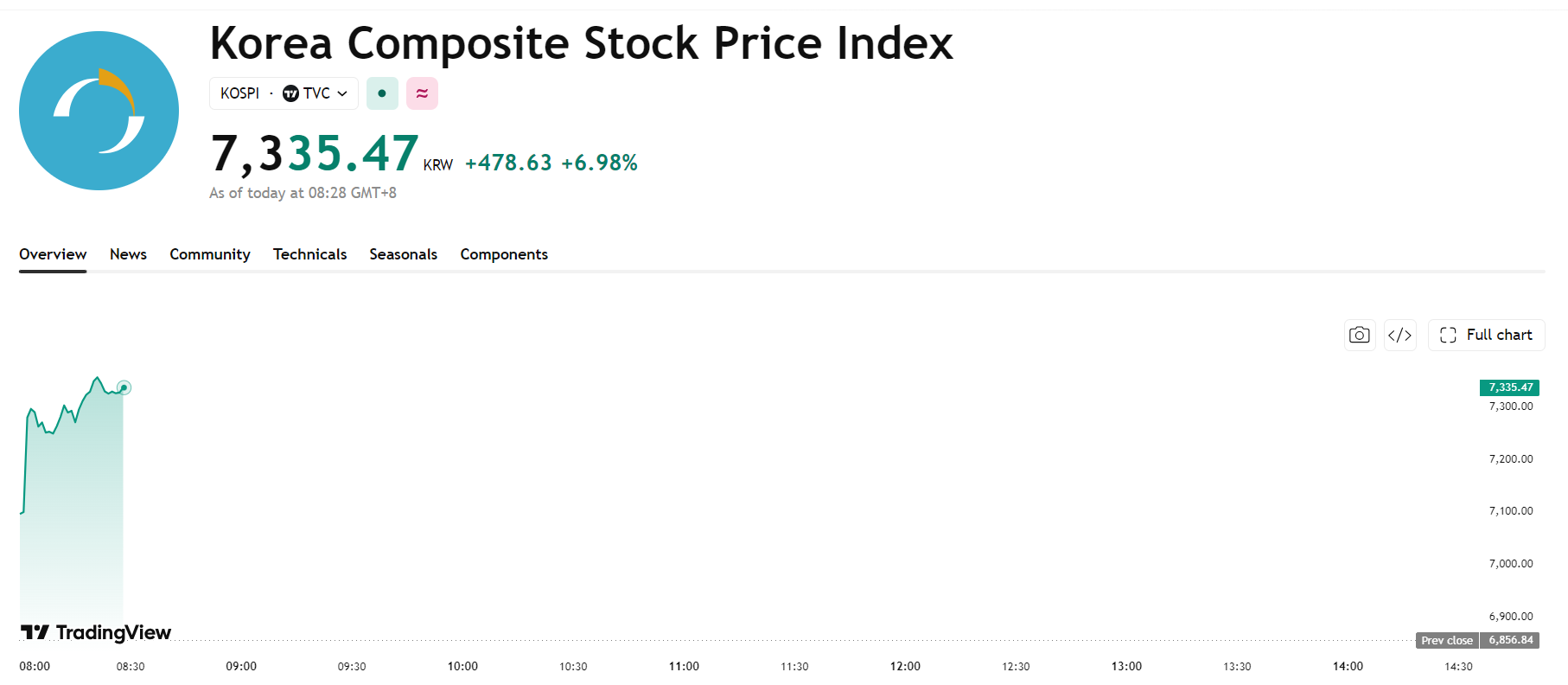 KOSPI Index Chart, Source: TradingView
Compared to the wild swings in South Korean stocks, the Japanese stock market also showed a steady upward recovery trend in early trading today, with the Nikkei 225 Index rising 1.36% to temporarily trade at 68,665.89 points; Kioxia rose 7.15% to temporarily trade at 74,040 JPY; SoftBank rose 0.33% to temporarily trade at 6,596 JPY.
The latest U.S. June CPI data released showed year-on-year growth slowing to 3.5%, lower than market expectations, which significantly eased market fears of an "ultra-hawkish rate hike" by the Federal Reserve. This, in turn, boosted sentiment across Asia-Pacific markets in early trading, while also indicating that the market had been severely oversold technically in the previous period. Long-term institutional funds and capital previously shaken out of the market are accelerating reallocation now that the negative news has run its course.
However, whether this rebound can translate into a medium- to long-term reversal still depends on the two ultimate macro shoes about to drop in quick succession today: ASML ( ASML) second-quarter earnings report and Fed Chairman Warsh's congressional hearing.
This content was translated using AI and reviewed for clarity. It is for informational purposes only.
Recommended Articles








Comments (0)
Click the $ button, enter the symbol, and select to link a stock, ETF, or other ticker.