


Bitcoin Falls Below $73,000. Hit by PCE Inflation Data, BTC Drops Out of Top 10 Global Asset List



AI Podcast


U.S. April PCE data indicating persistent inflation has dashed expectations for Federal Reserve rate cuts and may even prompt hikes. This led to a surge in U.S. Treasury yields and the dollar, draining liquidity from risk assets like Bitcoin. Bitcoin experienced significant outflows, particularly from spot ETFs. Capital fleeing crypto is reportedly flowing into high-performing U.S. AI stocks, such as NVIDIA and Micron. The trend suggests AI stock performance could dictate Bitcoin's liquidity and price direction.

TradingKey - U.S. April PCE data suggests Federal Reserve rate cuts are nowhere in sight; capital flows heavily from Bitcoin into AI stocks, and the downward trend may persist.
On May 29, following the release of the U.S. April Personal Consumption Expenditures (PCE) price index, the price of Bitcoin ( BTC) accelerated its retreat, hitting a low of $72,782 this morning, the lowest since April 13 this year. Currently, the Bitcoin price has recovered slightly, returning above $73,000.
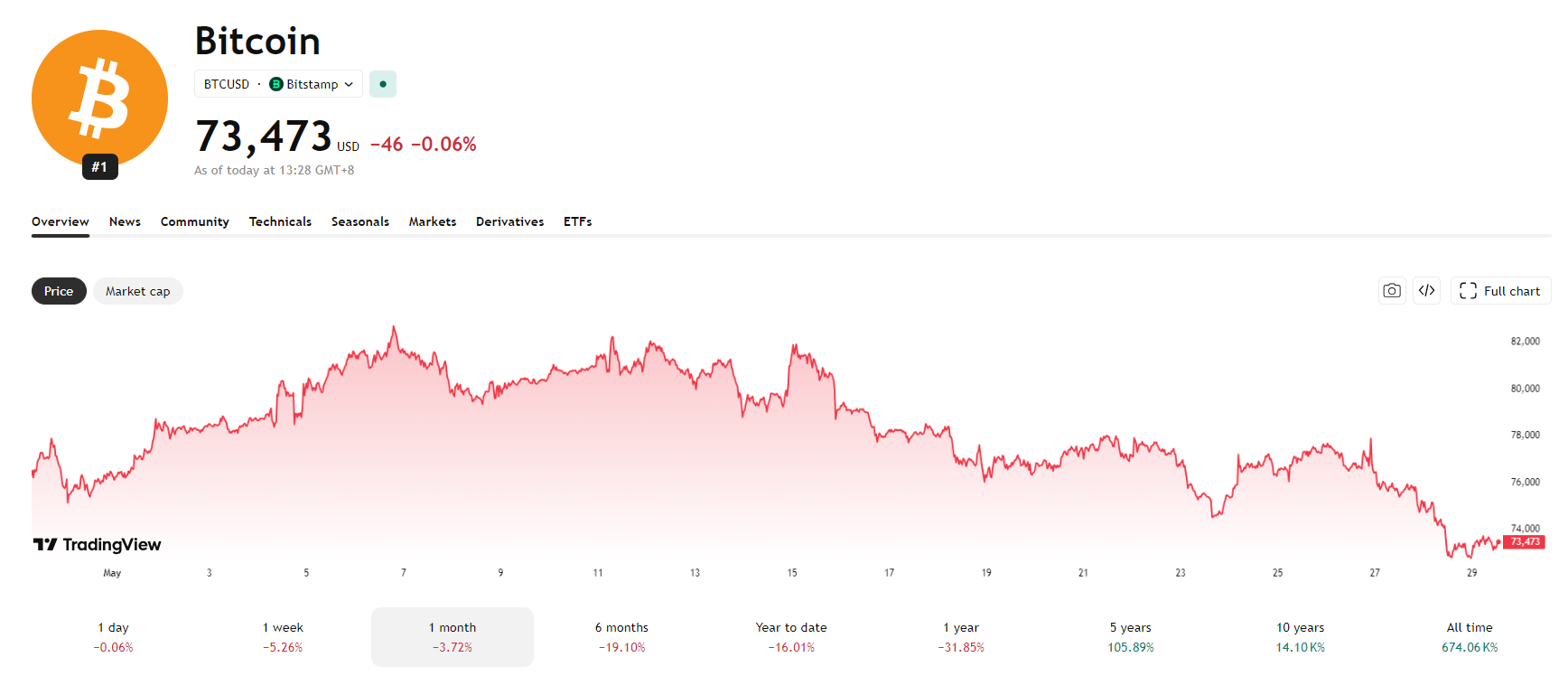 Bitcoin Price Chart (Last 30 Days), Source: TradingView
According to the latest reports, the U.S. April core PCE rose to 3.8%, and the core PCE price index (excluding food and energy) increased 3.3% year-over-year, both reaching nearly three-year highs. This has completely shattered market expectations for rate cuts, with some hawkish officials even suggesting that a resumption of rate hikes cannot be ruled out.
Following the data release, the 10-year U.S. Treasury yield instantly surged above 4.65%, and the U.S. Dollar Index (DXY) broke strongly above 106. Liquidity was drained from "non-interest-bearing" risk assets, with Bitcoin's market capitalization falling to $1.47 trillion, dropping it from the "World's Top Ten Assets" list.
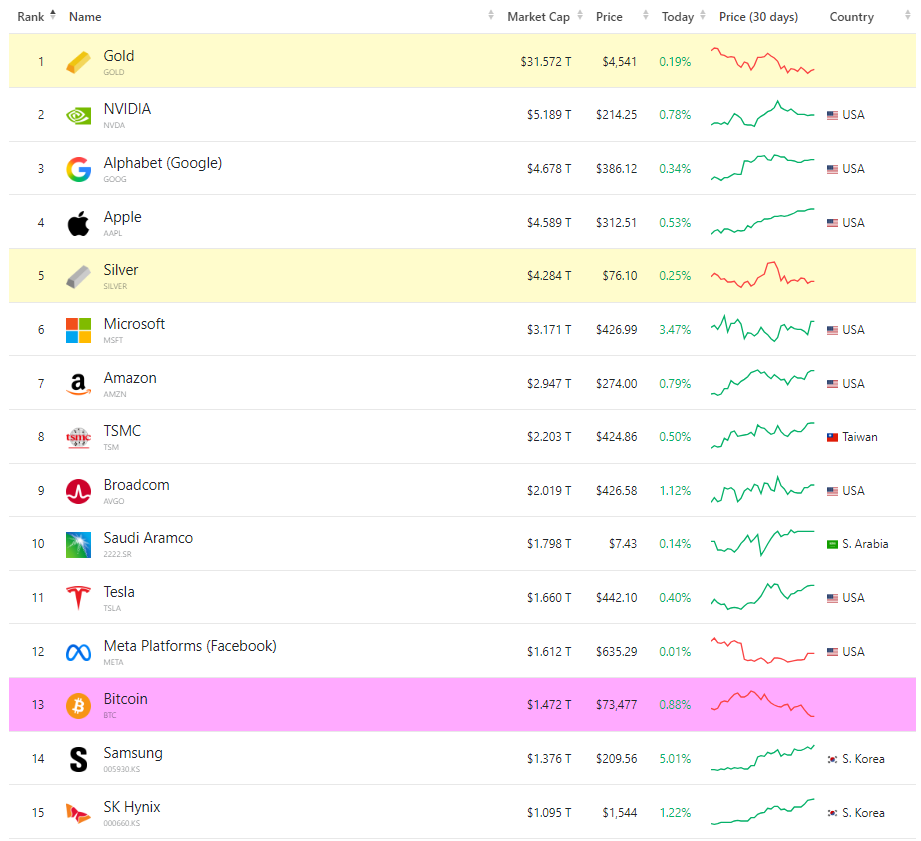
Top 15 Assets by Market Cap, Source: CompaniesMarketCap
If the PCE was the fuse that accelerated Bitcoin's decline, then the collective stampede of institutional funds was the hammer that drove BTC below $73,000. According to CoinGlass data, BlackRock's spot Bitcoin ETF (IBIT) saw a net outflow of $178 million after the data release, while Fidelity's FBTC saw net outflows exceeding $19 million, marking the largest single-day net outflow since their 2024 listings.
Notably, capital fleeing the crypto market did not move into cash for safety, nor did it purchase commodities like gold and silver. According to fund flow monitoring, institutional capital withdrawn from the crypto market quickly flowed into U.S. AI stocks supported by high margins and explosive performance this year, such as Micron ( MU ), NVIDIA ( NVDA ).
From CompaniesMarketCap data, it is evident that AI stocks are attracting massive global capital. Over the past 30 days, gold, silver, and Bitcoin have all declined, while AI-concept stocks such as NVIDIA, Google ( GOOG ), Apple ( AAPL ), Microsoft ( MSFT ), TSMC, Samsung, and SK Hynix have continued to rise. This also means that as long as the share prices of these AI giants do not decline, it will be difficult for Bitcoin to gain liquidity. Conversely, once the AI wave cools down, capital will flow back; therefore, Bitcoin investors must closely monitor the dynamics of AI stocks.
This content was translated using AI and reviewed for clarity. It is for informational purposes only.
Recommended Articles












Comments (1)
Click the $ button, enter the symbol, and select to link a stock, ETF, or other ticker.