


WTI Crude Oil Price Forecast: US-Iran Situation Worsens, Oil Prices Expected to Rise to $80



AI Podcast


As of the Asian session on July 8, WTI crude oil prices rebounded to $72, driven by renewed geopolitical tensions in the Strait of Hormuz. Following attacks on commercial vessels and subsequent U.S. military strikes and sanctions against Iran, the market has pivoted from de-escalation expectations to pricing in a significant supply risk premium. Technically, WTI reclaimed the $70 level with a 5.22% daily gain, breaking above short-term moving averages. With bullish momentum strengthening, oil prices face initial resistance at $75, with further potential to test the $80 mark should supply security concerns intensify.

TradingKey - As of the Asian session on July 8, WTI ( USOIL) crude oil prices rose to around $72, rebounding significantly from previous trading sessions. From a technical perspective, oil prices had previously fallen below $70 due to expectations of US-Iran negotiations, the resumption of navigation through the Strait of Hormuz, and pressure from OPEC+ production increases. However, as the attacks on vessels in the Strait of Hormuz escalated and the US resumed military actions and sanctions against Iran, the market quickly priced back in the Middle East supply risk premium, driving a continuous rebound in WTI.
Hormuz risks flare up again, driving a rapid recovery in the WTI risk premium
From a fundamental perspective, the core driver of today's WTI crude oil rally stems from the re-escalation of tensions between the U.S. and Iran. Previously, the market was trading on a de-escalation logic—expecting progress in U.S.-Iran negotiations, the recovery of Gulf shipping, and the potential return of Iranian crude to Asian markets—which had put under pressure on oil prices. However, the latest developments indicate that this expectation of de-escalation is being shattered.
According to reports, several commercial vessels were attacked near the Strait of Hormuz, including a Qatari LNG carrier and a Saudi oil tanker. Since the Strait of Hormuz is one of the world's most critical transit chokepoints for crude oil and liquefied natural gas, the attacks on these vessels immediately altered the market's assessment of supply security.
The U.S. subsequently took tougher action. The Trump administration launched retaliatory strikes against Iranian targets and revoked waivers that previously allowed Iran to sell a limited amount of crude oil. The impact of this shift on oil prices was highly direct: on one hand, the military action means the ceasefire and negotiation framework between the U.S. and Iran is at risk of collapse; on the other hand, the revocation of Iran's crude export waivers weakened market expectations regarding the return of Iranian supply.
Iran, meanwhile, denied responsibility for the attacks on the vessels and accused the U.S. of violating previous agreements. Iranian officials stated that the renewed U.S. strikes on Iranian targets and the revocation of oil sale waivers disrupted existing understandings, and warned of potential countermeasures. For the market, Iran's response means the risk of further escalation remains. If Iran takes retaliatory action or if the U.S. continues to expand its strikes, shipping risks in the Strait of Hormuz could rise further, leaving room for oil prices to push higher.
WTI Crude Oil Price Analysis: Oil Prices Poised to Rise to $80
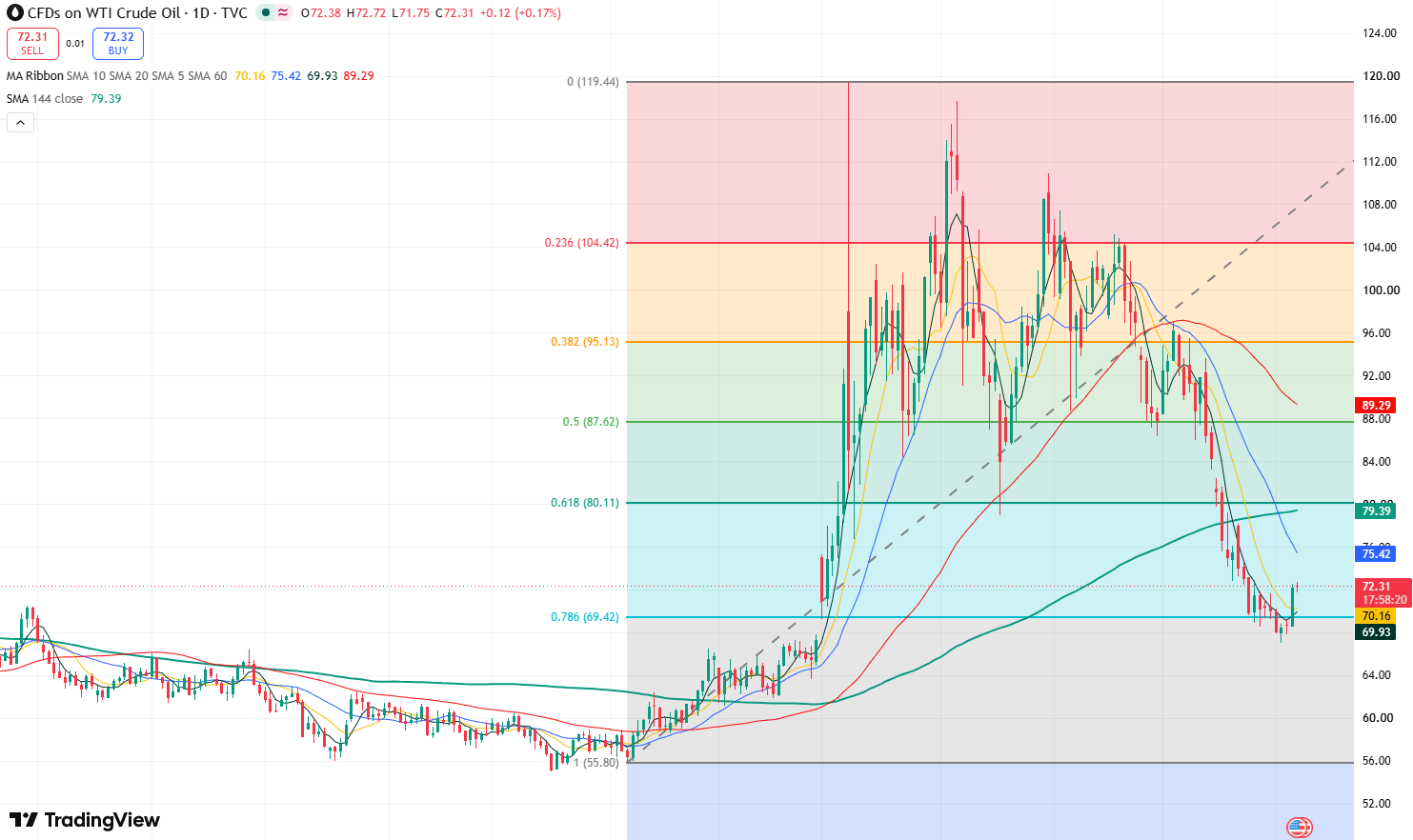
WTI crude oil daily chart, Source: TradingView
Looking at the daily chart of WTI crude oil, influenced by yesterday's escalation of the US-Iran conflict, oil prices surged during the session, closing with a gain of 5.22% and successfully reclaiming the $70 mark. This reversed the recent sluggish state of bulls in the crude oil market and significantly bolstered the market's buying momentum.
From the moving average perspective, oil prices successfully broke through the resistance of both the 5-day and 10-day moving averages yesterday. The market's bullish momentum has been further strengthened, and oil prices are expected to continue their technical corrective rebound in the short term.
Currently, as oil prices reclaim the $70 level, upside potential has opened up. The primary target for the rally will be to test the $75 resistance level. If oil prices can breakout strongly and consolidate above $75, they are expected to test the $80 mark in the short term.
This content was translated using AI and reviewed for clarity. It is for informational purposes only.
Recommended Articles








Comments (0)
Click the $ button, enter the symbol, and select to link a stock, ETF, or other ticker.