


Gold Falls Below $4,200 in Single-Day Drop of Over $100: Why Are Gold Prices Plunging?



AI Podcast


International spot gold fell below $4,200 intraday on September 28, driven by persistent short-term selling pressure. The pullback stems primarily from surging oil prices amid Middle East geopolitical tensions and hawkish signals from Federal Reserve officials regarding inflation risks. Consequently, market expectations for a 25-basis-point rate hike in October rose to 68.1%, lifting U.S. Treasury yields and the U.S. dollar. This environment increases the opportunity cost of holding non-yielding bullion. Moving forward, gold is likely to remain under downward pressure unless incoming U.S. inflation and employment data or Fed commentary shift rate expectations.
TradingKey - As of the Asian session on September 28, international gold prices continued their recent weakness, with spot gold (XAUUSD) falling below $4,200 intraday to a low of $4,179.42, down over $100 on the day. Gold prices had been under continuous pressure last week and fell by over 2% at one point during Monday's Asian session, indicating that short-term selling pressure on gold has not yet significantly eased.
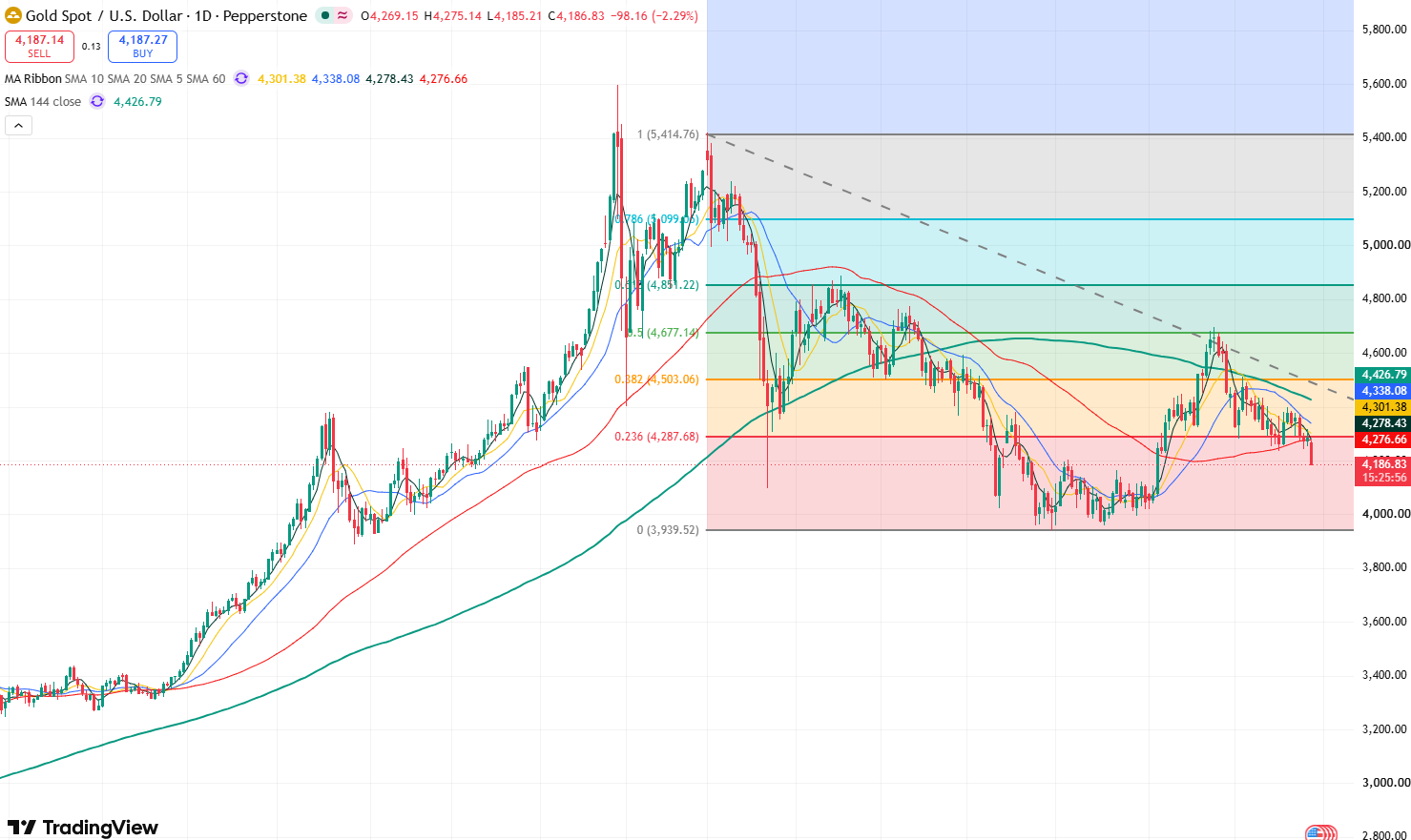
Gold price daily chart, Source: TradingView
The recent drop in gold prices was mainly driven by a rebound in oil prices and rising expectations of further interest rate hikes by the Federal Reserve. On Monday, international oil prices resumed their rise as U.S. President Trump rejected Iran's proposal to reopen the Strait of Hormuz, while Iran also showed no sign of easing its conditions, with Middle East energy supply uncertainty pushing oil prices higher again. Sustained high energy prices have kept market concerns alive that U.S. inflationary pressures will be slow to recede.
Meanwhile, Fed officials continued to send hawkish signals recently. Cleveland Fed President Beth Hammack stated that inflation risks remain elevated, while Fed Governor Michael Barr also noted that further policy adjustments may still be needed in the future to control inflation. Higher rate expectations continued to push U.S. Treasury yields higher, increasing the opportunity cost of holding non-yielding gold.
Driven by both rebounding oil prices and hawkish Fed signals, market bets on the next rate hike have increased further. The latest interest rate market pricing shows that the probability of the Fed raising rates by another 25 basis points in October has risen to 68.1%. Compared with the market's previous focus on whether another rate hike would occur by the end of the year, investors have now significantly raised their expectations for action at the October meeting.
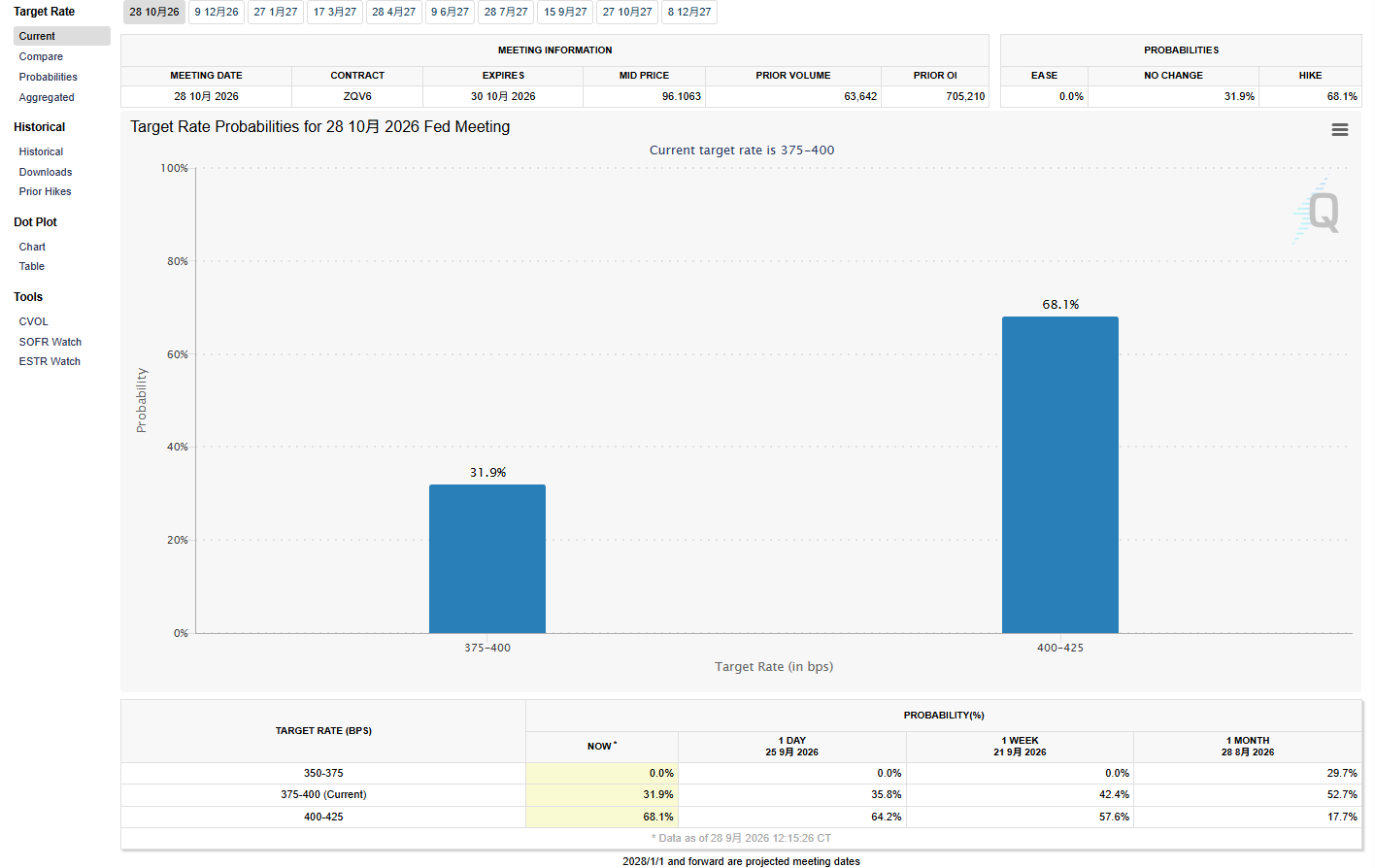
Source: CME FedWatch
Rising rate hike expectations have kept the U.S. dollar and U.S. Treasury yields strong. Since gold itself pays no interest, increases in both real and nominal yields raise the opportunity cost of holding gold. Reuters also previously pointed out that market expectations of "higher for longer" interest rates have been a key factor driving the persistent pullback of gold prices from high levels.
Looking at recent trends, gold has experienced a continuous pullback from around $4,700 at the end of August and has now fallen below $4,200. Moving forward, the market will focus closely on speeches by Fed officials as well as the latest U.S. inflation and employment data. If expectations of an October rate hike continue to heat up and drive the U.S. dollar and U.S. Treasury yields higher, gold may remain under downward pressure in the short term.
This content was translated using AI and reviewed for clarity. It is for informational purposes only.
Recommended Articles









Comments (0)
Click the $ button, enter the symbol, and select to link a stock, ETF, or other ticker.