


SpaceX Stock (SPCX) Opened Down by 4.16% on Oct 30: Facts Behind the Movement


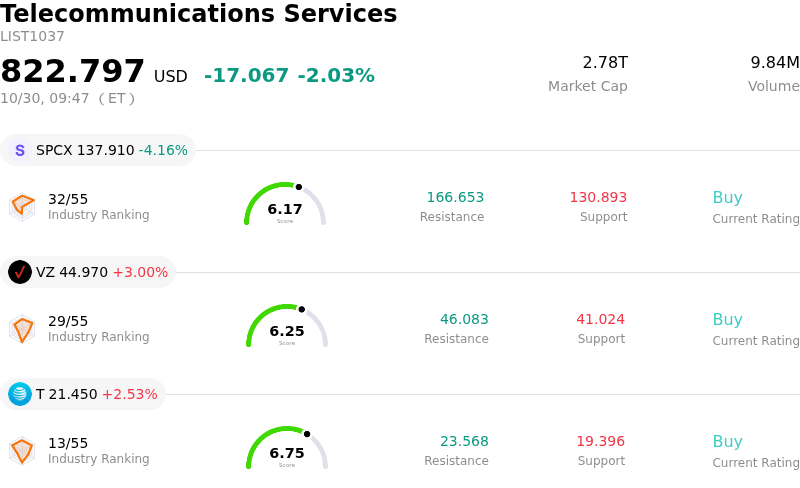
SpaceX (SPCX) opened down by 4.16%. The Telecommunications Services sector is down by 2.03%. The company underperformed the industry. Top 3 stocks by turnover in the sector: SpaceX (SPCX) down 4.16%; Verizon Communications Inc (VZ) up 2.94%; AT&T Inc (T) up 2.63%.
What is driving SpaceX (SPCX)’s stock price down today?
Space Exploration Technologies Corp. experienced downside momentum driven by a combination of operational headlines, ongoing lockup digestion, and broader risk aversion across high-valuation technology and aerospace equities. News reports indicating a launch failure during a recent Falcon 9 mission served as a trigger for sentiment deterioration, renewing focus on execution risks inherent in high-frequency space operations. Additionally, the market continues to absorb a substantial influx of newly tradable equity following a series of insider lockup expirations over recent weeks, which significantly expanded the float and created technical supply overhang.
Compounding the pressure on equity sentiment are persistent regulatory and geopolitical complexities surrounding the company's multi-segment platform. Recent scrutiny over localized restrictions on Starlink satellite services in high-profile geopolitical conflict regions has raised questions regarding defense contracts and governmental relationships. At the same time, news flow surrounding software integration risks and potential regulatory inquiry into artificial intelligence deployments under the expanded product suite has heightened investor caution regarding compliance and reputational vulnerabilities.
From a fundamental and strategic perspective, the stock remains vulnerable to sector-wide volatility and macro risk re-pricing. Despite strong multi-segment top-line growth and long-term commercial momentum in satellite communications and launch services, the company trades at elevated valuation multiples that leave little margin for error when operational or regulatory headwinds arise. High capital expenditure requirements and broader market sensitivity toward high-growth, rich-valuation technology assets continue to encourage tactical profit-taking and short-term positioning adjustments among institutional investors.
Technical Analysis of SpaceX (SPCX)
Technically, SpaceX (SPCX) shows a MACD (12,26,9) value of -3.538, indicating a sell signal. The RSI at 39.268 suggests neutral condition and the Williams %R at 93.400 suggests oversold condition. Please monitor closely.
Fundamental Analysis of SpaceX (SPCX)
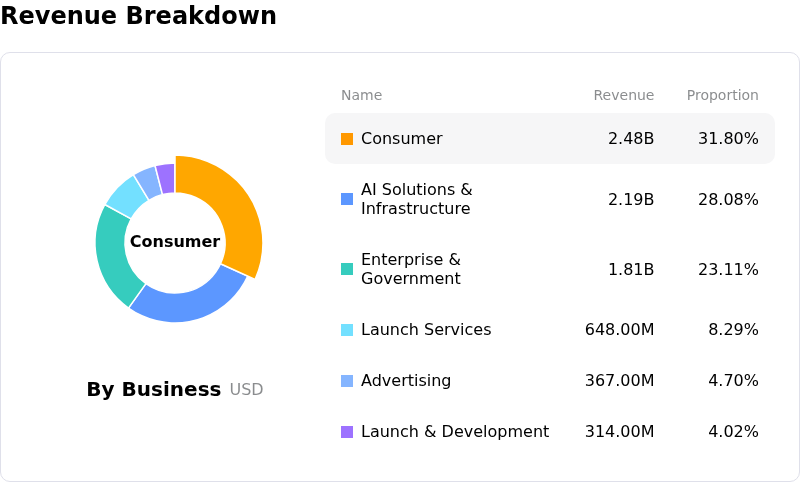
SpaceX (SPCX) is in the Telecommunications Services industry. Its latest annual revenue is $18.67B, ranking 10 in the industry. The net profit is $-4.94B, ranking 61 in the industry. Company Profile
Over the past month, multiple analysts have rated the company as Buy, with an average price target of $252.16, a high of $800.00, and a low of $118.00.
More details about SpaceX (SPCX)
Company Specific Risks:
- Massive Post-IPO Lockup Share Supply Overhang: Market tracking indicates that approximately 3.89 billion shares cleared lockup restrictions across eight events through late October 2026, expanding the total eligible trading float to 4.53 billion shares and creating structural selling pressure from early insiders.
- Extreme Capital Expenditure Deficit and Heavy Lease Liabilities: SEC filings (Form 10-Q and 8-K) reveal that nine-month capital expenditures reached $48.1 billion—outpacing operating cash flow by nearly $35 billion—while a newly committed $40 billion GPU master finance lease agreement with Apollo Global Management adds significant long-term financial liabilities.
- Severe AI Revenue Concentration and Pricing Power Vulnerabilities: Institutional analysis highlights that rapid growth in AI infrastructure revenue relies heavily on top customers like Anthropic, leaving the company vulnerable to margin compression as competing data center capacity comes online and reduces premium compute pricing.
- Multi-Year Operational Timelines and Regulatory Risks for Wireless Expansion: Industry commentary and cellular competitors emphasize that the Starlink Mobile network faces an extended multi-year buildout timeline to compete effectively with terrestrial carriers, alongside potential regulatory and closing risks for its $8 billion 800 MHz spectrum acquisition.
This article may include AI-generated content that is human-reviewed, which is for reference and general information purposes only and does not constitute investment advice.
Recommended Articles





Comments (0)
Click the $ button, enter the symbol, and select to link a stock, ETF, or other ticker.