


Aurora Innovation Inc Stock (AUR) Closed Down by 12.42% on Sep 28: Facts Behind the Movement



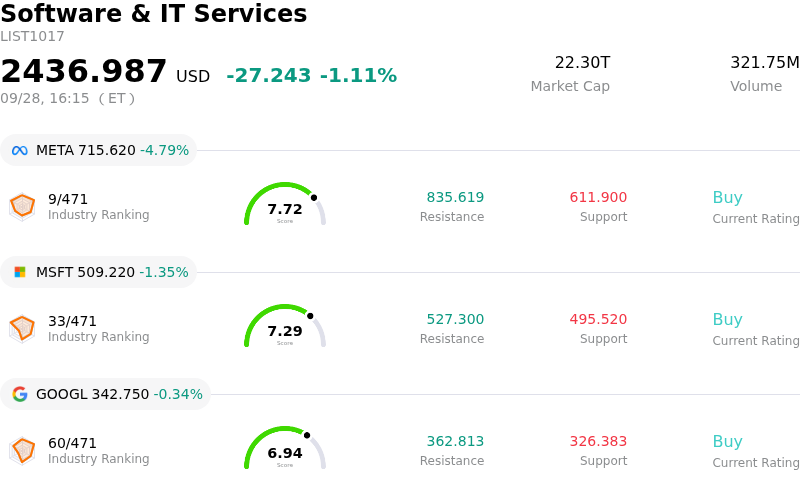
Aurora Innovation Inc (AUR) closed down by 12.42%. The Software & IT Services sector is down by 1.11%. The company underperformed the industry. Top 3 stocks by turnover in the sector: Meta Platforms Inc (META) down 4.79%; Microsoft Corp (MSFT) down 1.35%; Alphabet Inc Class A (GOOGL) down 0.34%.
What is driving Aurora Innovation Inc (AUR)’s stock price down today?
Aurora Innovation experienced sharp downward selling pressure as market participants reacted to the aftermath of its recent Analyst and Investor Day event. Heading into the conference, market expectations had risen sharply following bullish Wall Street research notes and tactical trading recommendations. However, the event triggered a classic sell-the-news reaction as investors recalibrated their expectations around near-term commercialization timelines. Although management presented ambitious long-term targets, including scaling its fleet to tens of thousands of autonomous trucks by 2030, the pushback in gross margin breakeven timing into 2027 raised concerns among investors seeking more immediate financial inflection points.
Beyond the event-driven profit-taking, underlying fundamental commentary from key logistics partners weighed heavily on sentiment. Commercial fleet operators publicly noted that while autonomous technology continues to progress, economic and contract gaps remain before full-scale deployment becomes financially viable across fleets. This cautious tone highlighted the operational friction Aurora faces as it transitions toward a Driver-as-a-Service model. Additionally, the company's financial profile continues to be defined by high research and development spending and deep quarterly operating losses against a modest revenue base, leaving the stock highly sensitive to valuation compressions during periods of heightened market scrutiny.
Technical and structural supply factors further compounded the downside volatility. Ongoing equity stake reductions by key early institutional backers and insider share sales created continuous supply overhead in the open market. Dilution risks stemming from active share issuance programs also kept momentum buyers on the sidelines. Moving forward, institutional investors will closely monitor execution on hardware cost reductions, actual fleet deployment numbers, and concrete progress toward finalizing commercial agreements with major transport carriers to assess whether the company can achieve its medium-term financial targets.
Technical Analysis of Aurora Innovation Inc (AUR)
Technically, Aurora Innovation Inc (AUR) shows a MACD (12,26,9) value of -0.156, indicating a sell signal. The RSI at 31.315 suggests neutral condition and the Williams %R at 99.661 suggests oversold condition. Please monitor closely.
Fundamental Analysis of Aurora Innovation Inc (AUR)
Aurora Innovation Inc (AUR) is in the Software & IT Services industry. Its latest annual revenue is $3.00M, ranking 545 in the industry. The net profit is $-816.00M, ranking 600 in the industry. Company Profile
Over the past month, multiple analysts have rated the company as Buy, with an average price target of $12.60, a high of $18.00, and a low of $7.00.
More details about Aurora Innovation Inc (AUR)
Company Specific Risks:
- Investor Day Commercialization Backlash: Market reaction following Aurora's Analyst and Investor Day SEC Form 8-K disclosure sparked notable downside volatility, as long-term goals of deploying 30,000 driverless trucks by 2030 failed to satisfy investor expectations for immediate monetization beyond its small $2 million quarterly revenue base.
- Severe Cash Burn and Continuous Equity Dilution: Deep quarterly net losses of $270 million and operating cash burn exceeding $225 million per quarter force heavy reliance on At-The-Market (ATM) share sales to sustain operations, heightening risks of ongoing shareholder dilution.
- Persistent Major Shareholder and Insider Selling Pressure: Significant equity stake reductions by early strategic backer Uber, alongside multi-million dollar insider share sales reported in recent filings, have introduced massive supply overhead and persistent technical resistance.
- Autonomous Fleet Safety and Regulatory Vulnerabilities: Ramping up uncrewed driverless commercial truck routes on public highways exposes the business model to acute regulatory scrutiny and operational safety risks, where any single safety breach could derail commercial adoption timelines.
This article may include AI-generated content that is human-reviewed, which is for reference and general information purposes only and does not constitute investment advice.
Recommended Articles






Comments (0)
Click the $ button, enter the symbol, and select to link a stock, ETF, or other ticker.