


General Electric Co Stock (GE) Moved Down by 3.16% on Sep 28: Drivers Behind the Movement



General Electric Co (GE) moved down by 3.16%. The Industrial Goods sector is down by 1.26%. The company underperformed the industry. Top 3 stocks by turnover in the sector: Bloom Energy Corp (BE) down 8.00%; Boeing Co (BA) down 6.31%; General Electric Co (GE) down 3.11%.
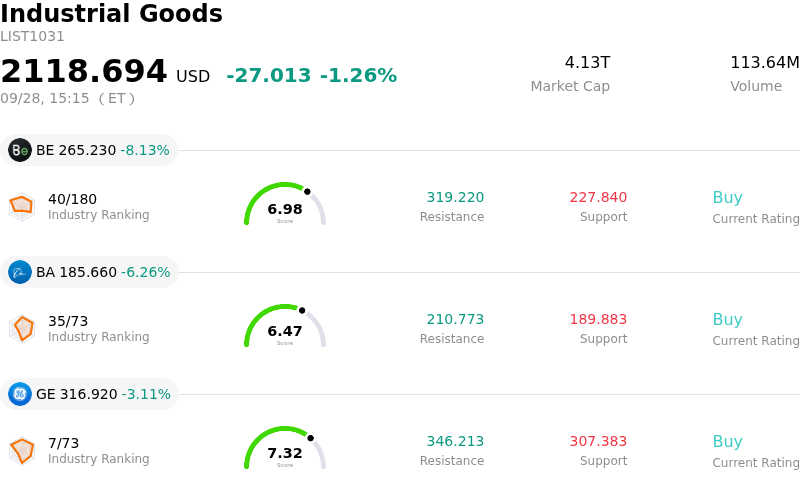
What is driving General Electric Co (GE)’s stock price down today?
GE Aerospace experienced selling pressure and noticeable intraday volatility, driven by a combination of investor profit-taking, valuation debates, and growing focus on key operational margins. As the stock trades near premium valuation multiples following a strong run, market participants are increasingly sensitive to any signs of margin compression or integration risk tied to recent corporate expansions.
A primary catalyst weighing on market sentiment is heightened scrutiny surrounding the commercial engine segment's profit margins. Although overall order volumes and delivery rates remain robust, recent financial disclosures indicated a slight margin contraction in commercial engines relative to prior periods. This development has sparked debate over whether rapid production acceleration and persistent supply chain bottlenecks are temporary headwinds or signs of eroding pricing power. Concurrently, the company's recent announcement to acquire Consolidated Precision Products continues to digest across the market. While the transaction strategically secures critical casting and turbine component manufacturing capacity, the substantial acquisition price and execution risks involved in absorbing a major supplier have led some institutional investors to re-evaluate their exposure.
Wall Street sentiment has also shown signs of divergence. While long-term bulls emphasize the structural support provided by a commercial and defense backlog exceeding two hundred billion dollars, recent cautious analyst revisions have cited potential macro risks. Elevated global energy prices and rising jet fuel costs could temper airline flight hours and affect aftermarket maintenance frequency, impacting high-margin spare parts demand. Furthermore, broader portfolio rebalancing across industrial leadership stocks ahead of the upcoming third-quarter reporting season compounded the session's intraday volatility.
Looking ahead, market participants will focus heavily on management's execution during the upcoming third-quarter earnings release. Investors will be looking for confirmation that aftermarket shop visit growth remains on track, supply chain integration is progressing, and commercial margins can stabilize to sustain the stock's current valuation premium.
Technical Analysis of General Electric Co (GE)
Technically, General Electric Co (GE) shows a MACD (12,26,9) value of 2.641, indicating a neutral signal. The RSI at 39.811 suggests neutral condition and the Williams %R at 59.660 suggests sell condition. Please monitor closely.
Fundamental Analysis of General Electric Co (GE)
General Electric Co (GE) is in the Industrial Goods industry. Its latest annual revenue is $45.85B, ranking 5 in the industry. The net profit is $8.70B, ranking 1 in the industry. Company Profile
Over the past month, multiple analysts have rated the company as Buy, with an average price target of $400.26, a high of $450.00, and a low of $350.00.
More details about General Electric Co (GE)
Company Specific Risks:
- Macro Energy Volatility and Aftermarket Revenue Vulnerability: Spiking crude oil and jet fuel costs are placing financial pressure on commercial airline operators, threatening to trigger earlier aircraft retirements or flight reductions that directly risk GE Aerospace's high-margin engine servicing, repair, and spare parts revenues.
- M&A Integration and Capital Allocation Exposure: The $12 billion acquisition of Consolidated Precision Products (CPP) at an elevated forward valuation multiple introduces notable integration and execution risks, creating margin risk if projected operational synergies and casting supply bottlenecks are not resolved efficiently.
- Stretched Valuation and Wall Street Downgrades: Trading at a forward P/E ratio near 40x—well above the aerospace sector average—the stock faces valuation contraction, underscored by recent analyst price target reductions and rating downgrades citing limited near-term upside.
- Supply Chain Friction and Margin Compression: Rising input costs and ongoing supply chain bottlenecks continue to squeeze operating margins, while operational headwinds and testing delays involving key aircraft engine programs add execution risk ahead of upcoming earnings reporting.
This article may include AI-generated content that is human-reviewed, which is for reference and general information purposes only and does not constitute investment advice.
Recommended Articles







Comments (0)
Click the $ button, enter the symbol, and select to link a stock, ETF, or other ticker.