


General Electric Co Stock (GE) Moved Down by 3.20% on Aug 20: What Signal Does It Send?



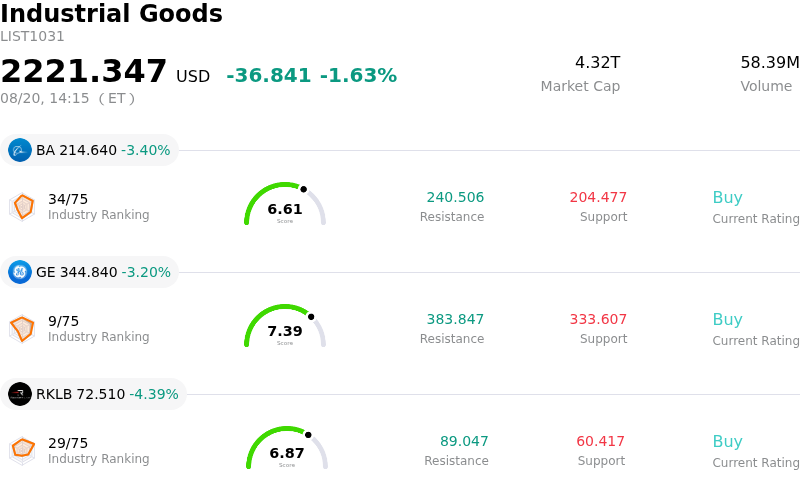
General Electric Co (GE) moved down by 3.20%. The Industrial Goods sector is down by 1.63%. The company underperformed the industry. Top 3 stocks by turnover in the sector: Boeing Co (BA) down 3.40%; General Electric Co (GE) down 3.20%; Rocket Lab USA Inc (RKLB) down 4.39%.
What is driving General Electric Co (GE)’s stock price down today?
GE Aerospace experienced downward pressure as market participants engaged in profit-taking following an extended multi-month rally. After delivering strong quarterly earnings beats and upward guidance revisions earlier in the summer, the stock reached premium valuation multiples relative to historical averages and its broader industrial peers. With ambitious growth projections and long-term margin recovery largely priced into the share price, the equity became increasingly vulnerable to valuation recalibrations, prompting investors to realize gains amidst broader market choppiness.
Compounding the valuation reset are persistent operational and cost pressures within the aerospace manufacturing environment. Although demand across commercial and defense propulsion segments remains exceptionally strong, ongoing supply chain bottlenecks and spare parts delivery delays continue to cap how rapidly order backlogs translate into revenue. Additionally, initial production ramps for next-generation engine platforms, alongside elevated labor and material expenses, continue to weigh on original equipment operating margins. Because management expects margin compression tied to initial engine builds and supply constraints to require extended time to resolve, execution risks have come under heightened scrutiny.
Broader industry dynamics and institutional portfolio positioning added to the day's pullbacks. While Wall Street consensus ratings and long-term order backlogs remain structurally supportive, institutional investors are demanding a higher margin of safety given the stock's elevated price-to-earnings multiple. Until supply chain bottlenecks ease and operating margin expansion normalizes, high-valuation industrial names remain sensitive to profit-taking and macroeconomic shifts. Consequently, the convergence of valuation sensitivity, operational headwinds, and sector-wide profit-taking drove the stock lower during the session.
Technical Analysis of General Electric Co (GE)
Technically, General Electric Co (GE) shows a MACD (12,26,9) value of -4.765, indicating a neutral signal. The RSI at 40.088 suggests neutral condition and the Williams %R at 99.910 suggests oversold condition. Please monitor closely.
Media Coverage of General Electric Co (GE)
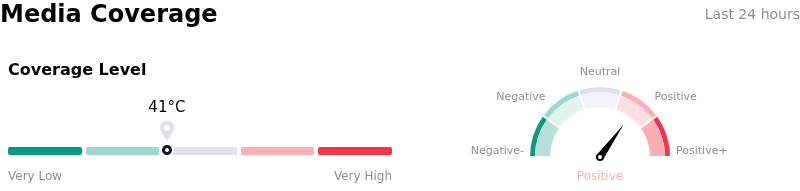
In terms of media coverage, General Electric Co (GE) shows a coverage score of 41, indicating a moderate level of media attention. The overall market sentiment index is currently in bullish zone.
Fundamental Analysis of General Electric Co (GE)
General Electric Co (GE) is in the Industrial Goods industry. Its latest annual revenue is $45.85B, ranking 5 in the industry. The net profit is $8.70B, ranking 1 in the industry. Company Profile
Over the past month, multiple analysts have rated the company as Buy, with an average price target of $399.21, a high of $455.00, and a low of $310.22.
More details about General Electric Co (GE)
Company Specific Risks:
- Supply Chain Delinquencies and MRO Constraints: Persistent supply-side bottlenecks led to a 20% sequential increase in spare parts delinquencies and severe over-subscription across Maintenance, Repair, and Overhaul (MRO) facilities, restricting engine turnaround times and delivery throughput.
- Commercial Engine Margin Compression: Margins in the Commercial Engines & Services division contracted 160 basis points to 27.3%, dragged down by an unfavorable installed engine product mix and ongoing cost pressures associated with GE9X engine development and production ramp-up.
- Elevated Valuation and Profit-Taking Pressures: Trading at approximately 42x trailing earnings and 47x forward earnings guidance, the stock carries a significant valuation premium over intrinsic fair-value estimates, leaving minimal margin of safety and sparking institutional profit-taking.
- Downstream OEM Dependencies and Aftermarket Risk: Strong operational ties to major aircraft manufacturers expose GE to partner-level execution delays on key narrow-body and widebody airframes, while decelerating aftermarket growth poses risks to forward cash flow assumptions.
This article may include AI-generated content that is human-reviewed, which is for reference and general information purposes only and does not constitute investment advice.
Recommended Articles









Comments (0)
Click the $ button, enter the symbol, and select to link a stock, ETF, or other ticker.