


Advanced Micro Devices Inc Stock (AMD) Moved Down by 3.13% on Aug 19: A Full Analysis



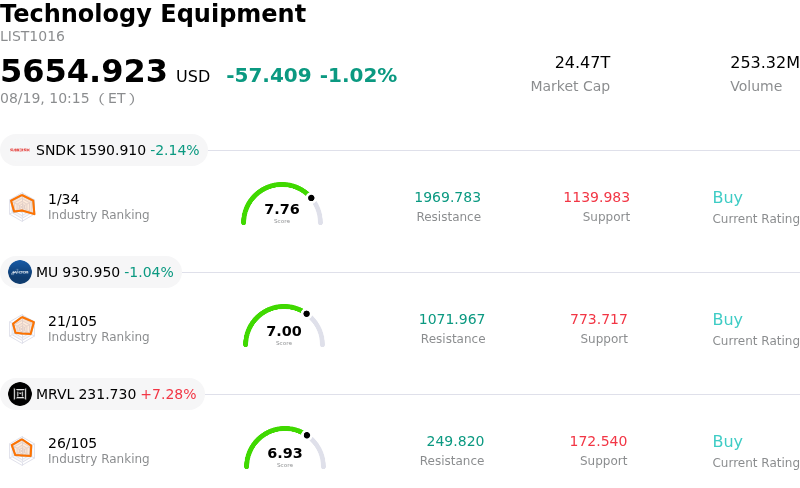
Advanced Micro Devices Inc (AMD) moved down by 3.13%. The Technology Equipment sector is down by 1.02%. The company underperformed the industry. Top 3 stocks by turnover in the sector: SanDisk Corporation (SNDK) down 2.14%; Micron Technology Inc (MU) down 1.04%; Marvell Technology Inc (MRVL) up 7.87%.
What is driving Advanced Micro Devices Inc (AMD)’s stock price down today?
Advanced Micro Devices experienced notable downward pressure during the trading session, largely driven by broad market weakness and sector-wide profit-taking across technology and semiconductor equities. Macroeconomic headwinds, including climbing benchmark bond yields and persistent inflation concerns, created a risk-off environment across major asset classes. Rising geopolitical tensions further elevated energy market uncertainty, encouraging institutional investors to scale back risk exposure in high-growth technology names that had enjoyed substantial gains over prior trading periods.
From a company-specific perspective, the decline reflects short-term valuation digestion rather than fundamental impairment. Although AMD recently delivered robust quarterly financial results backed by strong growth in its data center segment and expanding artificial intelligence product traction, elevated valuation multiples leave the equity sensitive to market pullbacks. Recent capital allocation moves, including a large multi-tranche debt offering to support long-term compute expansion, along with routine executive equity disclosures, contributed to temporary supply indigestion in the secondary market. Technical factors also played a role, as failure to hold key short-term moving averages triggered programmatic selling and accelerated intraday volatility.
From an institutional standpoint, the pullback appears primarily driven by macro-induced portfolio rebalancing and temporary sector rotation. The core thesis for AMD remains intact, supported by solid demand for its EPYC processors and Instinct AI accelerators, alongside strategic capital deployments aimed at expanding inference capabilities. Investors will continue monitoring key technical support levels, macroeconomic policy cues, and enterprise demand trends to gauge near-term price stabilization.
Technical Analysis of Advanced Micro Devices Inc (AMD)
Technically, Advanced Micro Devices Inc (AMD) shows a MACD (12,26,9) value of 3.720, indicating a neutral signal. The RSI at 47.522 suggests neutral condition and the Williams %R at 61.125 suggests sell condition. Please monitor closely.
Media Coverage of Advanced Micro Devices Inc (AMD)
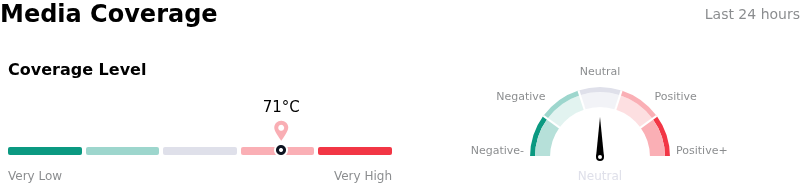
In terms of media coverage, Advanced Micro Devices Inc (AMD) shows a coverage score of 71, indicating a high level of media attention. The overall market sentiment index is currently in neutral zone.
Fundamental Analysis of Advanced Micro Devices Inc (AMD)
Advanced Micro Devices Inc (AMD) is in the Technology Equipment industry. Its latest annual revenue is $34.64B, ranking 9 in the industry. The net profit is $4.33B, ranking 12 in the industry. Company Profile
Over the past month, multiple analysts have rated the company as Buy, with an average price target of $601.51, a high of $1250.00, and a low of $320.00.
More details about Advanced Micro Devices Inc (AMD)
Company Specific Risks:
- Capital Structure and Debt Burden Expansion: The closing of a $4.75 billion senior notes offering across four distinct tranches increases long-term debt liabilities and annual fixed interest expense obligations, exposing the company to leverage risks during market downturns.
- Component Cost Inflation and Gross Margin Pressure: Near-term gross margins face headwinds from elevated component pricing for High Bandwidth Memory (HBM) and GDDR6 chips, alongside high early deployment costs for next-generation AI platforms.
- Supply Chain and Advanced Packaging Bottlenecks: Heavy reliance on Taiwan Semiconductor Manufacturing Company (TSMC) for specialized advanced packaging creates capacity constraints, threatening execution timelines for high-demand server CPUs and AI accelerator deployments.
- Geopolitical Export Controls and International Friction: Tightening U.S. export control policies restrict international sales of high-performance AI processors like the MI350X series, limiting revenue potential in key regions while incentivizing foreign enterprise competitors.
This article may include AI-generated content that is human-reviewed, which is for reference and general information purposes only and does not constitute investment advice.
Recommended Articles








Comments (0)
Click the $ button, enter the symbol, and select to link a stock, ETF, or other ticker.