


Seagate Technology Holdings PLC Stock (STX) Moved Down by 5.32% on Aug 3: What Signal Does It Send?



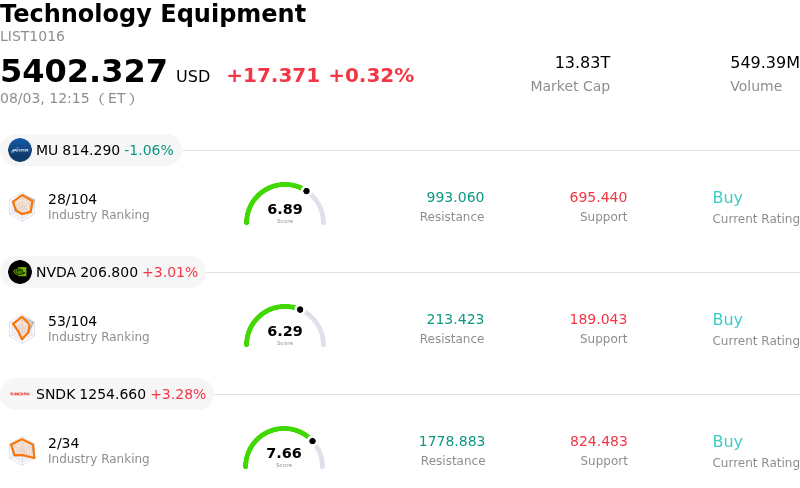
Seagate Technology Holdings PLC (STX) moved down by 5.32%. The Technology Equipment sector is up by 0.32%. The company underperformed the industry. Top 3 stocks by turnover in the sector: Micron Technology Inc (MU) down 1.06%; NVIDIA Corp (NVDA) up 3.01%; SanDisk Corporation (SNDK) up 3.28%.
What is driving Seagate Technology Holdings PLC (STX)’s stock price down today?
The downward movement in Seagate Technology shares is primarily driven by emerging concerns regarding the sustainability of capital expenditure cycles within the cloud infrastructure and data center segments. As the market navigates the mid-2026 investment landscape, institutional investors are increasingly scrutinizing the pace of storage hardware refreshes. There is a growing narrative that major hyperscale customers may be entering a digestion phase after several quarters of aggressive procurement to support artificial intelligence workloads, leading to a temporary slowdown in new orders for mass-capacity hard disk drives.
Recent financial disclosures and updated guidance from the broader storage ecosystem have highlighted a potential contraction in gross margins. While Seagate has successfully transitioned much of its portfolio to higher-capacity heat-assisted magnetic recording technology, the costs associated with scaling this production amid fluctuating component pricing are weighing on short-term profitability outlooks. The market is reacting to fears that the anticipated margin expansion from these advanced products may take longer to materialize than previously modeled by sell-side analysts.
Macroeconomic headwinds are also contributing to the negative sentiment. Softening manufacturing data and persistent high-interest rates have raised alarms about enterprise IT spending for the remainder of the fiscal year. In an environment where capital is expensive, corporate clients are prioritizing software and core compute capabilities over secondary storage expansions, directly impacting the demand for Seagate’s legacy and enterprise-grade solutions. This shift in spending priority has prompted a series of price target revisions from major brokerage firms, triggering a momentum-driven sell-off.
Furthermore, technical factors and institutional portfolio rebalancing are exacerbating the intraday volatility. The stock’s breach of key moving averages has activated automated sell programs, while large-scale funds appear to be reducing their exposure to hardware cyclicals in favor of more defensive technology plays. Without a near-term catalyst to reassure the market of a quick rebound in the HDD shipment cycle, the stock remains under pressure as investors wait for clearer signs of stabilized demand from the global cloud service providers.
Technical Analysis of Seagate Technology Holdings PLC (STX)
Technically, Seagate Technology Holdings PLC (STX) shows a MACD (12,26,9) value of -2.472, indicating a sell signal. The RSI at 50.066 suggests neutral condition and the Williams %R at 33.836 suggests buy condition. Please monitor closely.
Media Coverage of Seagate Technology Holdings PLC (STX)
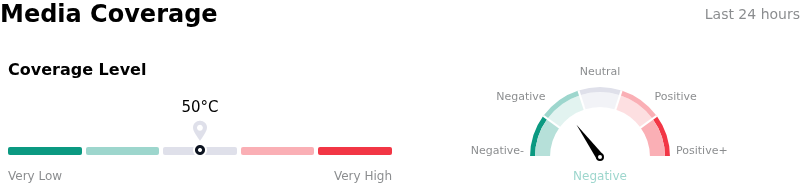
In terms of media coverage, Seagate Technology Holdings PLC (STX) shows a coverage score of 50, indicating a moderate level of media attention. The overall market sentiment index is currently in bearish zone.
Fundamental Analysis of Seagate Technology Holdings PLC (STX)
Seagate Technology Holdings PLC (STX) is in the Technology Equipment industry. Its latest annual revenue is $12.20B, ranking 8 in the industry. The net profit is $3.18B, ranking 3 in the industry. Company Profile
Over the past month, multiple analysts have rated the company as Buy, with an average price target of $1077.96, a high of $1400.00, and a low of $682.12.
More details about Seagate Technology Holdings PLC (STX)
Company Specific Risks:
- Cyclical Enterprise Demand Vulnerability: Recent macroeconomic data signaling a slowdown in U.S. manufacturing and labor markets has heightened concerns that enterprise customers may curtail capital expenditures, potentially derailing the recovery in mass-capacity hard disk drive (HDD) shipments.
- Execution Challenges in HAMR Technology: The high-stakes transition to Heat-Assisted Magnetic Recording (HAMR) for 30TB+ drives carries significant manufacturing yield and reliability risks; any qualification delays by major hyperscalers could allow competitors to capture market share with more stable, incremental technologies.
- Hyperscale Concentration and Capex Sensitivity: Seagate’s revenue recovery is heavily dependent on a limited number of cloud service providers; consequently, any intraday reports suggesting a slowdown in AI-related infrastructure spending by "Big Tech" firms triggers immediate downside volatility.
- Geopolitical and Export Control Pressures: Continued uncertainty regarding U.S. trade policy and potential expansions of export controls on advanced storage solutions to China remains a persistent threat to Seagate’s long-term sales projections and manufacturing supply chain stability.
This article may include AI-generated content that is human-reviewed, which is for reference and general information purposes only and does not constitute investment advice.
Recommended Articles







Comments (0)
Click the $ button, enter the symbol, and select to link a stock, ETF, or other ticker.