


WTI (USOIL) Is up 2.42% on Jul 19: What You Need to Watch



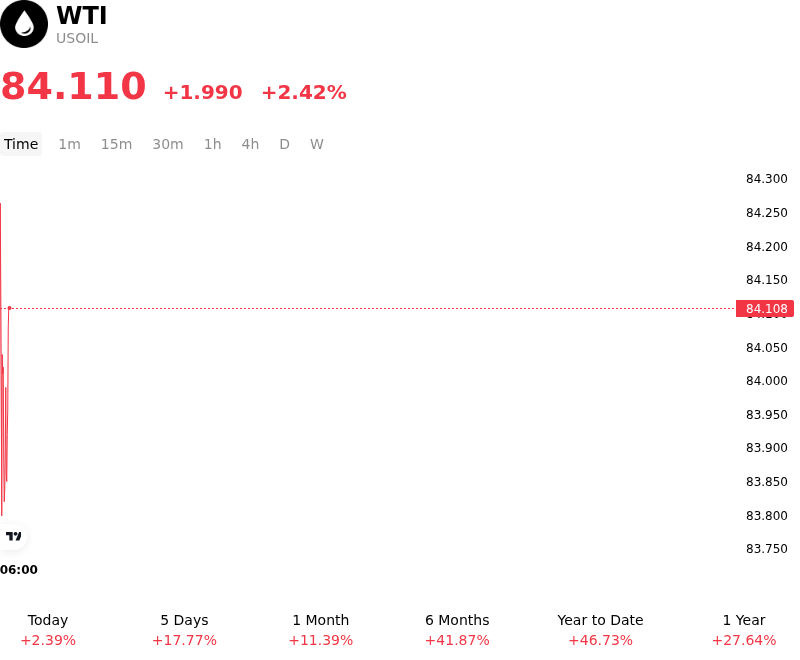
WTI (USOIL) is up 2.42% at Jul 19 18:20(ET), now at $84.11, with a 7-day up of 17.82%.
What is driving WTI (USOIL)’s stock price up today?
The upward momentum in USOIL is primarily driven by an escalation in geopolitical risk premiums across the Middle East, where renewed threats to critical maritime chokepoints have forced institutional investors to price in a higher probability of supply disruptions. These tensions are coinciding with reports of operational outages at major production facilities in North Africa, which have removed several hundred thousand barrels of light sweet crude from the daily global balance. The sudden tightening of physical supply is being felt acutely in the Atlantic Basin, where refiners are struggling to secure prompt-delivery cargoes to sustain high summer run rates.
Demand-side fundamentals remain exceptionally supportive as the Northern Hemisphere reaches the peak of the summer driving and travel season. High-frequency mobility data and jet fuel consumption metrics indicate that global oil demand is tracking at the upper end of seasonal projections. This robust consumption is reflected in the most recent inventory data, which showed a much larger-than-expected drawdown in commercial crude stocks at the Cushing hub. With inventories trending well below their five-year averages for this time of year, the market is exhibiting a strong backwardation structure, signaling that traders are willing to pay a significant premium for immediate delivery.
The macro environment has provided further tailwinds for the energy complex. A softening in the US dollar, driven by cooling labor market data and a shift in Federal Reserve policy expectations toward a more dovish stance, has increased the purchasing power of international buyers. As the greenback retreats, dollar-denominated assets like crude oil become more attractive to global participants, inviting significant capital inflows from commodity-indexed funds. The convergence of a weakening dollar and tightening physical balances has triggered a round of short-covering from trend-following algorithms, adding technical momentum to the price advance.
While the current move is characterized by immediate supply constraints and peak seasonal demand, investors are closely monitoring the sustainability of this trend relative to OPEC+ production policy. There is growing speculation that the alliance will extend its current voluntary production cuts into the fourth quarter to defend price levels and offset any potential slowdown in industrial manufacturing activity. For now, the combination of geopolitical uncertainty, rapid inventory depletion, and favorable currency moves suggests that the market is prioritizing immediate supply-demand deficits over long-term macroeconomic concerns.
Technical Analysis of WTI (USOIL)
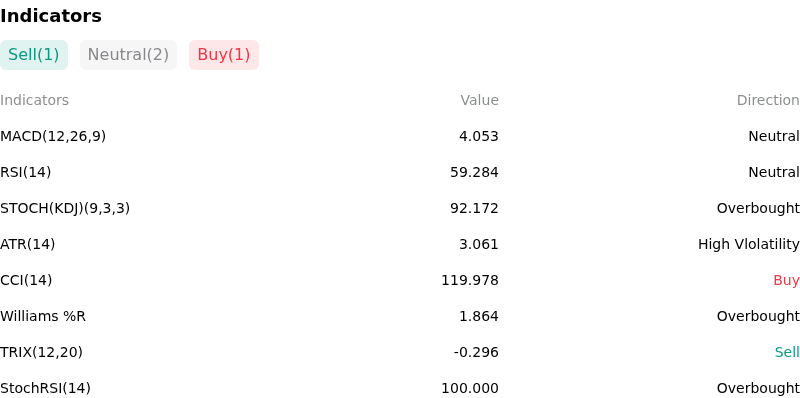
Technically, WTI (USOIL) shows a MACD (12,26,9) value of 4.053, indicating a neutral signal. The RSI at 59.284 suggests neutral condition and the Williams %R at 1.864 suggests overbought condition. Please monitor closely.
More details about WTI (USOIL)
Recent Events and Risks:
- Surprise Inventory Build: Recent industry reports indicated an unexpected increase in U.S. commercial crude inventories by approximately 3.6 million barrels, contradicting analyst expectations of a seasonal drawdown and suggesting a potential softening in domestic refinery demand.
- Chinese Economic Growth Concerns: Sluggish GDP data and cooling refinery throughput figures from China have intensified fears of demand deterioration in the world’s largest oil importer, signaling that industrial activity may not be sufficient to sustain current global consumption forecasts.
- Geopolitical Risk Premium Erosion: Heightened diplomatic activity and reports of progress in Middle East ceasefire negotiations have led to a rapid unwinding of the "war premium," triggering intraday price drops as market participants reduce long positions tied to supply disruption risks.
- Macroeconomic Pressure and USD Strength: Renewed strength in the U.S. Dollar, combined with hawkish sentiment regarding the duration of high interest rates, is increasing the cost of oil for international holders and exacerbating fears of a broader slowdown in global manufacturing activity.
This article may include AI-generated content that is human-reviewed, which is for reference and general information purposes only and does not constitute investment advice.
Recommended Articles






Comments (0)
Click the $ button, enter the symbol, and select to link a stock, ETF, or other ticker.