


WTI (USOIL) Is up 2.40% on Jul 17: Here Is Why



WTI (USOIL) is up 2.40% at Jul 17 09:05(ET), now at $81.178, with a 7-day up of 13.71%.
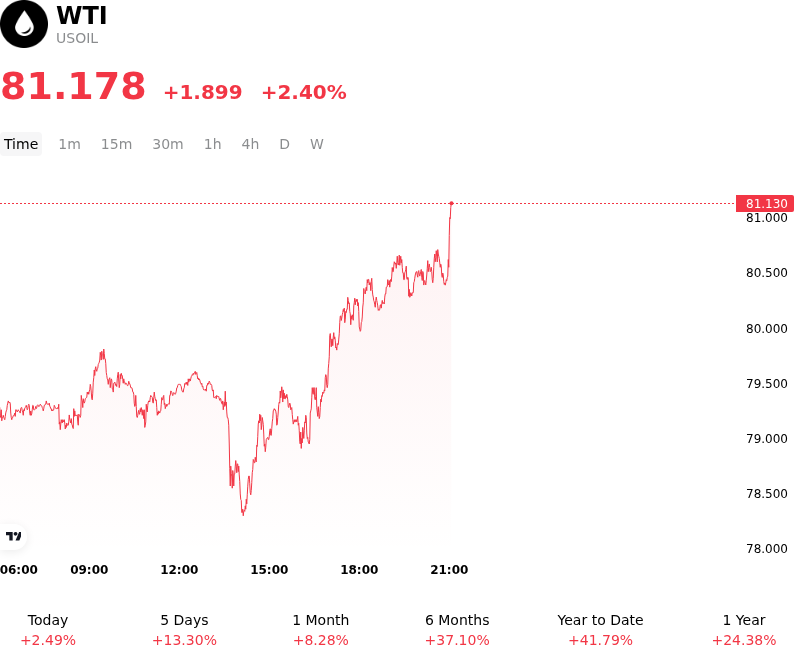
What is driving WTI (USOIL)’s stock price up today?
The upward trajectory in USOIL is primarily driven by a sharp escalation in geopolitical risk premiums coupled with signs of a tightening physical market. Market participants are reacting to reports of heightened naval tensions in the Strait of Hormuz, which has reignited concerns over potential disruptions to crude flows through the world's most critical transit chokepoint. This sudden increase in the risk premium has forced short-sellers to cover positions, providing strong upward momentum throughout the trading session.
On the fundamental side, the rally is being reinforced by recent data indicating that global crude inventories are drawing faster than seasonal norms. High refinery utilization rates across the United States, consistent with the peak of the summer driving season, have led to significant declines in commercial crude stockpiles. This suggests that despite lingering concerns over global economic growth, real-time demand for transport fuels remains robust, particularly in the North American and European markets.
Additionally, supply-side constraints are becoming more pronounced as OPEC+ maintains its commitment to production discipline. Reports suggesting that several member nations have successfully aligned their output with agreed quotas have reduced the supply overhang expectations that previously weighed on the market. The resulting shift in the market balance has moved the outlook into a clearer deficit for the current quarter, incentivizing institutional capital to move back into long positions.
The broader macroeconomic environment has also provided a favorable backdrop for energy prices. A noticeable softening in the US Dollar index, triggered by cooling inflation expectations and a subsequent repricing of Federal Reserve policy, has made dollar-denominated commodities more attractive to international buyers. As real yields stabilize, capital flows are rotating back into the energy complex as a hedge against potential supply shocks and currency volatility.
Furthermore, weather-related risks in the Atlantic Basin are beginning to influence pricing. The formation of a significant tropical disturbance heading toward the Gulf of Mexico has prompted early precautionary measures by offshore producers, leading to temporary platform evacuations. While actual production loss remains limited at this stage, the potential for a prolonged disruption to both extraction and refining capacity along the Gulf Coast is contributing to the current volatility and supporting the premium in front-month contracts.
Technical Analysis of WTI (USOIL)
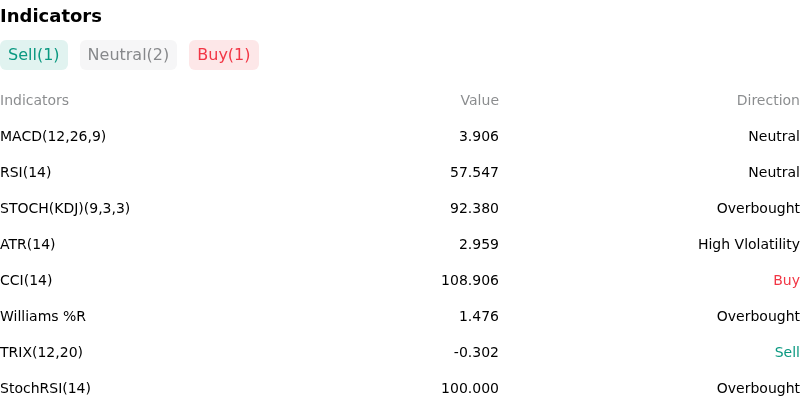
Technically, WTI (USOIL) shows a MACD (12,26,9) value of 3.906, indicating a neutral signal. The RSI at 57.547 suggests neutral condition and the Williams %R at 1.476 suggests overbought condition. Please monitor closely.
More details about WTI (USOIL)
Recent Events and Risks:
- Supply Restoration: Equinor has successfully restored production at the Johan Sverdrup oilfield in the North Sea following a temporary power-related shutdown; the return of Western Europe’s largest field removes a significant supply-side constraint and eliminates the upward price pressure seen earlier this week.
- Surprise Inventory Build: Latest industry data from the American Petroleum Institute (API) indicated a crude oil stock build of approximately 4.75 million barrels for the week ending November 15, far exceeding market expectations of a modest draw and signaling potentially weaker domestic refinery demand in the United States.
- Geopolitical Risk Premium Erosion: Renewed diplomatic efforts and signals regarding a potential ceasefire between Israel and Hezbollah have reduced the immediate fear of a broader regional escalation, prompting traders to unwind long positions as the perceived threat to Middle Eastern production infrastructure stabilizes.
- Persistent China Demand Concerns: Market participants remain focused on the lack of tangible improvement in Chinese fuel consumption data, as refining margins remain depressed and previous economic stimulus measures have yet to demonstrate a clear reversal in the downward trend of crude imports by the world’s largest importer.
This article may include AI-generated content that is human-reviewed, which is for reference and general information purposes only and does not constitute investment advice.
Recommended Articles









Comments (0)
Click the $ button, enter the symbol, and select to link a stock, ETF, or other ticker.