


South Korean Stocks Closed to Avoid Storm, Japanese Stocks Plunge at Open, Nikkei 225 Tumbles 3%, Kioxia Slumps Over 15%



AI Podcast


Japanese equities extended their recent selloff on July 17, with the Nikkei 225 dropping 3.45% to a one-month low. Market sentiment was pressured by the poor performance of US semiconductor and AI stocks, impacting Japan’s tech supply chain. Kioxia and SoftBank posted sharp declines, while a stronger yen dampened profit expectations for major exporters like Toyota and Honda. Heightened Middle East tensions further constrained global liquidity, exacerbating the downward trend. Investors remain cautious as high-valuation sectors face ongoing volatility and downward price discovery across the broader market.

TradingKey - Japanese equities extended losses at the open, with the Nikkei 225 tumbling over 3%, Kioxia plunging over 15%, and SoftBank dropping more than 7%.
During the Asian session on July 17, South Korea's market was closed for Constitution Day, while Japanese stocks extended the previous day's panic-driven selloff, opening lower and continuing to slide. The Nikkei 225 Index fell 3.45%, briefly losing the 65,000 level to trade temporarily at 64,527.49 points, hitting a new low in over a month.
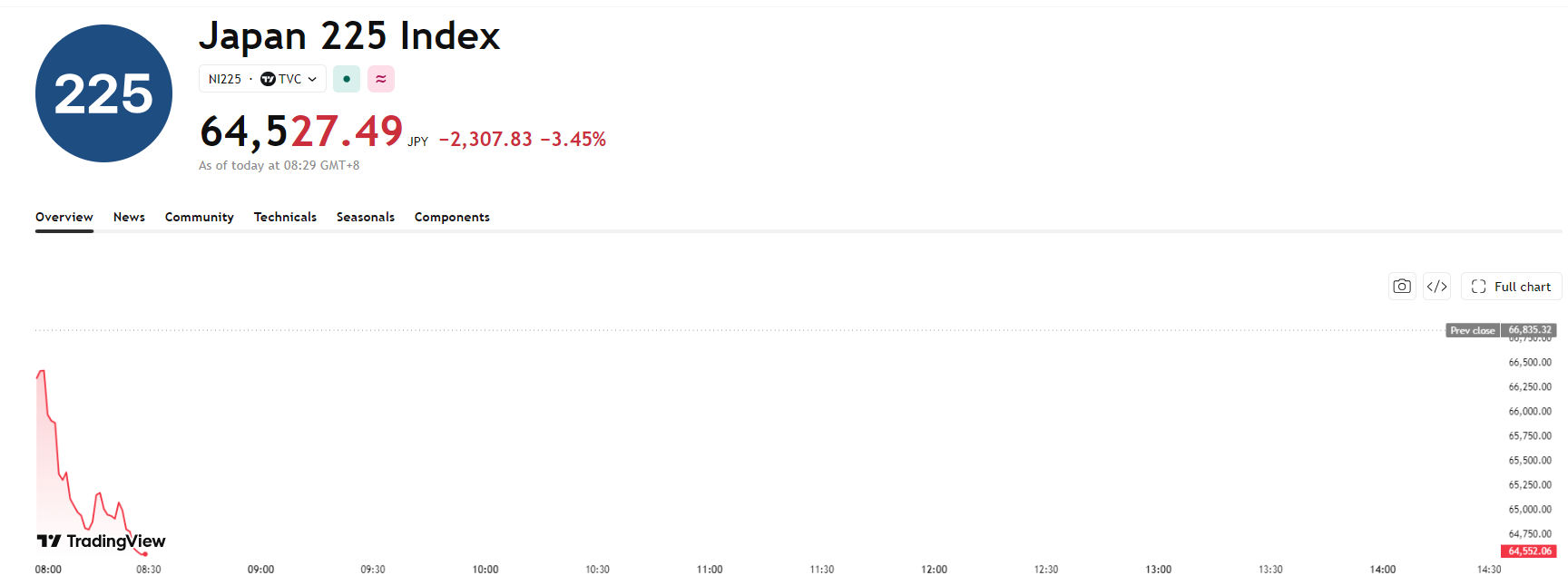
Nikkei 225 Index chart, Source: TradingView
Kioxia opened significantly lower, falling 15.33% and losing the 55,000 mark to trade temporarily at 52,590 yen, hitting a near two-month low. SoftBank fell for the third consecutive day, completely erasing its recent gains, opening down 7.11% today and approaching the 5,500 mark to trade temporarily at 5,537 yen.
Overnight, US semiconductor and AI stocks failed to mount an effective rebound, with the Philadelphia Semiconductor Index falling over 4%, and Micron Technology ( MU) falling over 5%, and Nvidia ( NVDA) falling over 2%, spreading caution among investors regarding high-valuation tech sectors. As a major hub for semiconductor equipment in the Asia-Pacific region, Japan's related supply chain faced pressure at the open.
In addition, the yen's rebound against the US dollar directly weighed on the profit expectations of major Japanese exporters reliant on overseas revenues, such as Toyota and Honda, dragging the broader market further down. Ongoing tensions in the Middle East have tightened global liquidity, significantly reducing stock market liquidity.
This content was translated using AI and reviewed for clarity. It is for informational purposes only.
Recommended Articles












Comments (0)
Click the $ button, enter the symbol, and select to link a stock, ETF, or other ticker.