


Brent (UKOIL) Drops on Jul 9: Key Factors to Watch



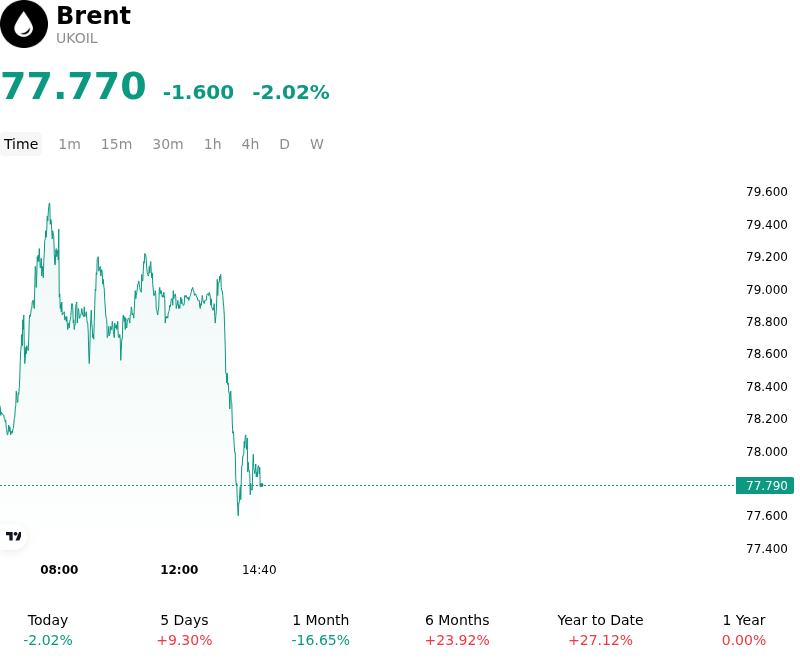
Brent (UKOIL) is down 2.02% at Jul 9 02:45(ET), now at $77.77, with a 7-day up of 8.62%.
What is driving Brent (UKOIL)’s stock price down today?
The downward movement in UKOIL on July 9, 2026, primarily reflects a standard technical consolidation and profit-taking by market participants following an exceptionally volatile, news-driven surge earlier in the week. In the preceding sessions, global crude benchmarks spiked sharply in response to escalating geopolitical hostilities between the United States and Iran. The United States launched military strikes on Iranian targets for two consecutive days and revoked a temporary sanctions waiver on Iranian oil sales, raising immediate fears of a total breakdown in diplomatic relations and major shipping disruptions through the critical Strait of Hormuz waterway.
This geopolitical escalation initially injected a substantial risk premium back into the energy complex, pushing Brent crude briefly above the $80-per-barrel threshold. However, the subsequent intraday decline indicates that the market quickly digested the immediate shock of the military strikes. Traders began locking in gains as the initial panic subsided, particularly as rhetoric from the White House suggested that the U.S. expected the latest military flare-up to resolve quickly, leaving the door open to future diplomatic talks and avoiding a full-scale regional war.
Beyond short-term profit-taking, the pull-back was reinforced by broader structural factors and macroeconomic headwinds. While the heightened risk of shipping bottlenecks in the Middle East has kept prices volatile, the underlying global supply-demand balance remains comfortably supplied. Upward revisions in non-OPEC global production capacity and expectations of softer demand growth continue to cap sustained upward momentum for energy prices. Additionally, the sharp rise in oil prices earlier in the week immediately reignited concerns over persistent global inflation. This prompted financial markets to pull forward expectations for central bank interest rate hikes, which in turn strengthened the U.S. dollar and created a natural headwind for dollar-denominated commodities.
Ultimately, the intraday retreat in Brent crude represents a transition from high-conviction geopolitical repricing to a state of technical consolidation. Investors remain highly sensitive to further headlines out of the Persian Gulf, but the lack of immediate, physical disruptions to seaborne oil flows has allowed the market to temper its initial war-risk premium.
Technical Analysis of Brent (UKOIL)
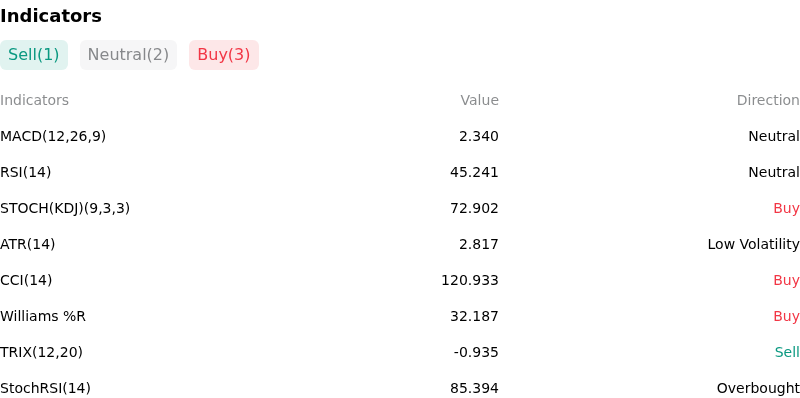
Technically, Brent (UKOIL) shows a MACD (12,26,9) value of 2.340, indicating a neutral signal. The RSI at 45.241 suggests neutral condition and the Williams %R at 32.187 suggests buy condition. Please monitor closely.
More details about Brent (UKOIL)
Recent Events and Risks:
- OPEC+ Output Target Increases: The OPEC+ alliance formalized a decision to raise their collective production targets by an additional 188,000 barrels per day effective August 2026. This represents the fifth consecutive month of expanding quotas, signaling a major push by core producers to reclaim market share and threatening to create structural oversupply as the market enters the second half of the year.
- Slowing Global Demand and Rising Stockpiles: In its latest forecasts, the EIA lowered its global oil consumption outlook, projecting a demand contraction of 1.1 million barrels per day for 2026. This demand destruction—particularly in Asia, where China has sharply pulled back on Gulf crude purchases—has led major financial institutions like Citi to forecast a potential slide in Brent crude toward $60–$65 per barrel.
- First Weekly U.S. Crude Inventory Build Since April: The EIA’s latest weekly petroleum report showed a surprise build of 3.0 million barrels in U.S. commercial crude inventories, reversing ten consecutive weeks of draws and defying analyst expectations of a 1.1 to 1.6 million-barrel decline. This build was driven by a rise in raw imports alongside a decline in domestic refinery capacity utilization.
- Bearish Futures Curve Shift: The front end of the Brent forward curve has slipped into a mild contango structure. September futures trading above the spot price signals that prompt-month physical crude supplies are temporarily outstripping immediate refining demand, which historically exerts downward pressure on spot prices.
This article may include AI-generated content that is human-reviewed, which is for reference and general information purposes only and does not constitute investment advice.
Recommended Articles








Comments (0)
Click the $ button, enter the symbol, and select to link a stock, ETF, or other ticker.