


NZD/USD (NZDUSD) Surges on Jul 9: Was It the Dollar, Rates, or Data?



NZD/USD (NZDUSD) is up 0.52% at Jul 9 01:15(ET), now at $0.57265, with a 7-day up of 0.58%.
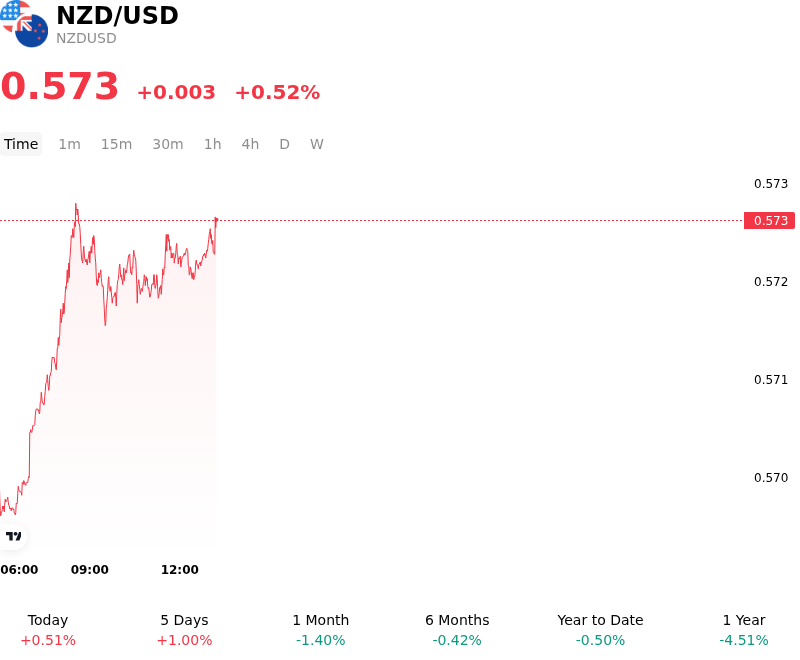
What is driving NZD/USD (NZDUSD)’s stock price up today?
The New Zealand Dollar advanced against the US Dollar, driven primarily by a shift in relative monetary policy expectations following a hawkish policy pivot by the Reserve Bank of New Zealand (RBNZ) and cooling sentiment around the Federal Reserve's rate path.
The primary catalyst for the New Zealand Dollar's strength was the RBNZ’s monetary policy decision. The central bank unexpectedly raised its Official Cash Rate by 25 basis points to 2.50%, representing its first interest rate hike in three years. Unlike the previous meeting, which saw a deeply divided committee, this decision was reached by consensus, signaling a unified commitment to curb persistent domestic price pressures. In its accompanying statement, the RBNZ emphasized that because inflation remains above the target midpoint and economic activity is expected to strengthen, further reductions in monetary stimulus are likely to be required.
This hawkish forward guidance prompted market participants to reprice the path of New Zealand’s monetary policy. Investors pushed up local short-term bond yields as expectations grew that the central bank will deliver subsequent rate hikes before the end of the year, possibly lifting the benchmark rate toward 3.00%. The widening of interest rate differentials in favor of the New Zealand Dollar bolstered the currency's yield appeal, attracting foreign capital flows.
The US Dollar, on the other hand, faced downward pressure following the release of the Federal Reserve's latest meeting minutes. The minutes revealed that Fed policymakers remain deeply divided over the trajectory of inflation and future interest rates. While some participants suggested rates could conclude the year lower, others argued for further tightening. This internal division, combined with recent softer US macroeconomic data, tempered near-term expectations for aggressive Federal Reserve policy, leading to a broader softening of the greenback.
Even as neighboring economic indicators pointed to slowing regional momentum—exemplified by softer-than-expected inflation data from China—the New Zealand Dollar held its ground and extended its gains. The combination of a hawkish domestic interest rate shock and a split Federal Reserve outlook has established a supportive macroeconomic backdrop for the currency pair, suggesting the move is backed by structural shifts in policy expectations rather than temporary risk sentiment alone.
Technical Analysis of NZD/USD (NZDUSD)
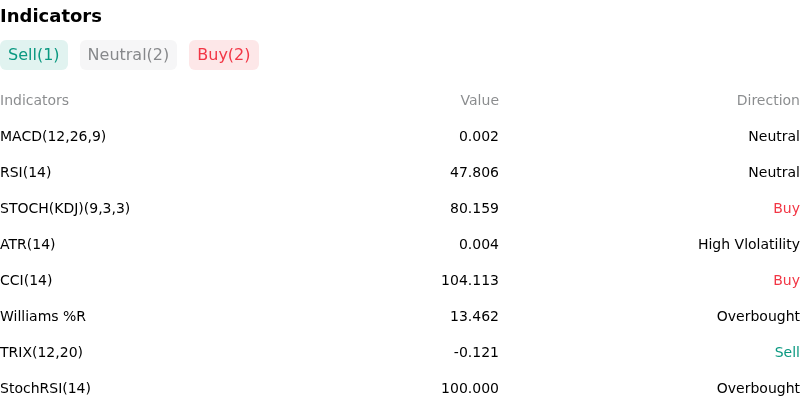
Technically, NZD/USD (NZDUSD) shows a MACD (12,26,9) value of 0.002, indicating a neutral signal. The RSI at 47.806 suggests neutral condition and the Williams %R at 13.462 suggests overbought condition. Please monitor closely.
More details about NZD/USD (NZDUSD)
Recent Events and Risks:
- Dovish Undercurrents in RBNZ Policy Decision: Although the RBNZ raised the Official Cash Rate by 25 basis points to 2.50%, the policy committee expressed mixed views. Four out of six committee members (including Governor Anna Breman) assessed that the balance of medium-term inflation risks is "broadly balanced". This creates downside risk for the Kiwi dollar if subsequent economic prints trigger a sharp dovish repricing toward a "one-off" insurance hike scenario.
- Cooling Inflation Projections and Oil Slump: The RBNZ revised its inflation forecast downward, projecting that headline inflation peaked at 3.9% in the June quarter and will fall to 3.3% in September. This decline is heavily driven by a global slide in oil and petrochemical prices following the partial reopening of the Strait of Hormuz. Because lower oil prices relieve headline inflation pressures, the fundamental justification for sustained aggressive rate hikes is rapidly diminishing.
- Sluggish Domestic Growth and Wobbly Recovery: RBNZ policymakers acknowledged that New Zealand’s economic recovery lost momentum during the second quarter as recent energy shocks weighed on growth. If upcoming domestic activity data reveals prolonged economic weakness, companies will struggle to pass on costs to consumers. This structural demand deficit poses a direct downside risk to the kiwi by limiting the central bank’s ability to implement further rate hikes.
- Spillover from Softer Chinese Inflation: China's June CPI rose just 1.0% year-over-year, missing market expectations of 1.1% and signaling persistent domestic demand weakness in New Zealand's key trading partner. Continued deflationary pressures and cooling growth dynamics in China limit the export outlook for New Zealand’s commodity sector, capping potential gains for the high-beta NZD.
This article may include AI-generated content that is human-reviewed, which is for reference and general information purposes only and does not constitute investment advice.
Recommended Articles








Comments (0)
Click the $ button, enter the symbol, and select to link a stock, ETF, or other ticker.