


WTI (USOIL) Volatility Intensified on Jun 16: What to Watch



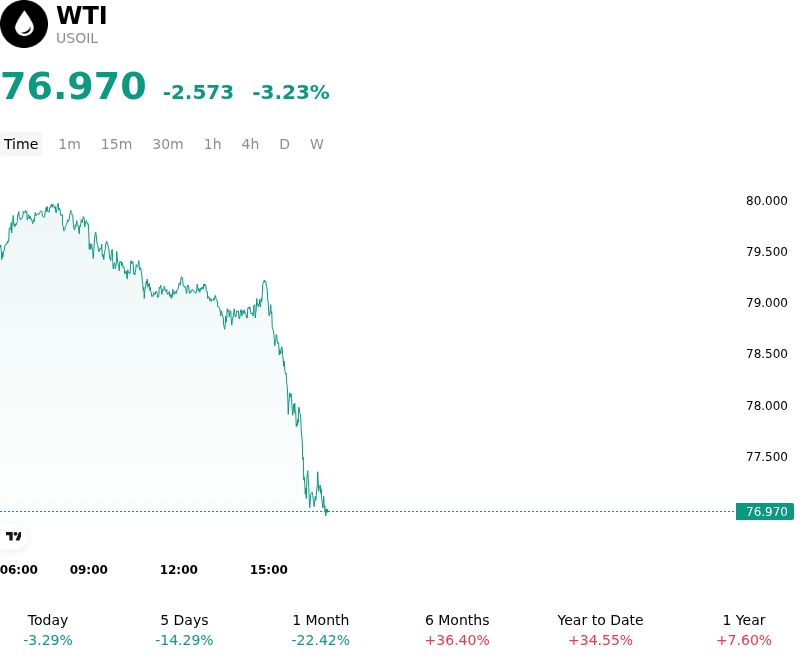
WTI (USOIL) is down 3.23% at Jun 16 04:55(ET), now at $76.97, with a 7-day down of 11.63%.
What is driving WTI (USOIL)’s stock price down today?
The sharp decline in WTI crude oil is primarily driven by a dramatic shift in geopolitical expectations following reports of an impending preliminary peace agreement between the United States and Iran. Market sentiment turned decisively bearish as traders reacted to the announced memorandum of understanding, which aims to end military hostilities in the Middle East and lift the naval blockade of Iran. Crucially, the deal outlines a pathway to reopen the Strait of Hormuz, a vital maritime corridor that typically handles approximately one-fifth of global oil supply.
This diplomatic breakthrough triggered an immediate and aggressive unwinding of the significant geopolitical risk premium that had kept crude prices elevated for months. The prospect of reopening the blockaded shipping lane has forced market participants to rapidly transition their trading focus toward a supply recovery framework. While the physical flow of oil has not yet normalized, the anticipation of resumed Gulf exports and the potential lifting of barriers on Iranian barrels have heavily pressured near-term pricing expectations.
In addition to the easing of Middle East tensions, demand-side factors continue to exert downward pressure on the market. Weakening macroeconomic indicators, highlighted by scaled-back crude imports from major Asian consumers like China, have compounded the bearish outlook. Refineries in key importing nations had previously curtailed runs to cope with high feedstock costs, and the sudden drop in crude prices reflects a broader repricing of both regional risk and global demand expectations.
Despite the heavy selling, structural factors may limit further deep losses in the near term. Industry analysts caution that the physical normalization of oil flows is far from straightforward. Reopening the Strait of Hormuz will require time-consuming processes, including naval mine-clearing, the re-issuance of maritime shipping insurance, and the gradual restarting of shut-in production wells in the Persian Gulf. Furthermore, global petroleum inventories have been heavily depleted during the prolonged transit restrictions, meaning any sustained return in demand could collide with tight prompt physical balances before new Middle Eastern supplies reach Western and Asian markets.
In the immediate term, institutional positioning remains highly sensitive to updates regarding the final signing of the peace agreement and the specific timelines for restoring maritime commerce. Until concrete details emerge on how quickly regional production and shipping logistics can be restored, crude markets are expected to see elevated volatility, with the critical psychological floor near eighty dollars per barrel serving as a key technical battleground for market participants.
Technical Analysis of WTI (USOIL)
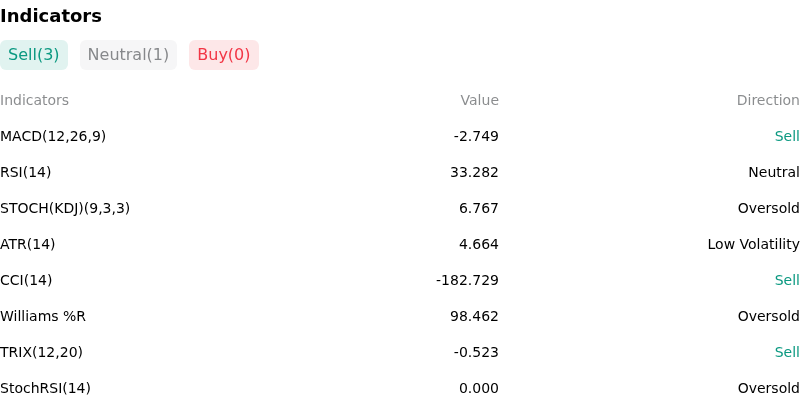
Technically, WTI (USOIL) shows a MACD (12,26,9) value of -2.772, indicating a sell signal. The RSI at 33.133 suggests neutral condition and the Williams %R at 99.575 suggests oversold condition. Please monitor closely.
More details about WTI (USOIL)
Recent Events and Risks:
- Unwinding of Geopolitical Premium on US-Iran Peace Deal: The announcement of a tentative peace framework between the U.S. and Iran, slated to be signed on Friday, has triggered a massive liquidation of the war premium, causing WTI crude (USOIL) to plunge over 5% in the last 24–72 hours to a three-month low near $79.00 per barrel.
- Anticipated Supply Recovery via Strait of Hormuz Reopening: The planned lifting of the U.S. naval blockade and the partial reopening of the Strait of Hormuz threatens to flood the market with previously shut-in Middle Eastern crude, shifting market trading logic to supply recovery and placing persistent downward pressure on front-month futures.
- Severe Demand Deterioration and Asian Refinery Cutbacks: Broader downside risks are fueled by weak consumption metrics, with China slashing its crude imports by an estimated 4 million barrels per day to hit decade lows, compounded by Asian petrochemical refineries reducing run rates by 3 to 4 million barrels per day.
- Inventory Reports and Macro Headwinds: Immediate intraday volatility is expected ahead of the weekly API and EIA inventory releases, which is further aggravated by risk-off sentiment ahead of the FOMC meeting, where persistent 4.2% headline inflation maintains pressure on the Fed to keep interest rates elevated, threatening industrial energy demand.
This article may include AI-generated content that is human-reviewed, which is for reference and general information purposes only and does not constitute investment advice.
Recommended Articles









Comments (0)
Click the $ button, enter the symbol, and select to link a stock, ETF, or other ticker.