


Oracle Falls Over 1% Pre-Market: Reportedly Cancels About $7 Billion AI Chip Lease Agreement With Tencent After US Officials Expressed Concern



AI Podcast


As of press time on Nov 4 ET, Oracle fell 1.36% in pre-market trading following the cancellation of its $7 billion AI chip lease agreement with Tencent. Prompted by U.S. regulatory concerns and pressure from local Chinese authorities favoring domestic chips, Oracle terminated the five-year deal. This event underscores escalating U.S. scrutiny on Chinese firms accessing advanced overseas computing power. While Oracle loses a major cloud order, Tencent must reassess its AI procurement strategies, relying more heavily on domestic alternatives. Investors should monitor evolving export control policies and the adaptability of both firms' long-term business models.
TradingKey - As of press time on Nov 4 ET, Oracle (ORCL) fell 1.36% in pre-market trading to $124.47.
According to the Financial Times, Oracle has canceled a five-year AI chip lease agreement signed with Tencent, worth approximately $7 billion.
Previously, US officials had expressed concerns over the deal, highlighting the policy risks facing Chinese companies accessing advanced AI computing power through overseas data centers.
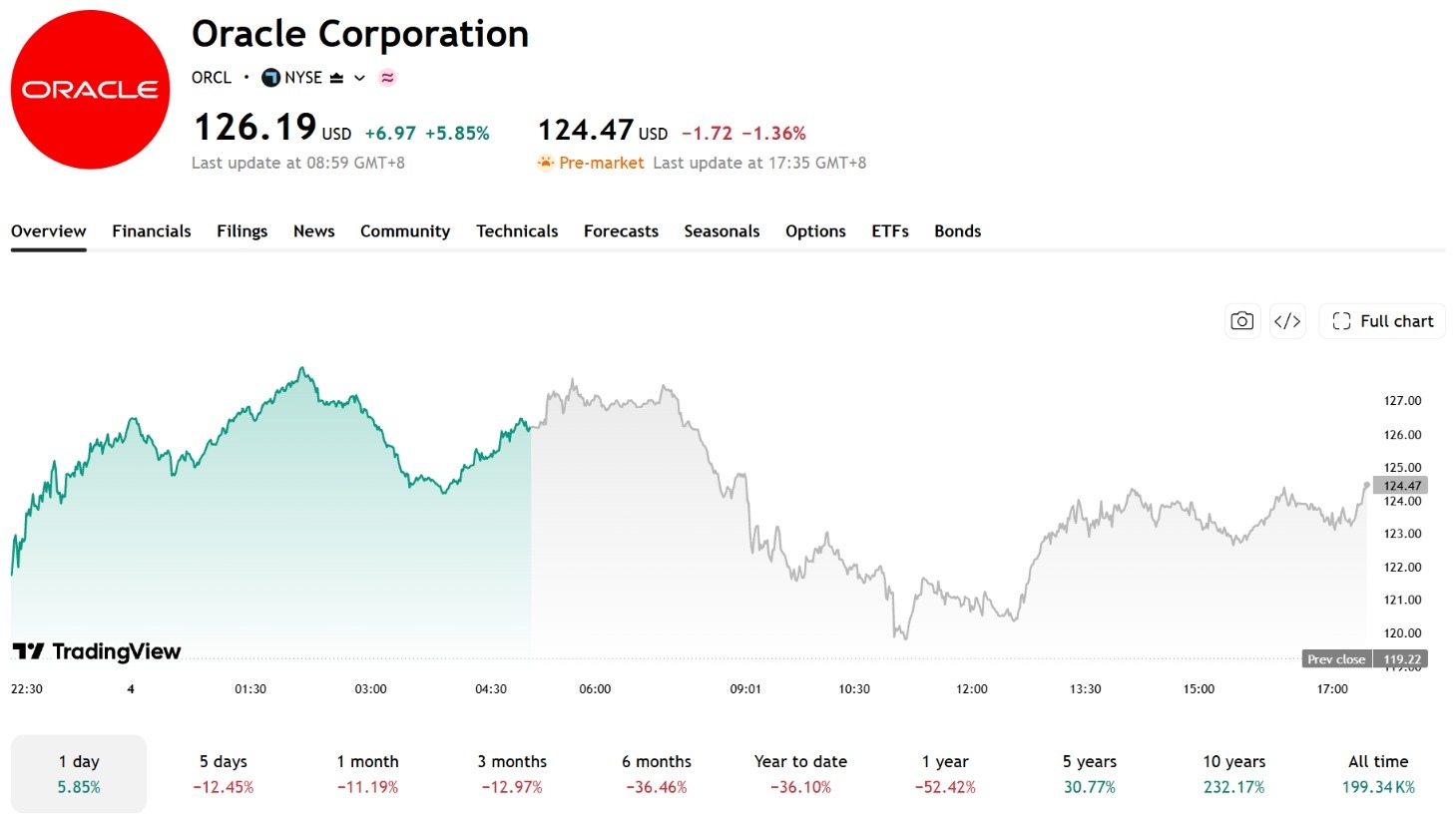
[Source: TradingView]
Oracle Cancels $7 Billion AI Chip Lease Agreement With Tencent
The Financial Times reported on September 30 that Tencent had previously signed a five-year lease agreement with Oracle, planning to use up to approximately 100,000 advanced AI chips across multiple Oracle data centers in Southeast Asia. The deal was valued at roughly $7 billion, with an upfront payment expected to account for about 30% of the total amount.
This was Tencent's largest overseas computing power lease deal, originally intended to support large model training and AI business development. Due to U.S. export controls restricting certain advanced AI chips from entering China, combined with a limited domestic supply of advanced chips in China, Tencent sought to secure relevant computing power through overseas data centers.
The Financial Times reported on November 4 that, according to two people familiar with the matter, U.S. officials had contacted Oracle to express concerns over the deal. Meanwhile, senior officials from Guangdong Province, where Tencent is headquartered, also visited the company to request its support for domestic chips. Sources said Oracle subsequently canceled the agreement.
US Tightens Scrutiny of Chinese Firms' Overseas AI Compute Leases as Cloud Providers Face Policy Pressure
The cancellation of this deal highlights the U.S. government's growing scrutiny over Chinese companies acquiring advanced AI computing power through overseas data centers. While leasing overseas computing capacity has not been fully banned, related transactions may face increased policy scrutiny and pressure.
For Oracle, the cancellation of the agreement means losing a potentially large cloud computing order. The estimated $7 billion total represents a five-year agreement rather than a confirmed loss of revenue, and the specific financial impact has not been disclosed. Going forward, it will be key to monitor whether overseas computing power leasing operations for other Chinese clients face similar impacts.
For Tencent, the inability to secure the planned overseas computing resources could affect its AI computing procurement. The company may need to seek alternative sources of computing power and assess whether domestic chips and other overseas channels can meet its needs.
In the short term, investors should focus on the execution of Oracle's other large cloud computing orders and whether its overseas data center business can continue expanding its customer base.
In the long term, shifts in U.S. AI chip policy toward China, along with the ability of Chinese tech firms to satisfy AI training demands through domestic chips and alternative channels, will shape the business strategies of affected companies.
This content was translated using AI and reviewed for clarity. It is for informational purposes only.
Recommended Articles










Comments (0)
Click the $ button, enter the symbol, and select to link a stock, ETF, or other ticker.