


Tesla Renames FSD in Europe to Tesla Assisted Driving Seeking EU Approval: What Does It Mean for TSLA?



AI Podcast


On October 9 ET, Tesla rebranded its FSD system to "Tesla Assisted Driving" on European websites to address regulatory scrutiny over consumer misinterpretation. The EU-wide approval vote has been postponed from October to December at the earliest, though eight EU countries already permit its use. While official approval could enhance software business expectations and subscriber growth, revenue impact may not be immediate. Key risks include further approval delays, slower subscriber growth, and potential downward pressure on Tesla's stock price if market expectations are unmet. Future performance will depend on approval scope, rollout progress, and subscriber revenue disclosures.

TradingKey - On October 9 ET, according to Reuters, Tesla (TSLA) has changed the name of FSD to "Tesla Assisted Driving" on its official websites in European countries including Germany, Spain, and the Netherlands. The company is seeking EU-wide approval for the system, with the relevant vote postponed from October to December at the earliest.
Europe Renames to Respond to Regulatory Scrutiny
Regulators in several European countries have questioned the name "Full Self-Driving," arguing that it may mislead consumers into believing the vehicle is fully autonomous. The system still requires continuous driver supervision, and the driver remains responsible for safe driving.
Germany's Federal Ministry of Transport stated on October 6 that Tesla proposed renaming the system to "Tesla Assisted Driving." Transport Minister Bürger said the two sides reached a consensus during talks in September, and based on this, he will support pushing for the system to be approved across the EU as soon as possible. Germany's support does not yet represent final approval by the EU.
Eight EU Countries Allow Use, Full EU Approval Still Pending
The Dutch vehicle authority RDW granted type approval for FSD Supervised on April 10, initially valid only in the Netherlands. The agency emphasized that the system remains a driver-assistance feature, and drivers must remain attentive and be ready to take control of the vehicle at any time.
According to a Reuters report on October 9, eight EU countries have already permitted the use of the system. An EU-wide vote has been postponed from October to December at the earliest, as countries including France continue to conduct additional testing.
Germany has expressed support for advancing the approval process, but full EU approval still requires completing the relevant procedures and a vote by member states in the responsible approval committee.
What Does It Mean for TSLA's Revenue and Stock Price?
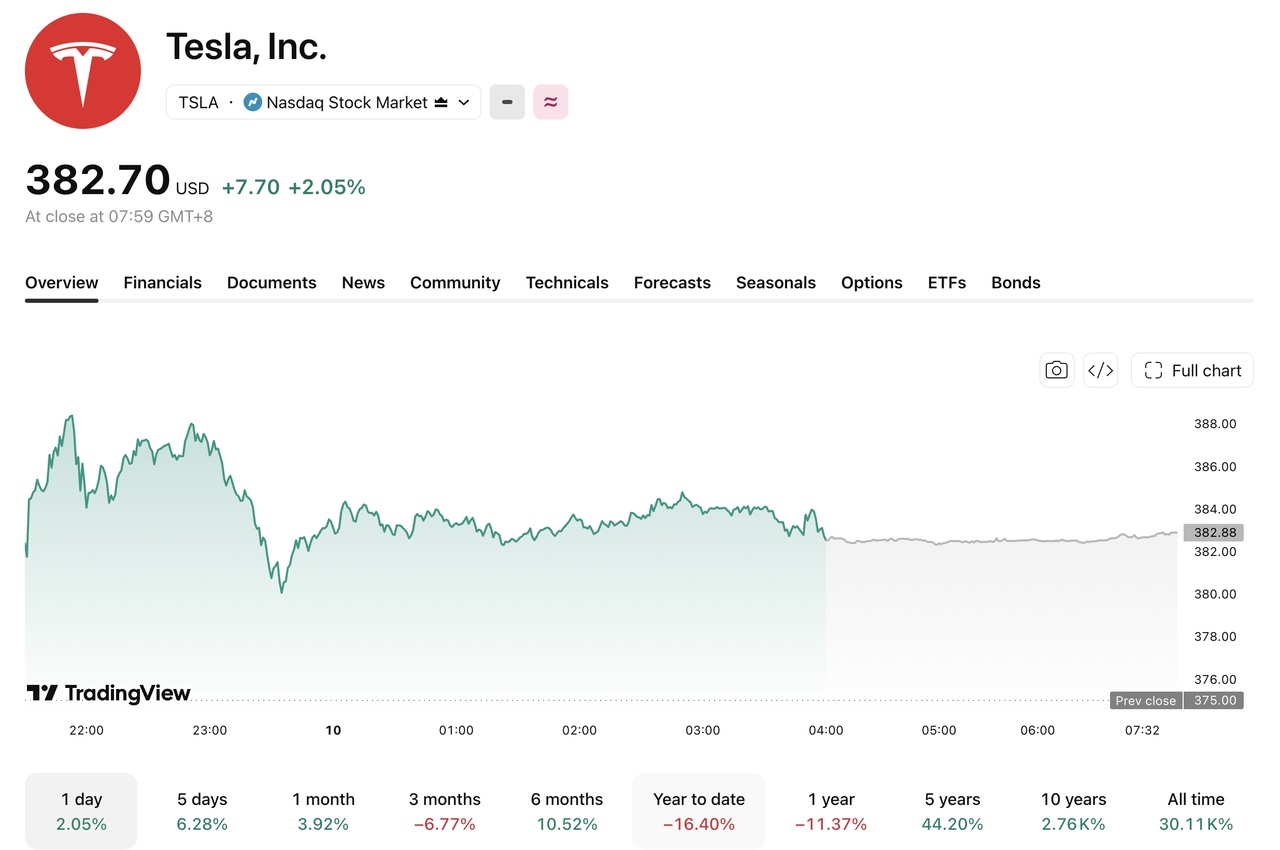
On October 9, Tesla closed up 2.05% at $382.70, up $7.70 from the previous trading day.
[Source: TradingView]
If the system gains approval to enter more European markets, Tesla will have the opportunity to attract more vehicle owners to subscribe. Additional revenue will depend on paid subscriber growth, renewal rates, and subscription pricing.
Eligible Basic subscribers can automatically transition to a Tesla Assisted Driving subscription at no extra cost once local approval is granted and the required software update is completed. Consequently, rolling out the feature will not necessarily boost revenue immediately.
For TSLA's stock price, official approval could improve market expectations for its software business, but the impact also depends on whether approval expectations are already priced in. If approvals are further delayed, available features fall short of expectations, or paid subscriber growth is slow, the stock price could come under pressure.
Going forward, key focus areas include the scope of approvals, rollout progress, and the company's disclosures on paid subscribers and related revenue. Vehicle sales, profit margins, and broader market trends will also impact TSLA's performance.
This content was translated using AI and reviewed for clarity. It is for informational purposes only.
Recommended Articles










Comments (0)
Click the $ button, enter the symbol, and select to link a stock, ETF, or other ticker.