


Crypto Brokerage Stocks Gain Pre-Market as SEC Introduces Five-Year "Innovation Exemption," Robinhood Rises Nearly 4%



AI Podcast


On September 18, U.S. crypto stocks rose following the SEC’s announcement of a five-year "Innovation Exemption" for eligible tokenized U.S. stocks, enabling trading via automated market makers. Following the Senate’s stalling of the CLARITY Act, SEC Chairman Paul Atkins emphasized leveraging existing statutory authority. While providing temporary exchange and dealer exemptions, the policy imposes strict conditions, including volume limits, shareholder rights parity, issuer objection mechanisms, and public, auditable smart contracts on public blockchains, balancing market innovation with robust regulatory oversight.

TradingKey - On September 18, U.S. pre-market crypto and digital asset stocks generally rose, with Robinhood (HOOD) up 3.71%, Coinbase (COIN) up 3.53%, and Gemini Space Station rising 1.81%. Market attention shifted to the Securities and Exchange Commission's (SEC) newly introduced "Innovation Exemption," which provides a temporary, conditional regulatory pathway for on-chain trading of eligible tokenized U.S. stocks.
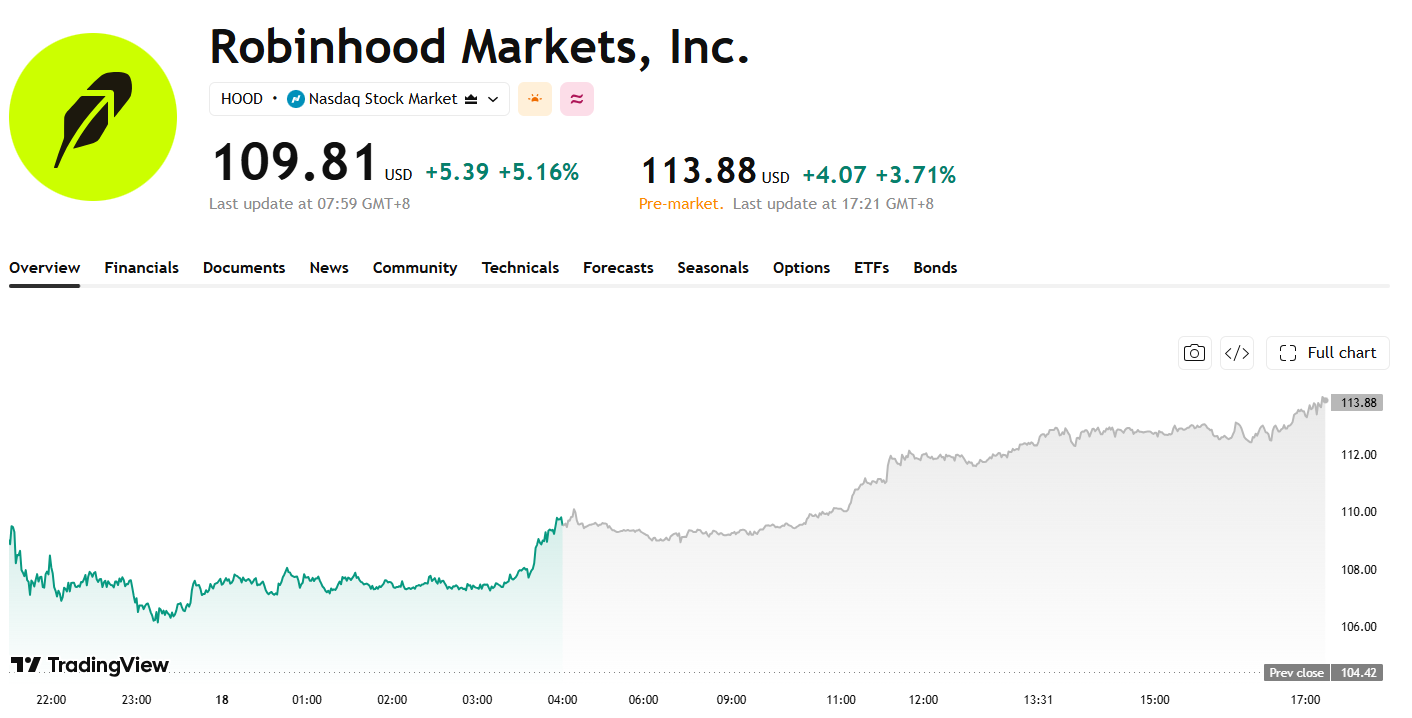
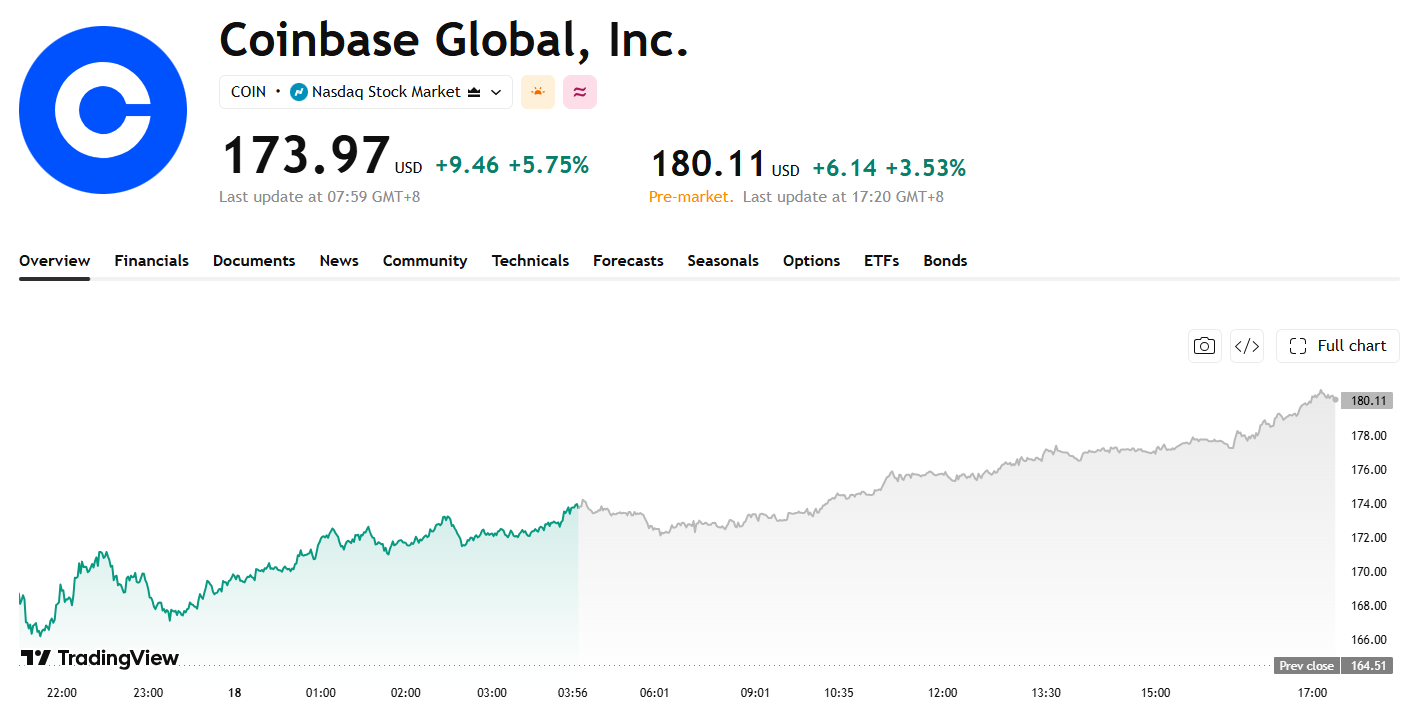
Source: TradingView
The SEC announced on September 17 local time that it will grant a five-year exemption to eligible tokenized security trading venues, allowing them to trade certain tokenized NMS stocks through permissioned automated market makers (AMMs) and liquidity pools while satisfying regulatory requirements. Relevant trading venues will be temporarily exempt from certain definitions of an "exchange" under the Securities Exchange Act, while eligible liquidity providers can also receive a limited "dealer" exemption.
The timing of this policy rollout has also drawn market attention. Just two days prior, a procedural vote in the U.S. Senate on the CLARITY Act failed to reach the 60-vote threshold with 49 votes in favor and 50 against, preventing the bill from advancing to the next stage. SEC Chairman Paul Atkins subsequently stated that even if congressional legislation is temporarily stalled, the SEC will still leverage its existing statutory authority to foster relevant market development.
However, this "Innovation Exemption" does not mean the SEC is fully opening up tokenized stock trading. Under the rules released by the SEC, participating trading venues must meet multiple conditions, including limits on the number of traded stocks and trading volume, ensuring tokenized stock holders enjoy the same rights as holders of corresponding traditional stocks, and providing original stock issuers an opportunity to object before third-party tokenized stocks are prepared for listing. Relevant smart contracts must also be public, auditable, and deployed on a public blockchain.
This content was translated using AI and reviewed for clarity. It is for informational purposes only.
Recommended Articles












Comments (0)
Click the $ button, enter the symbol, and select to link a stock, ETF, or other ticker.