


Meta’s Core AI Strategy Suffers Setback as Top Researcher Andrew Tulloch Departs, Sparking Talent Loss Concerns



AI Podcast


Top Meta AI researcher Andrew Tulloch has resigned less than a year after returning to the company on a massive compensation package, dealing a setback to Mark Zuckerberg’s high-stakes artificial intelligence strategy. Tulloch’s departure—following similar exits at Anthropic—threatens underlying architecture optimization and training efficiency for next-generation Llama models. This high-profile departure exposes cracks in Meta's costly talent barrier, prompting market reassessments regarding its competitive edge in AI research and development compared to industry rivals like OpenAI and Google. Meta shares dipped 0.79% in overnight trading following the announcement.

TradingKey - Tech Giants Trigger Resignation Wave: Following Anthropic, Key Meta AI Figure Andrew Tulloch Also Departs.
According to a Semafor report on September 10, top Meta (META) AI researcher Andrew Tulloch has decided to leave Meta, dealing a heavy blow to Mark Zuckerberg's strategy of poaching talent with astronomical compensation packages to advance AI. As of press time, Meta's stock fell 0.79% in overnight trading, losing the $650 mark to trade at $648.17.
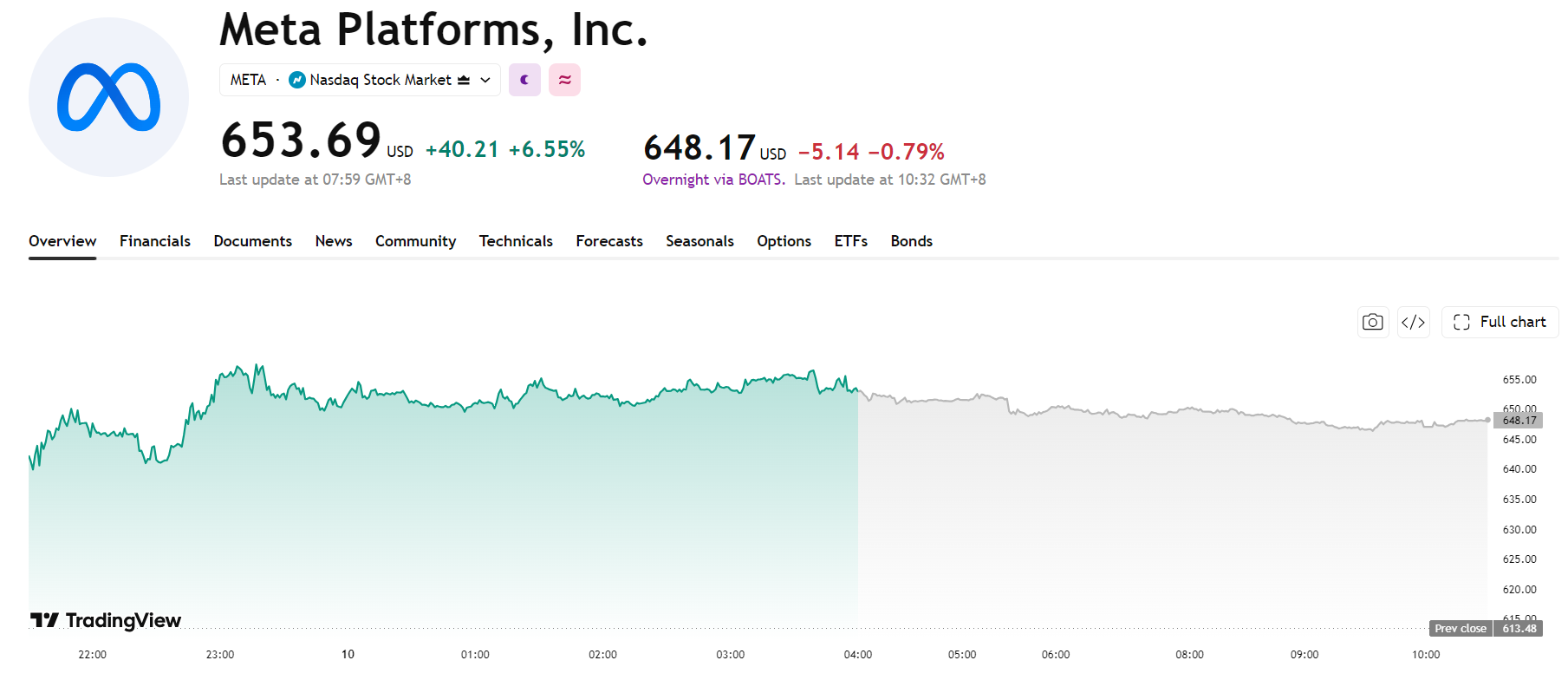
Meta stock chart, Source: TradingView
Andrew Tulloch previously worked at Meta for 11 years before moving to OpenAI, where he participated in training core models such as GPT-4o and o3, and co-founded Thinking Machines Lab. To close the gap in model development progress, Meta poached him back in late 2025 with an astronomical compensation package of $1 billion to $1.5 billion. However, his decision to resign less than a year after returning to Meta highlights the deep-seated challenges Meta faces in pushing forward superintelligence and upgrading its AI strategy.
Tulloch chose to leave the company after the launch of a new series of open-source AI models and the AI assistant Muse this Tuesday. Although this mitigated the impact on the company's AI progress, the departure of a top architect will directly affect the underlying architecture optimization and training efficiency of Meta's next-generation foundation models, such as subsequent Llama series upgrades. Furthermore, cracks have appeared in the talent barrier Meta built by spending heavily, leading the market to reassess whether Meta can truly offer a more attractive AI R&D environment than OpenAI, Anthropic, or Google (GOOG).
Currently, Tulloch has not disclosed his reason for leaving Meta. However, unlike Anthropic core researcher Jacob Coxon, who stepped away from the AI field, it cannot be ruled out that Tulloch might return to OpenAI or Thinking Machines Lab.
This content was translated using AI and reviewed for clarity. It is for informational purposes only.
Recommended Articles









Comments (0)
Click the $ button, enter the symbol, and select to link a stock, ETF, or other ticker.