


Google Plans at Least $15.1 Billion AI Infrastructure Expansion in Finland: What Alphabet's Massive Capex Means for GOOGL?



AI Podcast


On September 9, US Eastern Time, Google announced a minimum €13 billion investment in Finland for AI and digital infrastructure, marking its largest European project to date. Alphabet has significantly raised its 2026 capital expenditure guidance to between $195 billion and $205 billion, causing short-term negative free cash flow and pressure on stock performance. Meanwhile, Google Cloud demonstrates robust momentum, with Q2 revenue up 82% year-over-year and a backlog exceeding $513 billion. Despite near-term cash flow pressures and valuation risks, Wall Street maintains a "Strong Buy" consensus, emphasizing that long-term investment success depends on revenue conversion and profit margin improvements from AI infrastructure.
TradingKey - On September 9, US Eastern Time, Google (GOOGL) announced that it will invest at least 13 billion euros (approximately $15.1 billion) in Finland between 2027 and 2028 for AI and digital infrastructure, clean energy, and related supporting projects. This is Google's largest single investment in Europe to date.
As of press time, Google's stock fell 0.82% in pre-market trading.
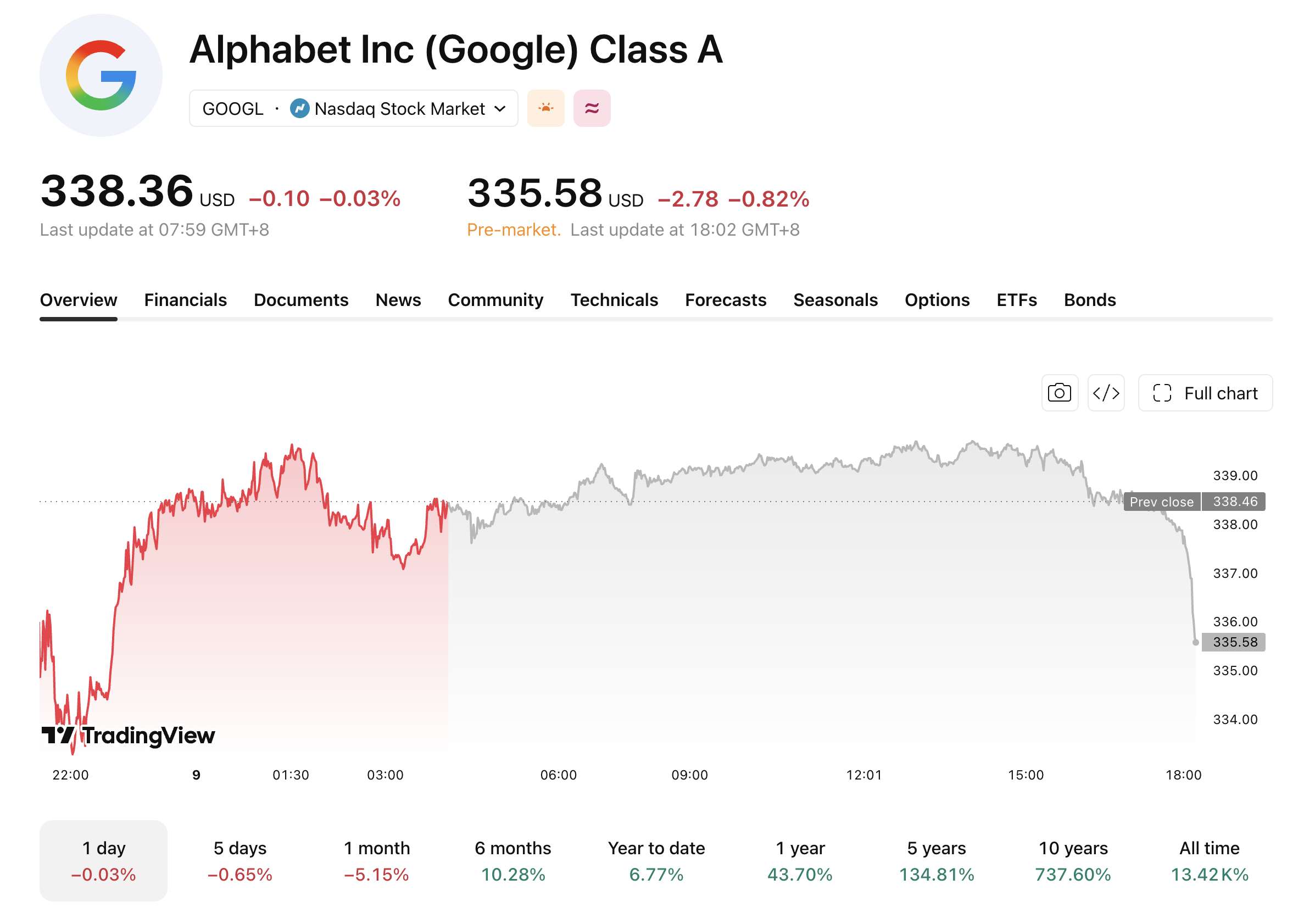
[Source: TradingView]
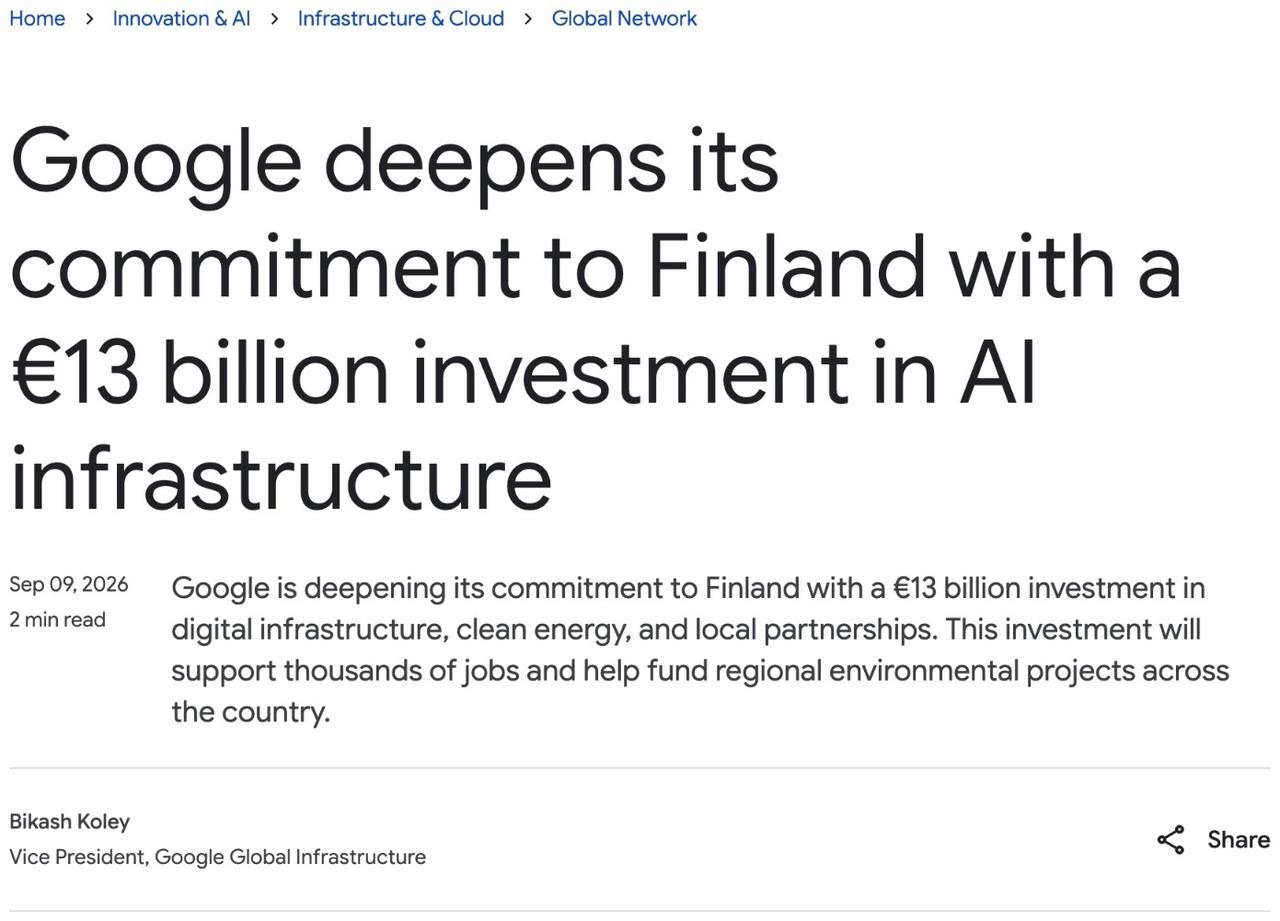
[Source: Google]
The investment covers four locations: Hamina, Kajaani, Muhos, and Vaala, including the construction of new data centers and related supporting infrastructure to power services such as Gemini, Search, Maps, and YouTube.
Google estimates that during the initial construction phase from 2027 to 2028, the investment will contribute an average of 3.6 billion euros annually to Finland's GDP and support over 37,000 jobs; once operational, the facilities are expected to support about 7,000 jobs annually.
Regarding energy, Google has signed a 22-year nuclear power purchase agreement with Finnish energy company Fortum to support extending the lifespan of the Loviisa nuclear power plant, increase onshore wind power procurement, and contract a 94MW battery energy storage system.
Google will also collaborate with organizations like Fingrid to utilize existing local grid capacity and carbon-free energy, reducing new grid investment and enhancing power system resilience.
Alphabet Raises Capital Expenditure Guidance to $195 Billion to $205 Billion
Infrastructure spending by Google's parent company, Alphabet, continues to grow rapidly. In the second quarter of 2026, the company's capital expenditures reached $44.9 billion. In July, Alphabet raised its full-year capital expenditure guidance to between $195 billion and $205 billion, higher than the market's previous expectations of approximately $186 billion to $187 billion.
Alphabet's full-year capital expenditures in 2025 were approximately $91.4 billion. Based on the $200 billion midpoint of the 2026 guidance, capital expenditures this year will be about 2.2 times last year's level.
Heavy investment has significantly impacted cash flow. In the second quarter, Alphabet's operating cash flow was approximately $39.1 billion, while capital expenditures reached $44.9 billion, bringing free cash flow down to negative $5.9 billion. This marks the first time Alphabet has recorded negative single-quarter free cash flow. BofA Securities estimates that the company's full-year free cash flow for 2026 could be negative $16 billion.
Google Cloud Demand Maintains Rapid Growth
In the second quarter, Google Cloud revenue reached $24.8 billion, up 82% year-over-year, significantly exceeding market expectations.
As of the end of June, Google Cloud's revenue backlog reached $513.9 billion. According to Alphabet's disclosures, slightly more than half is expected to be recognized as revenue over the next 24 months, with the remainder recognized at a later date.
The Cloud backlog of over $500 billion shows that enterprise customers have a substantial amount of unrecognized contractual demand, providing a demand foundation for Alphabet to continue expanding its cloud computing and AI infrastructure.
However, these orders do not equate to profits that can be directly recognized in the future. How much return the new infrastructure will ultimately deliver still depends on the pace of revenue conversion, operating costs, and asset utilization efficiency.
How High Capital Expenditures Affect GOOGL?
In the short term, large-scale capital expenditures have placed noticeable pressure on Alphabet's free cash flow. The Finland project will be implemented between 2027 and 2028, and alongside Alphabet's ongoing global expansion of AI infrastructure, the company's high capex cycle will persist.
The upward revision in capital expenditures also became a key market focus after the release of second-quarter earnings. On July 22, after Alphabet reported its second-quarter financial results, its stock fell more than 4% in after-hours trading. Despite strong revenue and Google Cloud performance, the further raise in capex guidance sparked investor concerns over cash flow and investment return cycles.
In the long run, whether this round of investment can generate sufficient returns depends largely on whether demand for AI and cloud computing can be continuously converted into revenue and profits. In the second quarter, Google Cloud revenue grew 82% year-over-year, with backlog reaching $513.9 billion as of the end of June, indicating that it has a large number of customer contracts with unrecognized revenue. If Cloud continues its rapid growth, the new data centers and AI infrastructure are expected to gradually contribute more revenue and profits.
In this investment in Finland, Google also particularly emphasized local existing grid capacity, carbon-free energy supply, and energy system resilience. Projects such as nuclear power, wind power, and battery storage will provide energy support for the new data centers while enhancing the stability and resilience of the local power grid. This investment will also further expand the scale of Google's AI infrastructure in Europe.
Wall Street Remains Bullish on Alphabet: What Else Should GOOGL Investors Watch?
Despite the rapid increase in capital expenditures, multiple Wall Street firms maintain positive ratings on Alphabet. According to data from StockAnalysis, Wall Street's current consensus rating for Alphabet is "Strong Buy," with an average price target of approximately $428.07, implying an upside potential of about 26.51%.
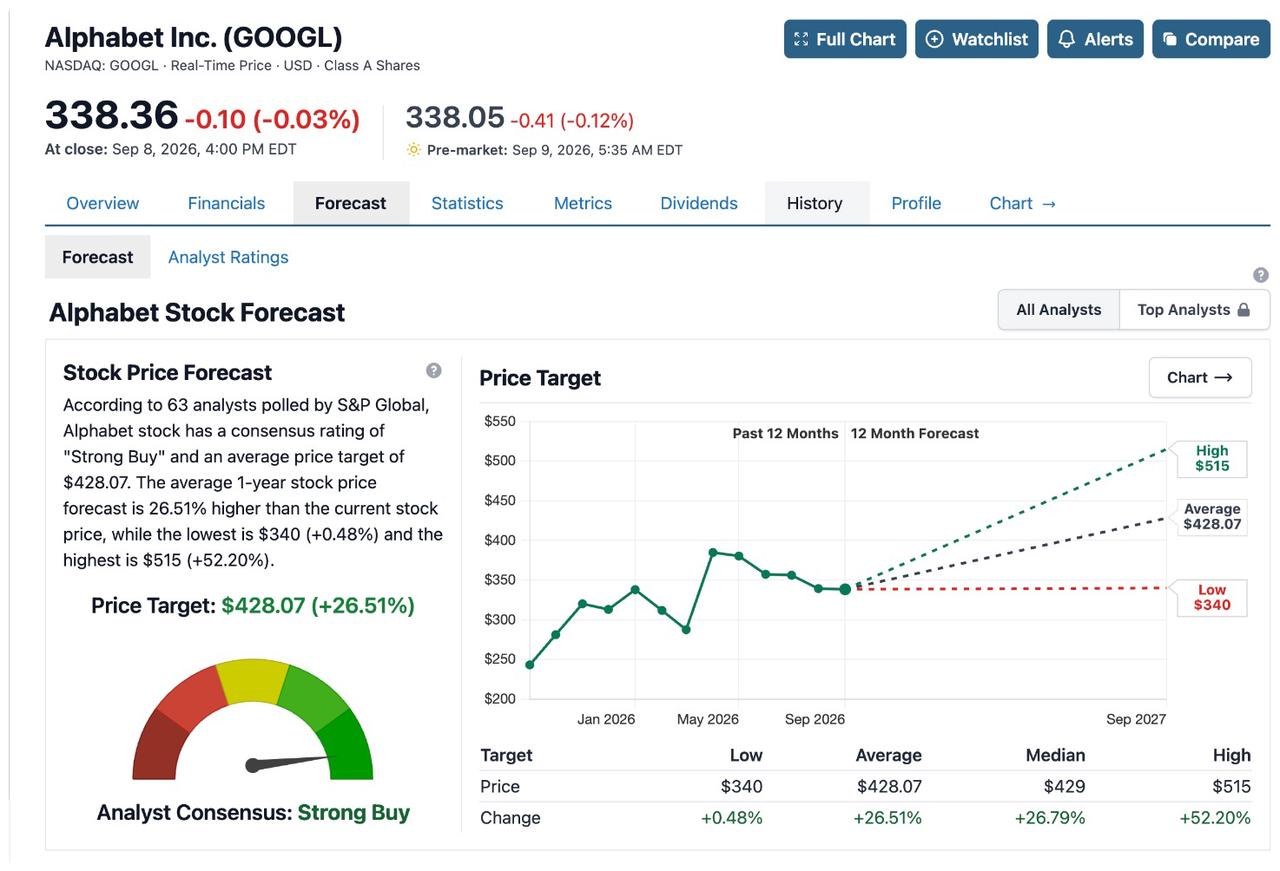
[Source: StockAnalysis]
As of September 8, BofA Securities maintained a "Buy" rating and a $430 price target. Following the release of Q2 earnings, JPMorgan (JPM) maintained an "Overweight" rating and lowered its price target to $420; Goldman Sachs (GS) maintained a "Buy" rating and lowered its price target to $435.
For GOOGL investors, the key focus going forward is not just how much capital Alphabet spends, but more importantly, whether these investments can translate into revenue and profit. Whether Google Cloud can maintain rapid growth, whether Cloud profit margins can continue to improve, and when Alphabet's free cash flow will recover will influence market assessments of the returns on this massive round of AI infrastructure investment.
If revenue and profit growth driven by AI and cloud businesses can gradually absorb the depreciation and operating costs from infrastructure expansion while capital expenditure growth stabilizes, Alphabet's free cash flow is expected to improve. Conversely, if demand growth slows while capital expenditures remain elevated, cash flow and valuation could remain under pressure.
This content was translated using AI and reviewed for clarity. It is for informational purposes only.
Recommended Articles







Comments (0)
Click the $ button, enter the symbol, and select to link a stock, ETF, or other ticker.