


Samsung Electronics Partners with Arm to Develop Next-Generation On-Device AI Chips; Arm Rises Over 2% Pre-Market



AI Podcast


Samsung Electronics and Arm have partnered to develop next-generation on-device AI SoCs, targeting advanced 2nm mass production. Arm provides AI accelerator architecture and RTL design technologies, while Samsung handles SoC integration, manufacturing, and commercialization. This custom chip model aims to extend AI computing power from cloud centers to terminal devices like smartphones, reducing latency and cloud reliance. Driven by the announcement, Arm shares rose roughly 2.5% in US pre-market trading. This collaboration highlights the growing semiconductor industry demand for local generative AI processing capabilities on edge devices.
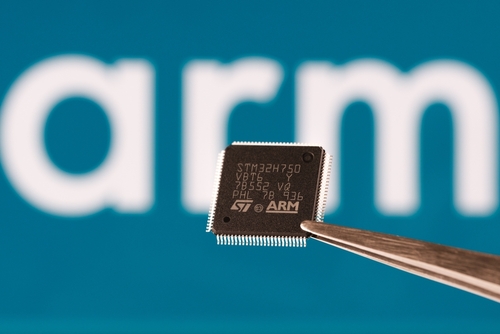
TradingKey - According to reports, Samsung Electronics and Arm (ARM) have officially launched joint R&D on next-generation on-device AI SoCs, under which both parties will develop customized chips for end customers to further extend AI computing power from cloud data centers to terminal devices such as smartphones.
Boosted by the news, Arm rose about 2.5% in US pre-market trading.
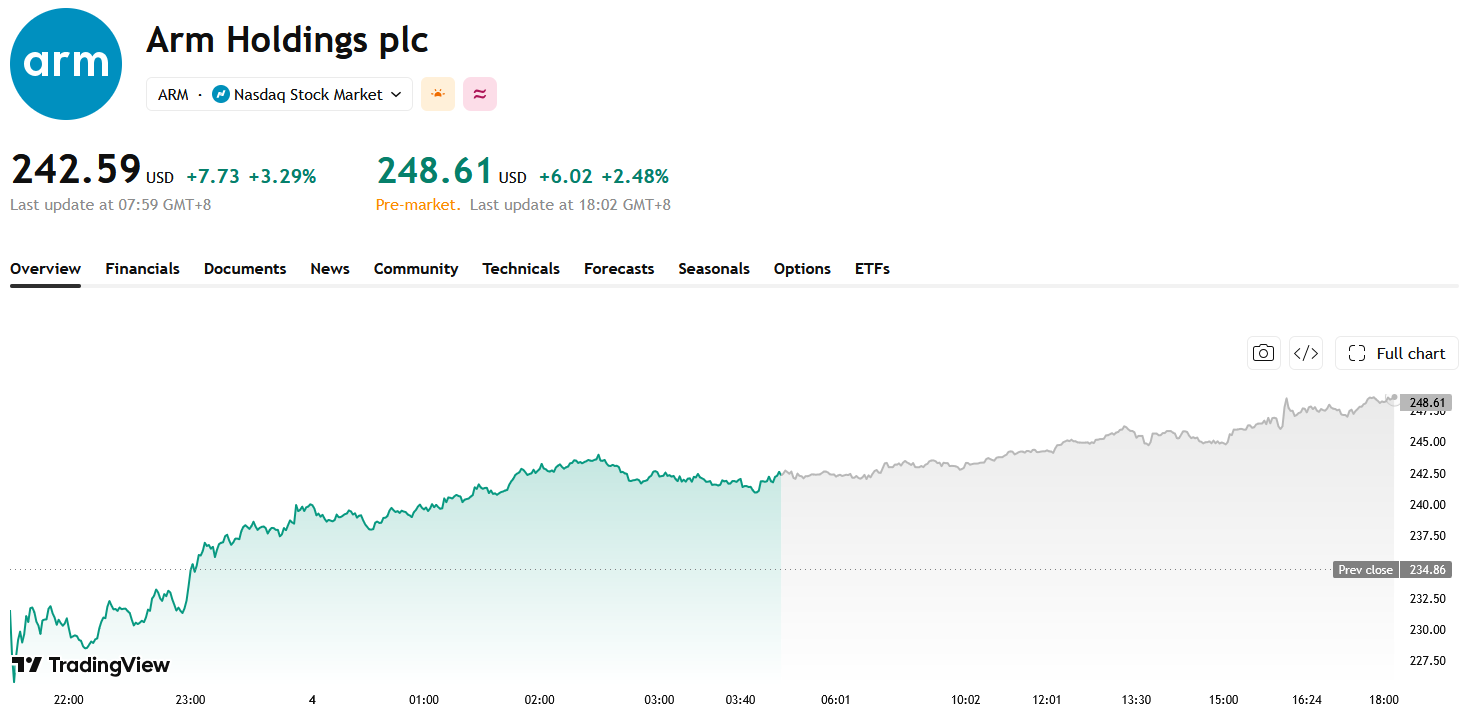
Source: TradingView
Arm approved the non-recurring engineering (NRE) expenses required for the project at the end of August and initiated related R&D work with Samsung Electronics. Under the current collaboration model, Arm is primarily responsible for providing key design technologies such as AI accelerator architecture and RTL, while participating in project execution based on end-customer needs; Samsung Electronics is responsible for chip design integration, manufacturing, and subsequent commercialization.
Specifically, Samsung Electronics' System LSI Business will conduct SoC design based on the AI architecture provided by Arm, while its foundry business is expected to leverage advanced process nodes for subsequent production, with plans to achieve mass production using a 2nm process. The finalized customized chips will be delivered directly to end customers.
Unlike traditional chip supply models, Arm focuses more on technology provision and joint development in this collaboration and does not directly handle chip sales. Samsung, on the other hand, covers major stages from design and manufacturing to delivery. This collaboration model allows for the customization of chip performance, power consumption, and AI computing capabilities based on the actual needs of different customers.
The core goal of this collaboration is to develop on-device AI computing capabilities. Unlike relying on cloud servers to complete AI tasks, on-device AI enables direct local computation on devices such as smartphones and PCs, helping to reduce data transmission latency and decrease reliance on cloud infrastructure. As generative AI and AI applications gradually penetrate terminal devices, demand for local computing power is becoming a new growth direction for the semiconductor industry.
This content was translated using AI and reviewed for clarity. It is for informational purposes only.
Recommended Articles












Comments (0)
Click the $ button, enter the symbol, and select to link a stock, ETF, or other ticker.