


Sam Altman Says Industry Overestimated AI Growth, AI Hardware Stocks Pull Back as SanDisk Drops Over 10%



AI Podcast


On August 24, Eastern Time, the Philadelphia Semiconductor Index declined broadly as AI hardware stocks retreated, led by memory, optical communications, and chip equities. This pullback followed OpenAI CEO Sam Altman’s cautious remarks acknowledging that the industry overestimated AI’s near-term growth pace, noting that economic inertia and slow corporate adoption extend technology penetration cycles. While a smoother transition may reduce long-term industry volatility, this downward revision of expectations forces a restructuring of valuation logic. Consequently, high-valuation targets relying on aggressive growth narratives face capital market repricing pressures regarding return on investment.
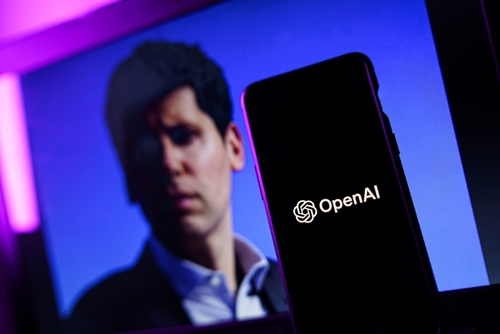
TradingKey - On August 24, Eastern Time, components of the Philadelphia Semiconductor Index fell across the board, with AI hardware stocks pulling back collectively. Among them, memory stocks, optical communications stocks, and chip stocks led the decline.
SanDisk (SNDK) once fell over 10%; Micron (MU) fell over 7%, dropping below the $900 level; SK Hynix (SKHY) dropped over 5%; Marvell Technology (MRVL), AMD (AMD), and Intel (INTC) all fell over 3%.
On the news front, OpenAI CEO Sam Altman recently sent a rare signal of caution, publicly acknowledging that the entire industry, including OpenAI, generally overestimated the growth pace of AI.
Altman stated that as early as 2023 when GPT-4 was launched, the industry generally expected AI to rapidly disrupt the software industry and reshape the business landscape. However, the reality is that the economic system itself possesses strong operational inertia; corporate procurement habits and user behavior will not be restructured overnight, and the technological transformation of industries requires a longer penetration cycle. In his view, a slower-than-expected pace of implementation is not entirely negative; a smoother transition will instead reduce industry volatility and make the process of technology integration more solid.
For capital markets, a downward revision of expectations means a restructuring of valuation logic. Since the advent of ChatGPT, massive amounts of capital have been invested globally across the AI industry chain, and tech company valuations have largely been supported by the AI growth narrative.
Once growth rates are revised downward, whether previous high investments can match expected returns will become the core logic for market repricing, putting pressure on high-valuation targets that rely on high growth expectations for a valuation pullback.
This content was translated using AI and reviewed for clarity. It is for informational purposes only.
Recommended Articles












Comments (0)
Click the $ button, enter the symbol, and select to link a stock, ETF, or other ticker.