


Samsung Electronics Shares Jump 4% on Next-Generation Memory Tech Push



AI Podcast


Samsung Electronics rallied over 4% on August 5, reaching 254,000 Korean won, bolstered by positive U.S. semiconductor sentiment and robust AI-driven memory demand. The momentum follows the unveiling of its V10 Bonding V-NAND prototype at the FMS conference, which improves storage density by over 50%. Additionally, the introduction of zHBM and zNAND-O architectures indicates significant potential for future performance gains, with Samsung targeting a tenfold increase in storage density over HBM5 and substantial improvements in energy efficiency and thermal management. These technical advancements strengthen the company's competitive positioning within the high-end memory market.
TradingKey - Samsung Electronics announced its next-generation memory technology, driving a rebound of approximately 4% in its stock price.
During Asian trading hours on August 5, Samsung Electronics opened higher and rallied, climbing over 4% at one point to break through 250,000 Korean won (approximately $175.45) and reaching a high of 254,000 won. Currently, Samsung Electronics' stock price has eased back slightly, trading at 248,500 won.
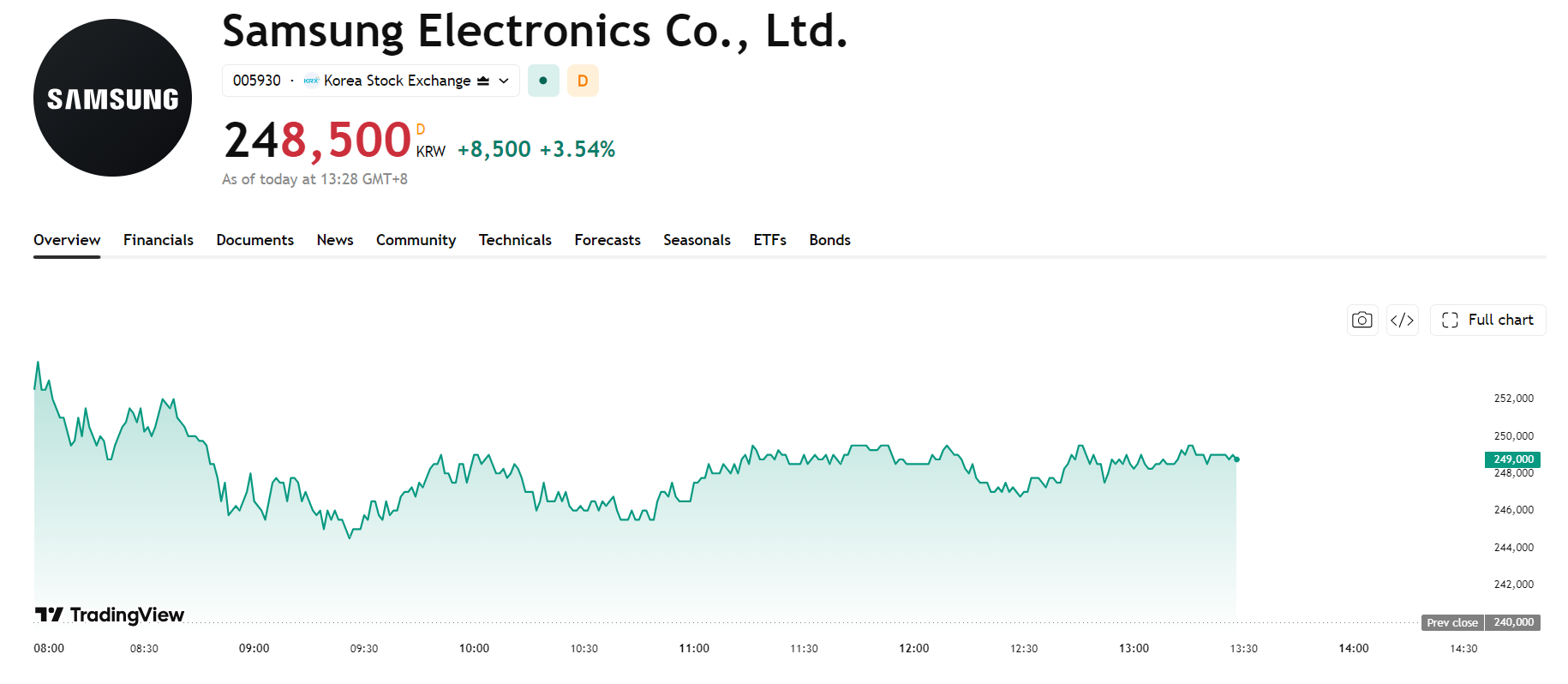 Samsung Electronics stock price chart, Source: TradingView
The rebound in Samsung Electronics' stock price today was primarily driven by positive factors, including the spillover effect of the surging U.S. semiconductor stocks, the rollout of new memory technology specifications (HBF/HBM4), and the sustained strength of the supercycle driven by AI demand. However, another crucial factor overlooked by the market is Samsung Electronics' introduction of new products and conceptual models.
Yesterday, Samsung Electronics unveiled its BV-NAND prototype (V10 Bonding V-NAND) at the Future of Memory and Storage (FMS) conference in Santa Clara, California. Compared to the previous-generation V9 NAND, it offers significant advantages, including a storage density boost of over 50%, alongside enhanced read/write and input/output performance.
In addition, Samsung showcased the industry's first zHBM and zNAND-O architecture conceptual models. According to Samsung, this wafer bonding technology is expected to achieve a storage density more than 10 times that of conventional HBM5 memory, while tripling energy efficiency and reducing thermal resistance by more than half.
This content was translated using AI and reviewed for clarity. It is for informational purposes only.
Recommended Articles











Comments (0)
Click the $ button, enter the symbol, and select to link a stock, ETF, or other ticker.