


Tesla Cybercab Features SpaceX Starlink Technology, Robotaxi Expands to Florida, Q2 Earnings Out Today



AI Podcast


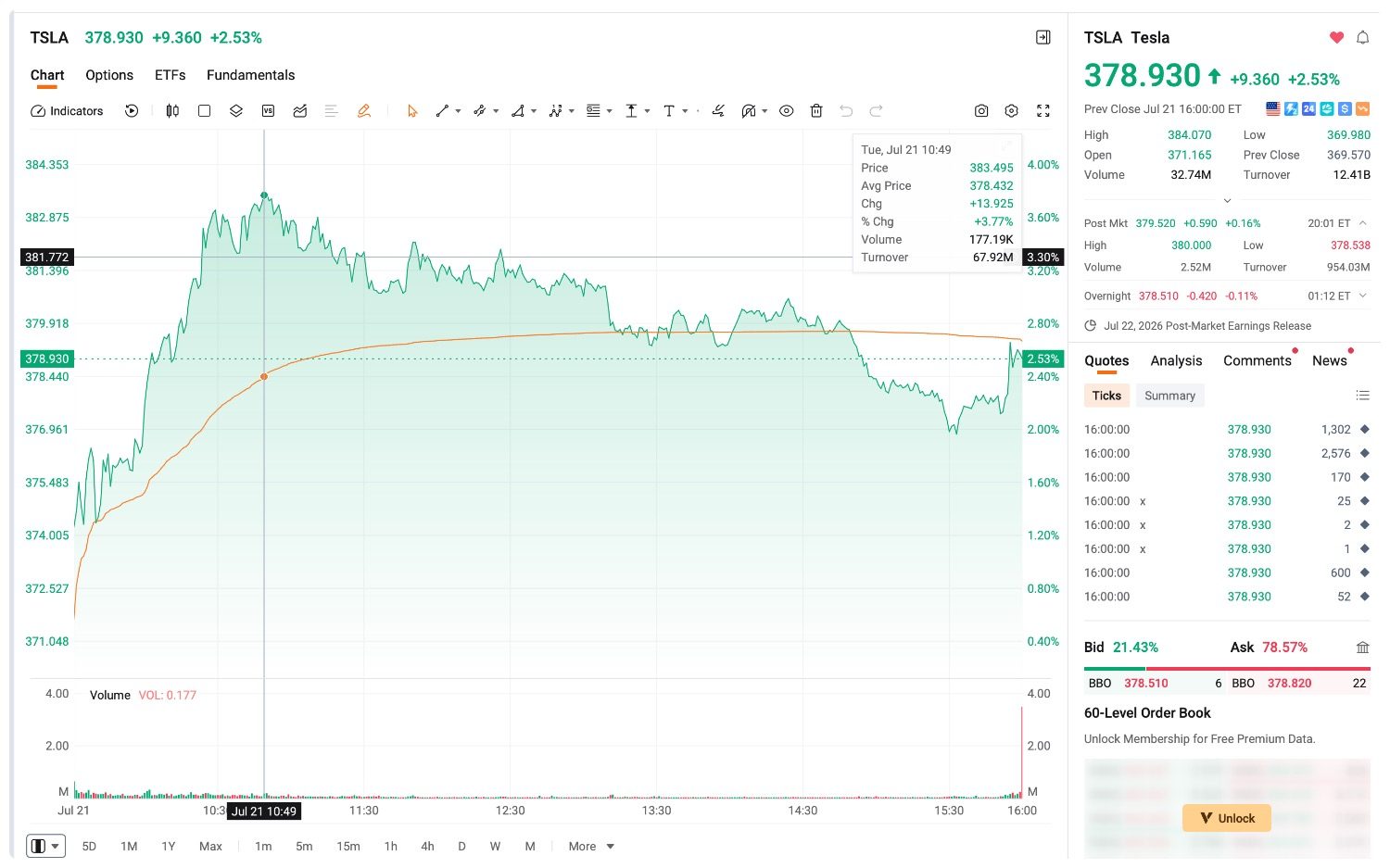
On July 21, Eastern Time, Tesla shares rose 2.53% to $378.93 following technical disclosures regarding the Cybercab. The vehicle integrates Starlink for fleet management and navigation, though Tesla clarified that autonomous driving safety remains independent of cloud connectivity, relying instead on onboard hardware. As Tesla expands its robotaxi service to Florida, market focus shifts to the Q2 earnings report on July 22. Investors are monitoring automotive gross margins for signs of sustainable profitability amid price-cutting strategies, as the firm seeks to reverse its 16% year-to-date stock decline through autonomous technology advancements and operational efficiency.

TradingKey - On July 21, Eastern Time, Tesla's stock price rose nearly 4% intraday before closing gains narrowed to about 2.53%, ending at $378.93. On the news front, Tesla released more technical details of its autonomous robotaxi, the Cybercab: this specially designed drive-by-wire vehicle has no steering wheel or pedals and will integrate SpaceX's Starlink for navigation, customer service, and fleet management.
[Source: Futu]
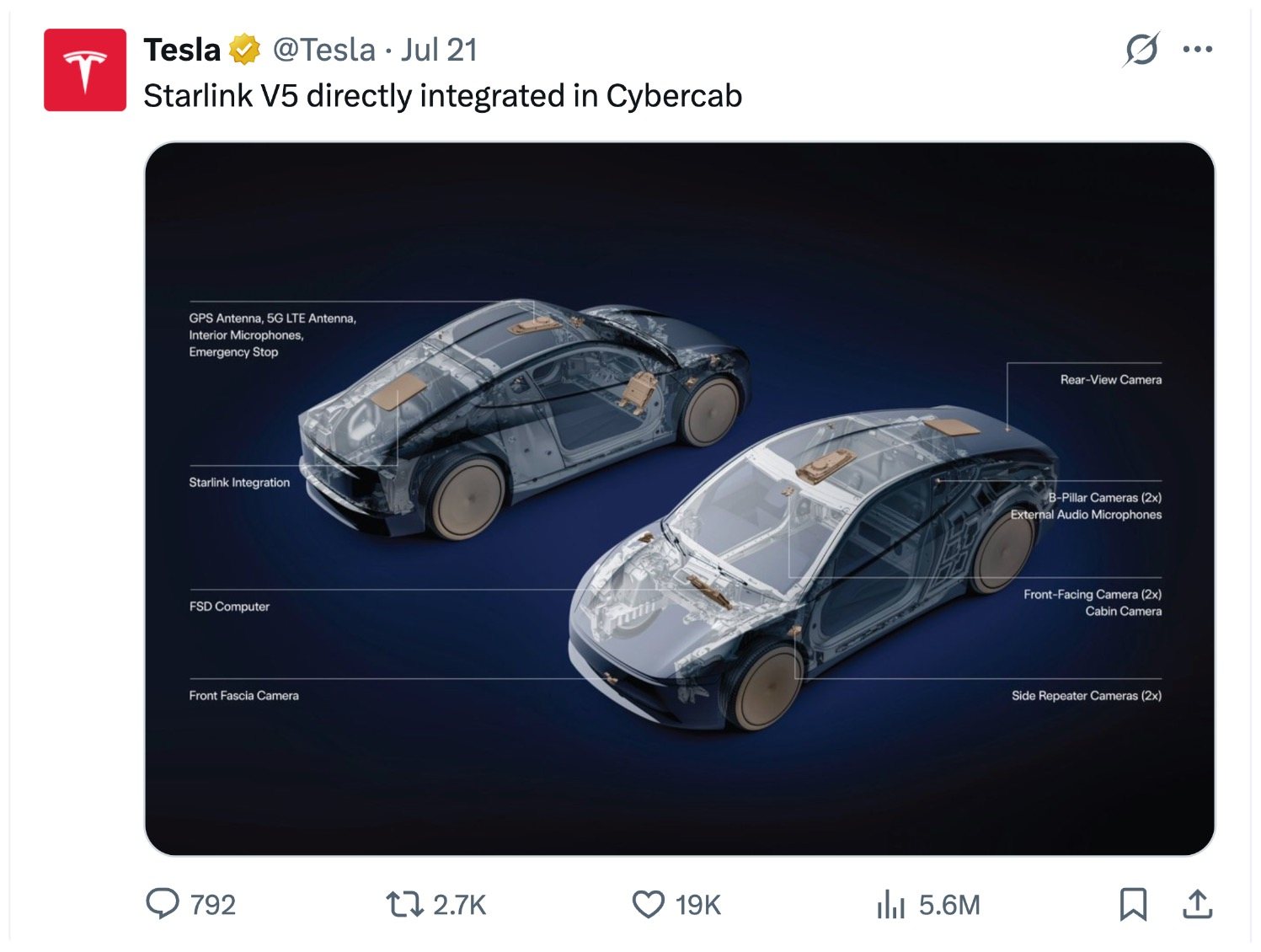
Tesla released a detailed cutaway diagram of the Cybercab on Monday, showing the specific location of the Starlink integration module on the vehicle body, while also revealing the hardware layout of the FSD computer, multiple external cameras, antennas, and internal microphones.
[Source: X]
Tesla's AI Lead Ashok Elluswamy confirmed on the X platform that the Starlink integration is primarily for navigation, customer service, and fleet management, and is not for safety purposes.
In a reply, X user Chuck Cook pointed out that in areas without cellular coverage, Starlink can improve dynamic rerouting, traffic updates, and fleet-wide real-time sharing of information such as potholes, road closures, or accidents. Ashok Elluswamy responded: "Connectivity is still not required for the vehicle to drive safely."
Tesla has always emphasized that its FSD and autopilot systems rely primarily on onboard cameras, sensors, and computing power, taking a different path from competitors that depend on cloud-based maps and real-time data.
Earlier on Tuesday, Tesla announced the expansion of its robotaxi service to Tampa and Orlando, Florida, having previously operated primarily in Austin and the San Francisco Bay Area. Tesla's current fleet consists mainly of Model Y vehicles, and the Cybercab will handle the additional capacity once launched.
Tesla will release its second-quarter earnings report after the market close on Wednesday, July 22. The market expects Q2 revenue of approximately $25.6 billion and adjusted EPS of around $0.47 to $0.51. Automotive gross margin (excluding regulatory credits) is the metric of greatest interest to the market; Q1 gross margin expanded for the fourth consecutive quarter to 19.2%. Whether this can extend into a fifth consecutive quarter is a core signal for judging whether the price cut and promotion strategy is sustainable.
Year-to-date, Tesla's stock price has fallen about 16%. Whether the progress of Cybercab and the expansion of the robotaxi service can receive more guidance during the earnings call, thereby changing the market's assessment of Tesla's profitability, the earnings release after the close on July 22 will be the first test window.
This content was translated using AI and reviewed for clarity. It is for informational purposes only.
Recommended Articles




Comments (0)
Click the $ button, enter the symbol, and select to link a stock, ETF, or other ticker.