


Nvidia’s Jensen Huang Tokyo Visit: 30-Year Sega History, Partners With Toyota, Fanuc, Noetra, and Other Japanese Firms to Deploy Physical AI



AI Podcast


Nvidia CEO Jensen Huang’s recent Tokyo visit marks a strategic shift toward integrating Japan’s precision manufacturing, material science, and robotics expertise into Nvidia's global "physical AI" blueprint. Through partnerships with industry leaders like Toyota, Fanuc, and the Noetra alliance, Nvidia is accelerating autonomous systems development. Huang dismissed AI bubble concerns, citing robust long-term demand for infrastructure. This pivot reinforces the synergy between Japan’s hardware supply chain and Nvidia’s GPU dominance. Historically rooted in a 1996 Sega investment that rescued the startup, this expanded collaboration positions Japan as a cornerstone of Nvidia’s future AI-driven industrial ecosystem.
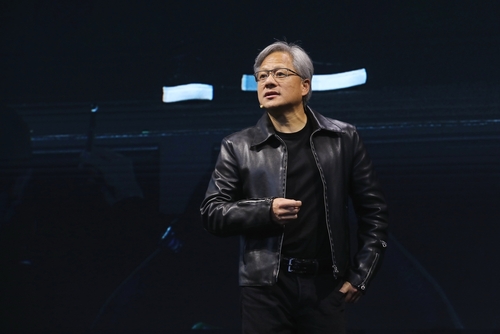
TradingKey - Nvidia ( NVDA) CEO Jensen Huang appeared in Tokyo this week, pushing Japan to the center of Nvidia's global physical AI strategy through a reunion spanning 30 years and a series of industrial partnerships.
On July 15 Tokyo time, Jensen Huang appeared at the former site of the Sega Game Center in Akihabara, Tokyo, sharing the stage once again with former Sega President Shoichiro Irimajiri. Thirty years ago, it was this Japanese executive who lent a helping hand when Nvidia was on the brink of bankruptcy, saving the startup—which then had only enough cash on its books to sustain itself for 30 days—with a $5 million investment. At the venue, Huang reflected with emotion: "If it weren't for everything Sega did, and if it weren't for everything Shoichiro Irimajiri did, Nvidia would not have survived today."
Around 1996, Nvidia made a wrong bet on its technical roadmap while developing a graphics chip for Sega's next-generation console, resulting in the complete failure of the project. Huang took the initiative to admit the failure to Shoichiro Irimajiri, who was then Sega's executive vice president. Instead of holding him accountable, Irimajiri pushed Sega to invest approximately $5 million in the cash-starved startup. Huang once recalled telling Irimajiri that they might lose all of this money, but after considering it for a few days, Irimajiri said, "We'll invest." Relying on this money, Nvidia laid off 60% of its employees and started over, launching the RIVA 128 in 1997, which laid the foundation for its position as today's GPU king.
The two companies announced the continuation of their partnership that day, with Sega's future titles set to support Nvidia's RTX Spark platform.
The “Supply Chain Summit” in an Izakaya
On the eve of the official partnership announcement, Jensen Huang completed a "charm offensive" targeting key nodes of Japan's AI supply chain through a low-profile izakaya dinner. On the evening of July 15, he appeared at a traditional izakaya in Tokyo's Kanda district, dining with executives from a host of core Japanese supply chain companies.
Attendees included the heads of companies such as Kioxia, Shin-Etsu Chemical, Tokyo Electron, Ajinomoto, Sumitomo Electric, Taiyo Yuden, and Panasonic, virtually outlining the entire landscape of the Japanese hardware supply chain that Nvidia's next-generation AI systems rely on. Earlier that day, Huang noted that while semiconductor manufacturing is distributed globally, Japan remains the most prominent in basic materials, chemical technology, and core sciences.
Physical AI: Japan Is ‘Natural Ally’
On July 16, Nvidia announced that it is expanding its robotics development collaboration with four Japanese companies—Fujitsu, Fanuc, Yaskawa Electric, and Kawasaki Heavy Industries—all of which will join the Nvidia-led Cosmos alliance. Meanwhile, Nvidia also announced an expanded partnership with Toyota, covering areas such as autonomous driving, smart cities, and factory simulation, with Toyota currently developing its next-generation L2++ vehicles based on the Nvidia DRIVE AGX platform.
At a media event in Tokyo, Jensen Huang remarked, "With AI, robots will become intelligent, adaptable, and accessible." He added, "This is a historic moment for Japan, as Japan has historically excelled in precision manufacturing and large-scale manufacturing."
Jensen Huang Dismisses AI Bubble Concerns, Nvidia Reaches Strategic Partnership With Noetra
In an interview, Jensen Huang dismissed external concerns about an AI investment bubble, stating, "We are still very far from an AI bubble, and demand is extremely strong," and emphasizing, "We need to build infrastructure for at least ten years." He also stated that Nvidia is already deeply integrated with Japan's sovereign AI development initiatives.
According to Japanese media reports, on July 16, Nvidia and Noetra, Japan's "national physical AI model team" composed of giants such as Sony and Honda, officially announced a strategic partnership. The two parties will jointly build a brand-new national-level AI super factory powered by 27,500 Rubin GPUs, fully accelerating the development of the core world model for Japan's next-generation intelligent robots.
This trip to Japan, from the nostalgic reunion in Akihabara to confidential supply chain talks in an izakaya, and finally to the implementation of partnerships with manufacturing giants, outlines a clear main thread of Nvidia's global strategy: Japan's manufacturing base, materials supply chain, and robotics industry are being systematically integrated into Nvidia's physical AI blueprint. Meanwhile, the startup that was saved 30 years ago by a $5 million investment from a Japanese company has now grown into a global giant with a market capitalization exceeding $5 trillion. For Shoichiro Irimajiri's initial investment, Sega received about $15 million when they quickly cashed out. Roughly estimated , if Sega had held onto it until today, this money would be worth nearly $1 trillion.
This content was translated using AI and reviewed for clarity. It is for informational purposes only.
Recommended Articles








Comments (0)
Click the $ button, enter the symbol, and select to link a stock, ETF, or other ticker.