


SpaceX Falls Below IPO Price One Month After Listing: Falling From $225 Peak, Can Starship Test Flight Reverse the Downturn?



AI Podcast


SpaceX’s recent stock pullback from its $225 peak to near its $135 IPO price represents a normalization from a scarcity-driven premium to fundamental valuation. While Starlink remains profitable, overall valuation remains high, relying on future growth. Short-term volatility is driven by three core variables: the success of Starship’s test flights, the impact of insider lock-up expirations, and the stability of Starlink’s ARPU as it trends downward. Given weak near-term momentum and significant upcoming supply pressure, any recovery is currently viewed as a technical rebound until long-term commercialization milestones are empirically validated.
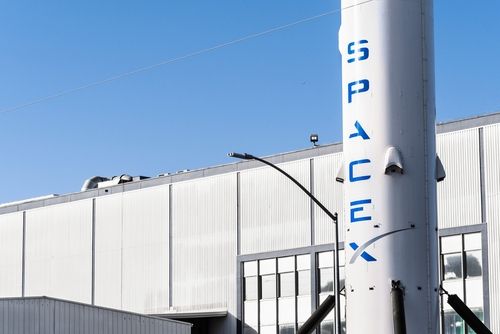
TradingKey - On June 12, Eastern Time, SpaceX ( SPCX) listed on Nasdaq at a price of $135 per share, with its stock price at one point surging to $225.64 in the subsequent trading sessions, pushing its market capitalization close to $3 trillion. However, on July 15, the stock price broke below its $135 IPO price intraday for the first time, hitting a low of $132.15 and closing at $135.27, narrowly defending the key level.
Measured from its peak, over $800 billion in market value has evaporated, representing a drawdown of approximately 40%. On the surface, it looks like a roller-coaster ride, but it is actually a normal transition from a "scarcity premium" back to "fundamental pricing." This is not because the fundamentals have suddenly deteriorated, but rather that the liquidity premium created by the trading structure is fading.
Where Does the $225 “Artificial Crowding” Come From?
SpaceX had an extremely low public float at the time of its listing, with freely tradable shares accounting for less than 5% of its total share capital. Prior to this, SpaceX had completed multiple rounds of financing in the primary market, where participants were predominantly institutional, leaving retail investors with virtually no avenue for entry. A massive wave of buying demand was unleashed simultaneously at the exact moment of listing, while tradable shares were extremely scarce, which was the direct driver pushing the stock price to $225.
However, once the initial buying demand from the IPO was digested, the liquidity foundation supporting the high price vanished. This was not because the company's fundamentals had deteriorated, but rather because the buyers capable of driving the stock price higher had already finished purchasing. Subsequently, the stock price pulled back to around $136, representing a return to fundamental valuation after the IPO sentiment premium faded.
Even greater pressure lies ahead: the expiration of the insider lock-up period. According to IPO filings, insider holdings will be unlocked in tranches starting after the release of the second-quarter financial results, continuing through June 2027. Strategists at research firm 22V Research estimate that up to approximately 44% of the company's shares could be sold once the lock-up period ends. The mere expectation of tradable shares gradually expanding from the current level of less than 5% is sufficient to weigh on the stock price.
Starlink Is Making Money, the Future Is Burning Cash
On paper, SpaceX is not cheap. Its full-year net loss for 2025 was approximately $4.9 billion, and its net loss in the first quarter of 2026 further widened to $4.276 billion.
However, the losses need to be broken down. Starlink's 2025 revenue was $11.387 billion, with an operating profit of $4.423 billion and an EBITDA margin of 63%, making it currently SpaceX's only profitable business. The losses primarily stem from Starship R&D and satellite factory construction, which are capex-driven investment expenditures rather than operating losses.
The key variable lies in ARPU, or Average Revenue Per User, which is a key metric for measuring the profitability of subscription-based businesses such as telecommunications, internet, and satellite communication services. It is calculated by dividing total revenue by the number of active users, reflecting the level of revenue contributed by an individual user. A decline in this metric typically indicates that user acquisition is coming more from lower-spending segments or facing competitive pressure.
Starlink's ARPU has dropped from $99 in 2023 to $66 in the first quarter of 2026. The decline itself is not concerning, as long as user growth is fast enough and the unit price remains above marginal cost. Starlink's user base has grown from several million to 10.3 million, covering 164 countries; the $66 ARPU remains far above Starlink's marginal service cost, meaning the logic of scaling up still holds.
There is only one scenario that truly warrants concern: user growth slowing while ARPU continues to slide. That would mean the narrative of economies of scale can no longer be sustained. The next verification window is the first quarterly earnings report (Q2 report, expected in early August), at which time both user numbers and ARPU data will be disclosed.
As a valuation reference, among companies currently with a price-to-sales (P/S) ratio of over 30 times, the vast majority have a price-to-earnings (P/E) ratio of over 100 times. SpaceX, however, not only has no P/E ratio, but its P/S ratio already exceeded 90 times at the start of its listing, indicating that the market is paying for ten years of future growth expectations for a company that is not yet profitable.
Why Starship Test Flight Matters? It Determines Short-Term Stock Price Trend
Starship's 13th test flight is scheduled for July 16. This mission will mark the first time Starship is used to launch 20 third-generation Starlink V3 satellites, validating Starship's capability to execute actual satellite deployment. For SpaceX, this is not just a technical test, but a validation of its business logic: only if Starship can transition from an R&D project into a reusable launch vehicle will SpaceX's core commercial closed-loop be truly completed.
This is precisely the core of the divergence between bulls and bears. Raymond James set its target price at $800, based on the assumption that Starship will achieve weekly commercial launches before 2028. George Noble's $30 target price, on the other hand, implies a different judgment: Starship's R&D will continue to experience cost overruns, delaying commercialization until after 2030. In other words, the disagreement is not over the current value of Starlink, but the probability of Starship's success.
The current stock price of around $135 roughly reflects a state where 'Starship has not yet been proven successful, but the market is willing to wait.' Once the test flight results exceed or fall short of expectations, the stock price will face a directional choice:
If the Starship test flight is successful (successful deployment of V3 satellites and successful recovery of the first stage), the stock price could rally to the $150–$160 range in the short term, as the market begins pricing in expectations of 'Starship transitioning from R&D to commercial operations.'
If the test flight fails (satellites are not deployed or Starship is destroyed), the stock price could fall below its offering price of $135, potentially dropping to around $120 in a pessimistic scenario, prompting the market to reassess Starship's commercialization timeline.
Amid Wall Street Disagreement: Three Core Variables Determining Stock Price Direction
Currently, Wall Street's price targets for SpaceX range from $30 to $800, with Goldman Sachs ( GS) at $205, Morgan Stanley ( MS) at $300, and UBS ( UBS) at $210. However, the divergence itself is not what matters; what matters is the analytical framework. Over the next 6 to 12 months, there are only three core variables that will determine the direction of SpaceX's stock price:
First, the execution results of Starship's test flights. This is the most imminent and direct variable. The results of the test flight on July 16 will determine the short-term direction.
Second, the actual pace of insider selling after the lock-up expiration. The expiration will begin after the Q2 earnings report. If the selling pressure after the release is absorbed by market demand, the stock price may instead stabilize; if there is heavy selling, supply pressure will continue to weigh on the stock price.
Third, whether Starlink's ARPU can stabilize. While $66 is not a crisis, if it continues to slide below $60 while user growth slows, the market will re-examine Starlink's business model.
Among the three variables, the outcome of the Starship test flight will be known by the end of this weekend; the pace of insider selling requires close attention to the reduction activity of the first batch of unlocked shareholders after the first earnings report in early August, with the full trend to be verified by subsequent quarterly earnings (the Q3 report); similarly, the ARPU inflection point will require Q2 data disclosed in the first earnings report, followed by subsequent confirmation in the Q3 report.
Does SpaceX Stock Price Upward Momentum Still Exist?
Short-term momentum is weak. The surge during the early post-listing period was driven by three one-time factors: an extremely low free float (<5%), passive buying from index inclusion (totaling tens of billions of dollars), and a retail subscription frenzy. All three forces have been fully digested and are now reversing. Insider share unlocks will gradually expand the public float, while there are currently no clear signs of new buying power to counter this.
Long-term momentum exists but has yet to materialize. Starlink is already profitable, and if Starship succeeds, it will slash launch costs per kilogram from around $2,000 to $50–$100, fundamentally transforming the valuation logic. However, the timeline for realization remains uncertain. Raymond James's $800 price target implies a schedule of achieving weekly commercial launches by 2028, which seems optimistic given the aerospace industry's historical pace.
Overall judgment: Until Starship's test flights succeed and ARPU stabilizes, any rally should be viewed as a rebound rather than a reversal. Short-term momentum is weak, and the long-term logic requires more validation signals.
The premise of the above framework is that Starlink's subscriber growth and ARPU are relatively independent variables. However, if both deteriorate simultaneously, it would mean Starlink's addressable market might be overestimated. In that scenario, even if Starship succeeds, SpaceX's valuation logic would need to be rewritten. This is a risk that requires continuous tracking.
SpaceX's business model is unique, with Starlink providing stable revenue and Starship offering long-term upside potential. The stock price performance in the first month of listing is less of a market rejection and more of a normal return from a 'scarcity premium' to 'fundamental-based pricing.'
This content was translated using AI and reviewed for clarity. It is for informational purposes only.
Recommended Articles







Comments (0)
Click the $ button, enter the symbol, and select to link a stock, ETF, or other ticker.