


Japanese and South Korean Stocks Suffer Another Bloodbath: KOSPI Plunges 6%, Kioxia Slumps 15% Leading Chip Stocks



AI Podcast


Japanese and South Korean equity markets suffered significant losses on July 16, driven by a sharp sell-off in the semiconductor sector and mounting geopolitical instability. The KOSPI plunged 6.37%, led by heavy declines in Samsung Electronics and SK Hynix, while the Nikkei 225 fell 2.79% amid sharp drops in Kioxia and SoftBank. Analysts attribute this volatility to the correction of the global semiconductor bubble and rising inflation anxieties. South Korea’s decline was further exacerbated by the tightening of domestic monetary policy, signaling a broader retreat from regional tech-heavy assets.

TradingKey - Japanese and South Korean stock markets plunged, erasing previous gains, with the KOSPI tumbling over 6%, the Nikkei 225 shedding over 2%, Kioxia plummeting 15%, and SK Hynix sliding 11%, while Samsung Electronics and SoftBank followed suit.
During Asian trading hours on July 16, both the Japanese and South Korean markets suffered sharp declines. Among them, the South Korea Composite Stock Price Index (KOSPI) experienced panic selling, with its intraday loss widening to as much as 7% before narrowing to close down 6.37% at 6,820.61 points; Samsung Electronics fell 8.77% to 255,000 won, and SK Hynix tumbled 11.53% to 1,842,000 won.
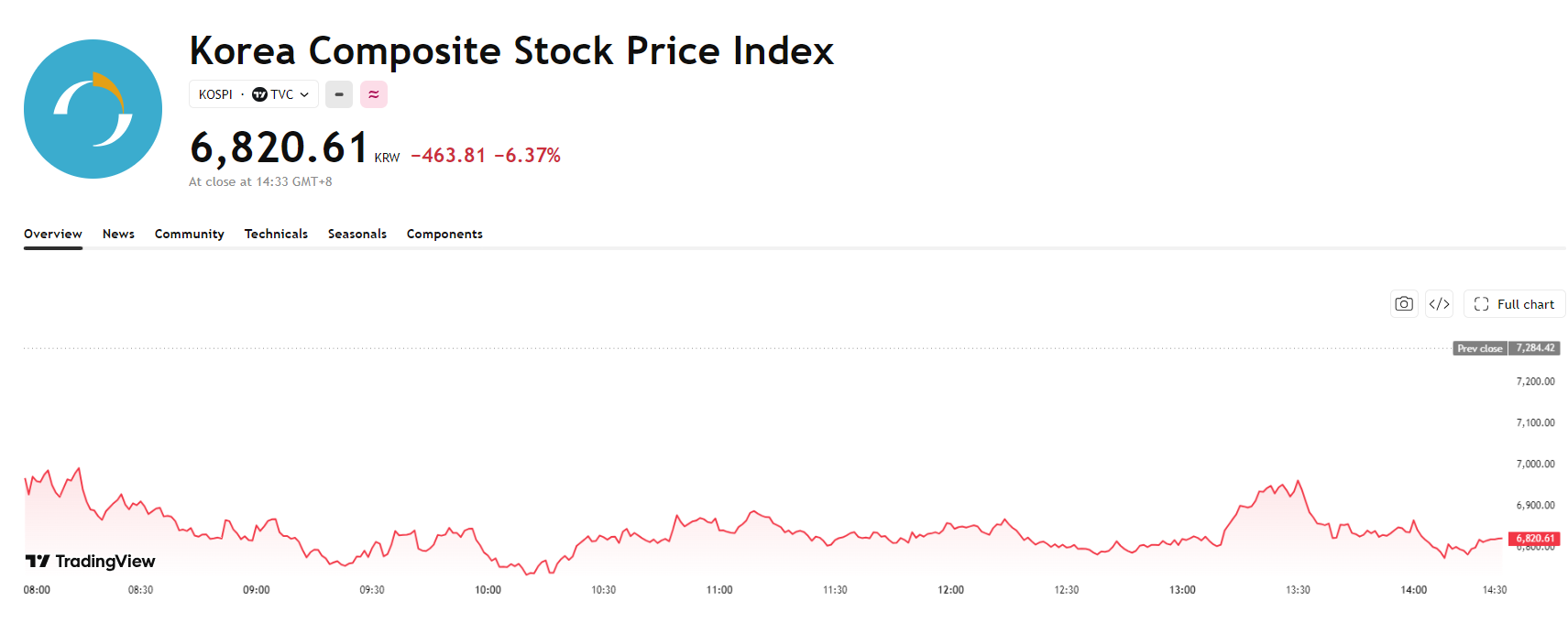 KOSPI Index Chart, Source: TradingView
Japanese equities were also not spared, with the Nikkei 225 Index dropping 2.79% to close at 66,835.49 points; Kioxia plummeted 15.03% to close at 62,110 yen, hitting its lowest level since May 26; SoftBank slid 6.27%, breaking below the 6,000 mark to end at 5,961 yen.
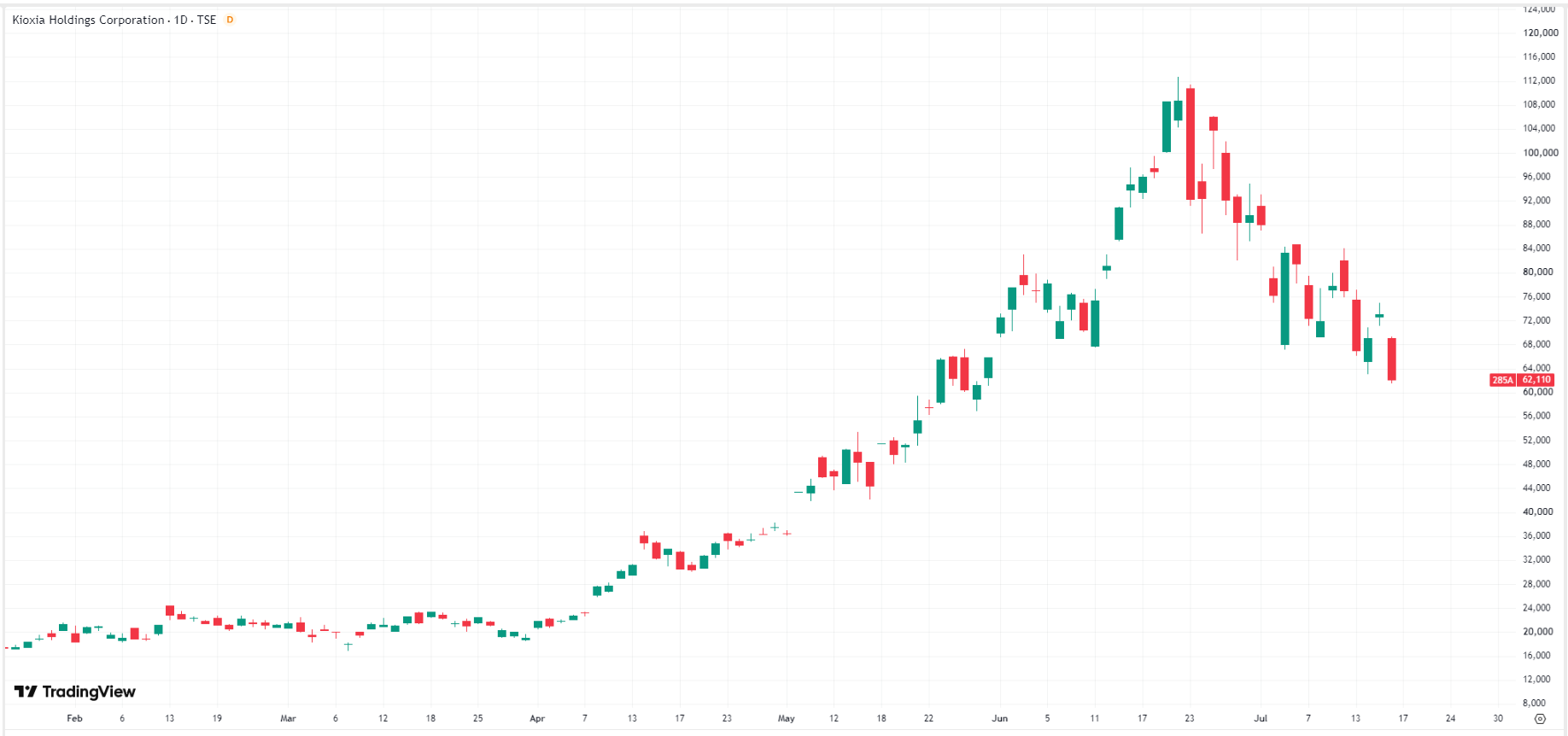 Kioxia Stock Price Chart, Source: TradingView
Today's collective plunge in the Japanese and South Korean stock markets is essentially the result of the interplay between two major macro narratives: the deflating of the global semiconductor bubble and geopolitical tensions fueling inflation anxieties. South Korea, in particular, faced a tech stock sell-off while simultaneously grappling with the tightening of domestic monetary policy, making its decline appear especially severe among Asia-Pacific markets.
This content was translated using AI and reviewed for clarity. It is for informational purposes only.
Recommended Articles









Comments (0)
Click the $ button, enter the symbol, and select to link a stock, ETF, or other ticker.