


Lithography Giant ASML Q2 Earnings Preview: Growth Challenges and Geopolitical Risks Under the AI Cycle



AI Podcast


ASML’s Q2 2026 earnings, reporting July 15, 2026, serve as a critical gauge for AI infrastructure demand. Despite an 11% stock decline since July amid concerns over AI capital expenditure sustainability, J.P. Morgan maintains an "Overweight" rating with a $2,200 target. While 2026 growth is constrained by supply chain limits, long-term value remains supported by ASML’s EUV monopoly. Investors should monitor Q3 guidance, potential capacity expansion, and the impact of evolving export restrictions on the Chinese market. Strong delivery metrics and margin stability are essential to restore market confidence in future revenue growth.
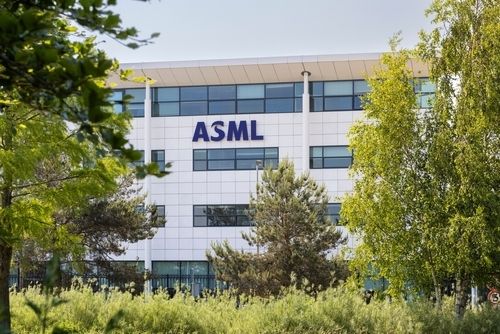
TradingKey - Global semiconductor equipment giant ASML ( ASML) will release its second-quarter 2026 financial results before the US market opens on July 15, 2026.
As the world's only manufacturer mastering extreme ultraviolet (EUV) lithography technology, ASML's financial performance is not only related to its own stock price trend, but is also an important bellwether for the intensity of global AI infrastructure investment.
Recently, market concerns over the sustainability of AI capital expenditure have intensified, and ASML's US-listed stock has fallen by a cumulative total of over 11% since July. Whether the upcoming earnings report can release positive signals will be key to determining the direction of the stock price.
J.P. Morgan has given ASML an "Overweight" rating with a price target of $2,200 ahead of the earnings release. The firm believes that although capacity cannot be fully unleashed in 2026 due to supply chain constraints, ASML's growth in 2027 is expected to significantly outperform the industry average.
Current market concerns are focused more on the sustainability of short-term growth, while ASML's technological monopoly and the essential nature of its equipment in the AI era ensure that its long-term value remains significant.
Growth Expectations Test
Previously, ASML raised its full-year guidance in the first quarter and emphasized that customer demand continues to outpace supply capacity. The market's core focus is no longer on whether single-quarter revenue meets targets, but rather on whether it can translate robust demand into actual equipment deliveries while maintaining margin stability and navigating potential restrictions on its China business.
JPMorgan pointed out in its latest research report that ASML needs to clearly signal capacity expansion and strong demand for 2027 and beyond before its stock price can achieve a breakthrough.
The bank believes that ASML's growth in 2027 is expected to be significantly higher than the overall growth rate of the global wafer fabrication equipment (WFE) market, but in 2026, limited by supply chain capacity, it will not be able to fully deliver orders.
According to analyst expectations compiled by Yahoo Finance, ASML's second-quarter revenue guidance is 8.4 billion to 9 billion euros, with a gross margin of 51% to 52%, and the market is generally focusing on whether management will raise its full-year outlook once again.
If the company's third-quarter revenue guidance meets or exceeds the market expectation of 10.34 billion euros, while confirming that downstream capacity expansion demand continues, it will serve as a direct catalyst for the stock price to rise. Conversely, if revenue meets targets but new orders are weak, it could weaken market confidence in future revenues and prompt investors to reassess whether AI demand can support current valuations.
Can AI Boom Be Verified Under EUV Technology Monopoly?
With its monopoly as the world's sole provider of EUV lithography technology, ASML has become an irreplaceable, critical node in the semiconductor supply chain. EUV equipment utilizes reflective mirror systems instead of traditional lenses to achieve nanometer-scale precision etching, making it a prerequisite for the mass production of advanced-node chips below 7 nanometers.
Currently, mainstream global foundries, memory chip manufacturers, and integrated device manufacturers (IDMs) all rely on ASML's EUV equipment to produce high-end chips used in scenarios such as AI data centers, smartphones, and personal computers. Memory makers like SK Hynix and Micron are also leveraging EUV technology to develop memory products with higher performance and lower power consumption.
ASML expects to deliver approximately 60 Low NA EUV systems in 2026, an increase of about 25% from last year. Despite robust demand, production volumes depend on whether suppliers can provide sufficient optical components, light sources, and precision parts. Investors need to closely monitor signs of supply delays—if ASML cannot scale up capacity quickly, some revenue may be deferred to subsequent quarters even with ample customer orders, which could impact short-term financial performance.
In the first quarter of this year, ASML delivered solid results, reporting revenue of 8.76 billion euros (approximately $10 billion), up 13% year-on-year, and net income of 2.84 billion euros, up 5.4% year-on-year. Driven by robust industry demand fueled by AI infrastructure investment, ASML raised its full-year guidance for the second time in its Q1 report, lifting its 2026 net sales expectation from the initial range of 34 billion to 39 billion euros to 36 billion to 40 billion euros.
Will Restrictions on China Become a Greater Problem?
The Chinese market is projected to contribute about 20% of ASML's sales in 2026, with the primary risk coming not from the already restricted EUV equipment, but from the implementation of stricter controls on advanced deep ultraviolet (DUV) systems, spare parts, and services.
ASML has already factored export controls into its full-year earnings guidance in its first-quarter financial report. Investors need to focus on developments in several areas, including whether the share of sales from the Chinese market will continue to decline, whether export license approvals for DUV equipment will impact new orders, whether after-sales service and field option sales will be affected, and whether customers in other regions such as Taiwan, South Korea, and the U.S. can absorb potential demand gaps.
Recent reports on the Dutch Trade Minister's visit to China indicate that the restrictions on ASML's sales to China are a key topic in the economic and trade dialogue between China and the Netherlands. The Dutch side stated that the goal of implementing export controls on ASML equipment is to ensure that sensitive technology is not used in scenarios that could jeopardize security.
For investors, this means that the risks facing ASML stem not only from demand cycle fluctuations in the semiconductor industry, but also from uncertainties surrounding international policy coordination and export license approvals.
The level of risk varies across different business segments. Sales of EUV equipment have long been restricted, while DUV equipment has a relatively broader market reach, though new control measures could alter its shipment rules and service boundaries. Service revenue is typically highly stable; however, if the scope of policy regulations extends to the service sector, it will also impact the predictability of future earnings.
This content was translated using AI and reviewed for clarity. It is for informational purposes only.
Recommended Articles







Comments (0)
Click the $ button, enter the symbol, and select to link a stock, ETF, or other ticker.