


SpaceX’s 25 Billion Debut Bond Suffers Rare Drop Below Issue Price, Will Surging Spreads Drag Down SPCX Stock Rebound?



AI Podcast


SpaceX’s debut bonds have experienced significant secondary market declines, with spreads widening to levels typically associated with junk-rated debt. Investors criticize the initial underwriting as overly reliant on short-term speculative capital rather than long-term institutional support. The resulting increase in capital costs, marked by annual interest expenses of up to $1.6 billion, poses risks to future earnings and valuation ceilings. While the bond market reflects heightened risk, upcoming inclusion in the Nasdaq 100 on July 7 may drive short-term price support through passive index fund inflows, setting the stage for increased stock volatility.
stock-spacex-spcx-elon-musk-invesco-band-qqq-tradingkey
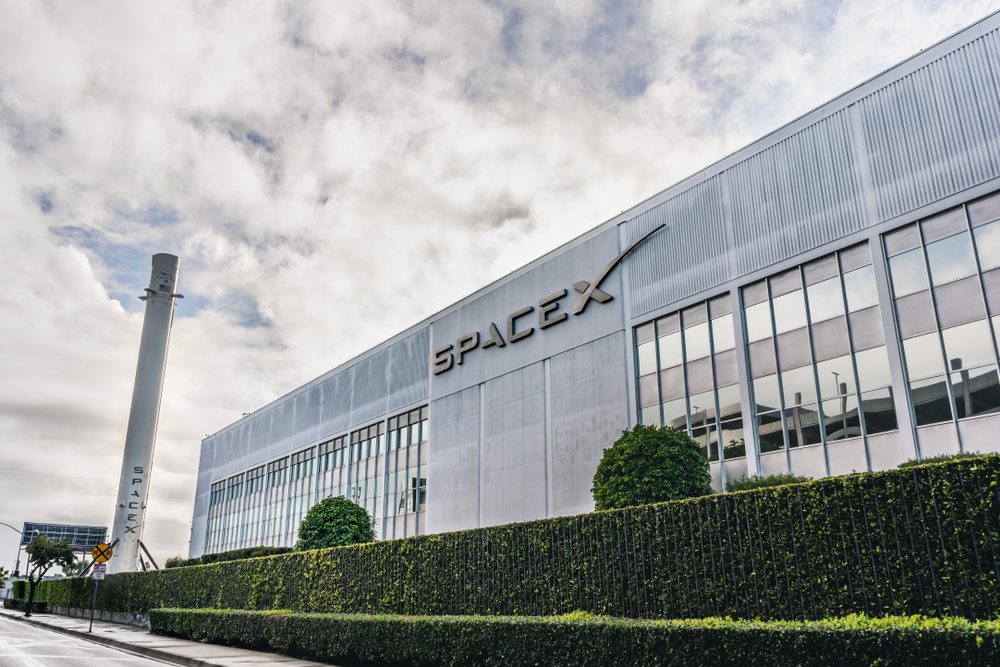
TradingKey - SpaceX's debut bonds continue to weaken, which will lower its valuation ceiling, but the short-term impact may be offset by the positive news of its inclusion in the Nasdaq.
On Thursday, Matt Brill, Head of North American Investment Grade Credit at Invesco, criticized Musk's company SpaceX ( SPCX) for its debut bond issuance, calling its secondary market performance "very messy" and saying he was "very, very disappointed." Invesco, which manages $2.5 trillion in assets, reportedly holds SpaceX bonds in its portfolio.
In late June, SpaceX issued up to $25 billion in investment-grade bonds, the largest corporate bond issuance in the U.S. this year. Initially, the bonds attracted up to $90 billion in oversubscriptions, but once they entered secondary market trading, they immediately suffered a "cliff-like sell-off."
The latest data shows that SpaceX's short-term bonds with maturities under 10 years have performed relatively resiliently, but their spreads have still been pushed to a level about 50 basis points wider than comparable tech bonds. Meanwhile, the spreads on 30-year ultra-long bonds widened violently by 28 to 32 basis points within the first week of listing, surging from 1.75% at issuance to over 2.05%, bringing unrealized paper losses of up to $305 million to primary market subscribers.
Although the three major rating agencies gave SpaceX a BBB rating (the lowest investment grade), the average market spread for such bonds is only about 0.95%. However, SpaceX's long-term bonds currently have a real spread exceeding 2%, meaning the bond market is actually pricing them with a risk premium close to junk bonds (BB rating, which averages 1.67%).
Regarding the weakening performance of SpaceX bonds, Matt Brill believes there "may have been an underwriting pricing discrepancy, or insufficient participation from long-term capital (such as pensions and insurance funds)." Asset management firm Impax Asset Management shared a similar view, claiming that "the $90 billion buying frenzy at the initial issuance was just an illusion; a large portion of that capital came from hedge funds and short-term traders who just wanted to profit from the spread by subscribing to the bonds during the SpaceX IPO craze."
The bond market has always been regarded as "smart money," and its pricing correction will inevitably exert substantial psychological and technical pressure on SPCX stock investors. The stock market was originally immersed in the AI mania of a "$2 trillion valuation," but the bond market's drop below issue price forced shareholders to remember: SpaceX has locked in high fixed rates of 5.35% to 6.65%, meaning the company's annual interest expense alone will consume $1.4 billion to $1.6 billion, significantly squeezing future earnings per share expectations.
The rare drop below issue price in SpaceX's bond market undoubtedly lowers its "valuation ceiling" because it represents a passive, significant increase in the cost of capital (WACC) for this $2 trillion behemoth. However, the stock market currently chooses to ignore the surging bond spreads, rebounding and strengthening after briefly touching $150. Yesterday, SpaceX rose 2.83% to close at $162, still remaining above its opening price on the first day of listing.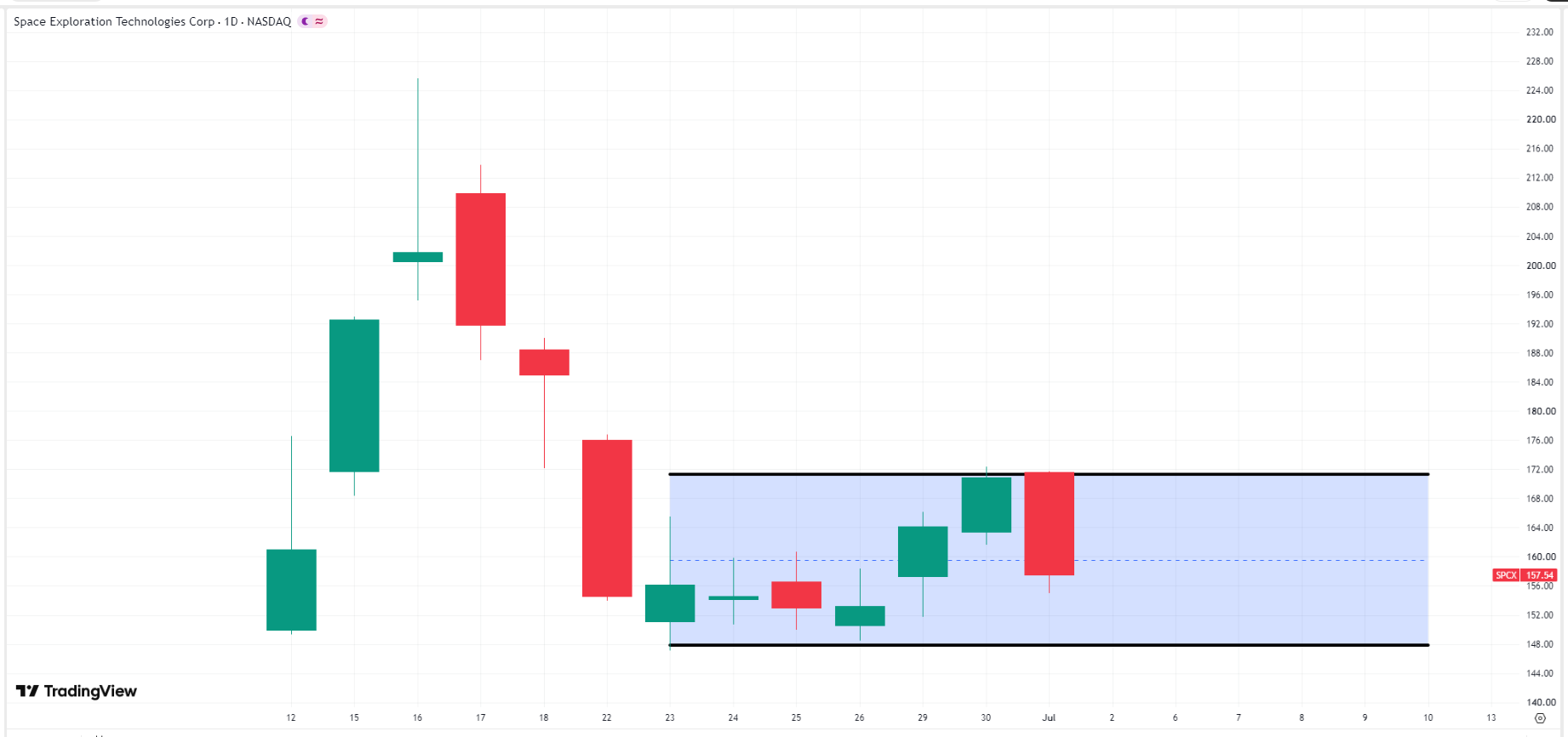 SpaceX Stock Chart, Source: TradingView
Next Tuesday (July 7), SpaceX will be officially included in the Nasdaq 100 Index, and it is expected that up to $43 billion in passive index funds (such as QQQ) will be forced to enter the market and buy shares to build positions. Therefore, next week will evolve into a classic Musk-style financial showdown of "bond credit system slump vs. passive capital inflows," and SpaceX's stock price will face severe volatility, potentially staging a "high-low spike" between $150 and $170.
This content was translated using AI and reviewed for clarity. It is for informational purposes only.
Recommended Articles



Comments (0)
Click the $ button, enter the symbol, and select to link a stock, ETF, or other ticker.