


Sports Business Drives Recovery! Nike Earnings Beat Expectations, But Greater China Revenue Remains Under Pressure.



AI Podcast


Nike reported fiscal 2026 fourth-quarter revenue of $11 billion, exceeding expectations largely due to a one-time tariff refund. While the running and soccer segments show momentum, the company faces significant headwinds. Greater China revenue declined 12% year-on-year amid fierce local competition and shifting consumer preferences. Furthermore, new U.S. tariffs are expected to add $1 billion in costs, pressuring gross margins despite management’s plans to optimize supply chains in Southeast Asia. While the "Sport Offense" strategy demonstrates progress, long-term growth remains constrained by regional underperformance and rising operational expenses.
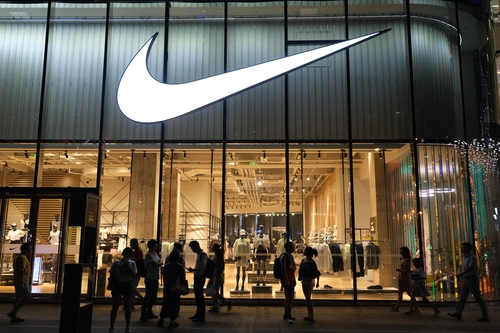
TradingKey - After the market close on June 30 local time, Nike ( NKE) announced its fourth-quarter and full-year fiscal 2026 financial results, with data showing that fourth-quarter global revenue reached $11 billion, beating market expectations, while full-year revenue was $46.4 billion, flat year-over-year.
Despite the strong overall performance, the ongoing decline in the Chinese market remains the focus of investor attention, while upcoming new tariff policies also cast a shadow over Nike's future growth.
Earnings Beat Expectations, Nike Sees Recovery
Nike's fourth-quarter financial results beat expectations, primarily driven by a one-time tariff refund and the initial success of its business adjustments.
According to the data, earnings per share (EPS) for the quarter came in at 72 cents, far exceeding Wall Street expectations of 12 cents, which included a 52-cent benefit from the tariff refund. This refund resulted from a Supreme Court ruling that declared certain tariffs previously imposed by the Trump administration invalid, and Nike expects to recover the related taxes.
Excluding the one-time benefit, Nike's business adjustments are also starting to show positive signs. Elliott Hill, President and CEO of the group, said that in fiscal year 2026, Nike made substantial improvements in team culture, product innovation, and consumer service, laying the groundwork for its "Sport Offense" strategy.
The running business achieved double-digit growth for five consecutive quarters, adding approximately $1 billion in cumulative revenue and gaining 5 percentage points of market share. The soccer business also experienced broad-based growth driven by the World Cup cycle, with sales of soccer products in the Chinese market increasing by more than 20% year-on-year.
In terms of channel innovation, Nike's premium retail experience stores performed exceptionally well. The Shanghai 001 store, Nike's first House of Innovation globally, achieved double-digit growth in the fourth quarter, while the ACG Base at Nanjing MixC World attracted over 1,700 visitors on its opening day, with sales reaching 300,000 yuan.
These data indicate that Nike is winning back consumer recognition through experiential retail and community operations.
Revenue in the Greater China region declined
Despite an improvement in global performance, the Chinese market's performance remains worrisome, with Nike's Greater China revenue in the fourth quarter falling 12% year-on-year to $1.297 billion, and full-year revenue decreasing 11% year-on-year to $5.847 billion. This marks multiple consecutive quarters of decline for Nike in the Chinese market, making it the weakest link in its global business.
He Yanfeng stated during the earnings conference call that the Chinese market is a "key long-term growth market" for Nike, and the company is pushing forward a comprehensive restructuring plan. This plan includes various aspects such as returning to sports and innovation, localized product development, reconstructing the channel system, and optimizing inventory management.
However, the competitive environment in the Chinese market is becoming increasingly fierce. Domestic sportswear brands are rising rapidly in market segments like running, outdoor, and basketball, seizing market share through precise market positioning and highly cost-effective products.
At the same time, consumer demands are also changing, with higher requirements for product functionality and personalization, while Nike's past strategy of relying on global blockbusters and classic footwear models is facing challenges.
Tariffs impose one billion in additional costs, increasing pressure on future profitability
In addition to its struggles in the Chinese market, Nike is also facing cost pressures brought by new tariff policies. According to the tariff list recently released by the U.S. government, approximately 16% of Nike's supply chain is located in China, and the new tariff policies are expected to add about $1 billion in costs to the company in fiscal year 2026.
Nike Chief Financial Officer Matt Friend stated that the company plans to mitigate this pressure by adjusting its supply chain, raising product prices, and optimizing its cost structure, though gross margins will still be affected in the short term.
The company will continue to expand its production capacity in Southeast Asian countries such as Vietnam and Indonesia, while also exploring the relocation of some production lines to regions closer to the U.S. market, such as Mexico. However, supply chain adjustments require time and significant investment, making it difficult to fully offset the rising costs brought by tariffs in the short term.
This content was translated using AI and reviewed for clarity. It is for informational purposes only.
Recommended Articles









Comments (0)
Click the $ button, enter the symbol, and select to link a stock, ETF, or other ticker.