


SanDisk Stock Has Skyrocketed 6,500% Since Spinning Off From Western Digital. Can You Buy This AI Storage Leader Now?



AI Podcast


Following its February 2025 spin-off from Western Digital, SanDisk has emerged as a primary beneficiary of the AI storage supercycle, with its stock surging over 6,500%. Transitioning into a pure-play NAND/SSD entity has unlocked operational efficiency and strategic focus on high-growth data center markets. Driven by explosive demand for high-performance storage and technological leadership in BiCS8, the company reported exceptional Q3 FY2026 earnings. While long-term fundamentals remain robust, current elevated valuations and technical indicators suggest potential short-term volatility. Investors should weigh substantial growth prospects against cyclical risks, favoring disciplined, long-term entry strategies over chasing near-term peaks.
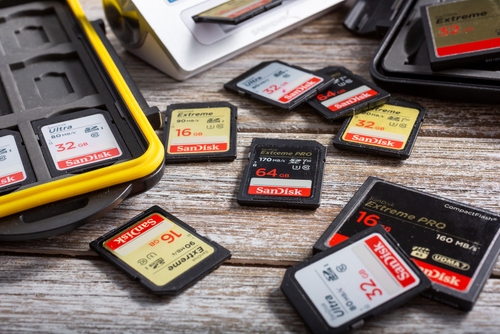
TradingKey - In February 2025, SanDisk ( SNDK) was spun off from Western Digital ( WDC) to become an independent public company focused on the NAND flash memory business. No one expected that this storage manufacturer, whose value was once obscured by its parent company's diversification strategy, would go on to create a legend in the U.S. stock market, propelled by the AI wave.
Since the spinoff, SanDisk's stock price has soared by over 6,500% cumulatively, with its market capitalization surpassing $300 billion. This not only far exceeds Western Digital's market cap but also places it among the ranks of the world's most valuable technology companies, making it one of the largest beneficiaries of the AI storage supercycle.
Behind the skyrocketing stock price is the explosive growth in demand for high-performance storage in the AI era, along with fundamental improvements driven by SanDisk's own strategic focus. However, as the stock price repeatedly hits new highs, market concerns over its valuation are also intensifying: Can SanDisk's upward momentum be sustained? Is now the right time to enter?
Why is SanDisk spinning off from Western Digital? How will an independent listing unlock AI storage potential?
Western Digital acquired SanDisk for $19 billion in 2016, initially aiming to integrate its hard disk drive (HDD) and NAND flash memory businesses to build a comprehensive storage giant. However, as market dynamics shifted, strategic conflicts between the two divisions became increasingly apparent.
As a legacy storage technology, the HDD business features slow market growth, relying primarily on cold storage demand from cloud data centers, with stable gross margins but limited upside. In contrast, the NAND flash business operates in a rapidly evolving technological segment driven by emerging demand in AI and consumer electronics, characterized by high market volatility but massive growth potential.
Since 2022, the global storage market has entered a downcycle, with Western Digital's HDD and flash memory revenues declining for multiple consecutive quarters, resulting in cumulative losses of nearly $2 billion. This dual-business model not only failed to achieve synergies but instead dragged down overall performance due to conflicts in resource allocation and strategic positioning.
In addition, activist investor Elliott has been pushing for a spin-off since 2022, arguing that SanDisk's growth potential was obscured by the parent company's diversification strategy and that operating independently would unlock greater value.
Driven by multiple factors, Western Digital completed its spin-off in February 2025, with SanDisk officially becoming an independent, publicly traded company.
Following the spin-off, SanDisk gained independent operational decision-making power and capital flexibility, enabling it to focus its strategy entirely on the R&D and application of NAND flash technology, particularly high-performance storage demand in the AI era.
The company's management can now allocate resources more flexibly to focus on high-growth, high-margin sectors such as enterprise SSDs and AI storage solutions. This strategic focus enables SanDisk to respond rapidly to market changes and capture opportunities arising from the explosive growth in AI storage demand.
In terms of operational efficiency, SanDisk has freed itself from Western Digital's internal bureaucratic constraints. Its decision-making chain has been significantly shortened, markedly improving its response speed in resource allocation and market expansion.
Why has SanDisk's stock price surged so much?
The surge in SanDisk's stock price is no accident; rather, it is the result of a convergence of explosive storage demand in the AI era, industry-wide supply-demand imbalances, and the company's technological edge.
At the 2026 CES, Nvidia CEO Jensen Huang systematically introduced the concept of ICMS (Inference Context Memory Storage) for the first time, pointing out clearly that context—rather than computing power itself—is becoming AI's new bottleneck.
As the context windows of large language models scale from hundreds of thousands of tokens to the terabyte (TB) level, the crowding out of HBM by KV Cache and context memory has become unsustainable—a realization that has directly catalyzed massive demand for high-performance NAND flash.
Total AI infrastructure spending by the four major North American hyperscalers is projected to reach $600 billion in 2026, with over 30% allocated to storage hardware. TrendForce analysts predict that the storage supply-demand deficit could persist into 2027 or beyond, with the price of DDR5—a traditional DRAM—expected to jump 40% quarter-on-quarter in Q1 2026, followed by an additional 20% increase in Q2.
As a leader in the NAND flash market, SanDisk has fully capitalized on rising product prices. The price of SanDisk's NAND chips for enterprise-grade SSDs surged by more than 100% quarter-on-quarter in the first quarter of 2026, while consumer-grade flash product prices also rose by over 10%.
SanDisk boasts deep expertise and clear advantages in NAND flash technology. Its BiCS8 (3D NAND technology) utilizes a 218-layer stack to deliver a 20% increase in single-chip capacity, a 15% boost in read/write speeds, and a 10% reduction in power consumption. Tailor-made for energy-intensive AI data centers, this technology currently accounts for only about 15% of SanDisk's production capacity, though management plans to make it the absolute majority by the end of fiscal 2026.
As yield improvements for BiCS8 technology drive a dramatic collapse in costs, SanDisk will firmly lock in its bargaining power with major customers, making a steep upward trajectory in gross margins highly probable over the next one to two years.
SanDisk is also at the forefront of the industry in terms of its product portfolio. The company's 256TB NVMe SSD is specifically designed for AI data lakes, addressing the high-capacity, low-latency storage demands of AI training and inference.
Furthermore, SanDisk is developing High Bandwidth Flash (HBF) technology, targeting next-generation AI inference workloads with a 16x capacity increase and a cost structure similar to HBM. Developed in partnership with SK Hynix, this technology will provide higher-performance storage support for AI inference scenarios in both data centers and edge devices.
Why Did SanDisk's "Pure NAND Strategy" Deliver Better-Than-Expected Earnings?
In addition to its technological advantages, SanDisk's pure-play strategy has also gained high recognition from Wall Street. Following the spin-off, SanDisk has completely shed the baggage of its legacy businesses and hit the ground running with $1.4 billion in cash flow, becoming an extremely scarce pure-play NAND/SSD play in the US stock market.
This transparent asset portfolio implies a high level of certainty, which was directly reflected in its Q2 FY2026 results, with revenue surging 60% year-over-year and net profit soaring by 672%.
Its Q3 earnings report comprehensively beat market expectations, with revenue reaching $5.95 billion, a staggering 251% increase year-over-year and a 96.69% increase quarter-on-quarter; net profit reached $3.615 billion, a sharp quarter-on-quarter increase of 350%; adjusted EPS was $23.41, also significantly exceeding the market consensus of $14.50.
David Goeckeler, CEO of SanDisk, stated: "This quarter marks a fundamental turning point in SanDisk's history—our technological leadership allows us to proactively transition our product portfolio toward high-value, data-center-centric end markets."
Although market expectations have been pushed to elevated levels, SanDisk's growth logic remains solid. Unlike previous cyclical booms in the memory market, the current market environment primarily reflects structural demand from artificial intelligence infrastructure.
Analysts believe that investments in data centers and AI-related infrastructure will surpass $1 trillion by 2030, providing a sustained and vast market space for SanDisk's high-capacity, energy-efficient solid-state drive (SSD) products. SanDisk is transforming from a mere storage vendor into a core participant in AI infrastructure, and its rising stock price is only a milestone reflection of this strategic transformation.
Is it worth buying SanDisk stock now?
From the perspective of the industry cycle, the current global AI storage market is in a super-cycle. Institutions like Goldman Sachs predict that AI-driven demand will continue to cause undersupply in the memory market until at least 2028, with the supply-demand gap expected to persist through 2028.
Data center NAND flash demand is projected to grow by 20% annually. As AI transitions from the training phase to the inference phase, the demand for storage capacity and performance will be further elevated.
As a global leader in NAND flash, SanDisk is a core beneficiary of the explosion in enterprise SSD demand, particularly the surging storage demand in AI inference scenarios, and the industry's dividend period is far from over.
Meanwhile, while the current forward P/E ratio of 58.95x appears high, considering the rapid growth of future earnings, the projected P/E based on fiscal year 2027 is only about 7x, far below the Philadelphia Semiconductor Index's average of 25x.
Some analysts believe the market still underestimates SanDisk's core position in AI storage, with its technological barriers and earnings elasticity not fully reflected, and target prices are set as high as $3,000.
However, others argue that SanDisk's stock price has accumulated too large of a gain, with its price-to-sales (P/S) ratio reaching 59x trailing 12-month sales, meaning the valuation has already priced in some future growth. With a Relative Strength Index (RSI) of 74.17, the risk of a short-term correction is rising.
Nevertheless, risk factors cannot be ignored. The storage industry is highly cyclical, and current capacity expansion may begin to ease shortages by the end of 2026. If AI demand growth falls short of expectations, the supply-demand dynamics could reverse.
In addition, SanDisk faces fierce competition from rivals such as Samsung and Kioxia, representing high risks of technological iteration. If competitors launch more advanced storage technologies, SanDisk's market share could be impacted. External factors, such as geopolitical conflicts and Fed policy shifts, could also exacerbate stock price volatility.
Summary
On balance, SanDisk's long-term investment value remains compelling. The dividends from the AI storage supercycle are far from over, the company's fundamentals continue to improve, and its valuation still has room to expand supported by future earnings. However, the stock price is currently at a short-term high, presenting a significant risk of a pullback, and investors should exercise caution.
For long-term investors with a higher risk tolerance and an investment horizon of three to five years or more, building positions on dips through dollar-cost averaging is a viable strategy. For short-term investors, it is advisable to wait for the stock price to pull back to a more reasonable range before entering the market, thereby avoiding the risk of chasing highs.
This content was translated using AI and reviewed for clarity. It is for informational purposes only.
Recommended Articles









Comments (0)
Click the $ button, enter the symbol, and select to link a stock, ETF, or other ticker.