


Apple Implements Largest Hardware Price Hike. Stock Tumbles Over 5%, JPMorgan Says Market Overly Amplified Cost Impact



AI Podcast


Apple shares fell 4.78% to $279.15 after implementing significant global price hikes across its Mac, iPad, and hardware portfolios. The market fears that rising costs, driven by supply chain pressures and foundry price increases, will weaken product demand and erode hardware margins by 20 to 30 basis points. However, JPMorgan views the impact as manageable, citing vertical integration and strategic procurement as effective hedges. While near-term earnings growth faces pressure, analysts maintain an average target price of $314.85, banking on future AI integration and foldable device expansion to drive long-term valuation toward a $6 trillion market cap.
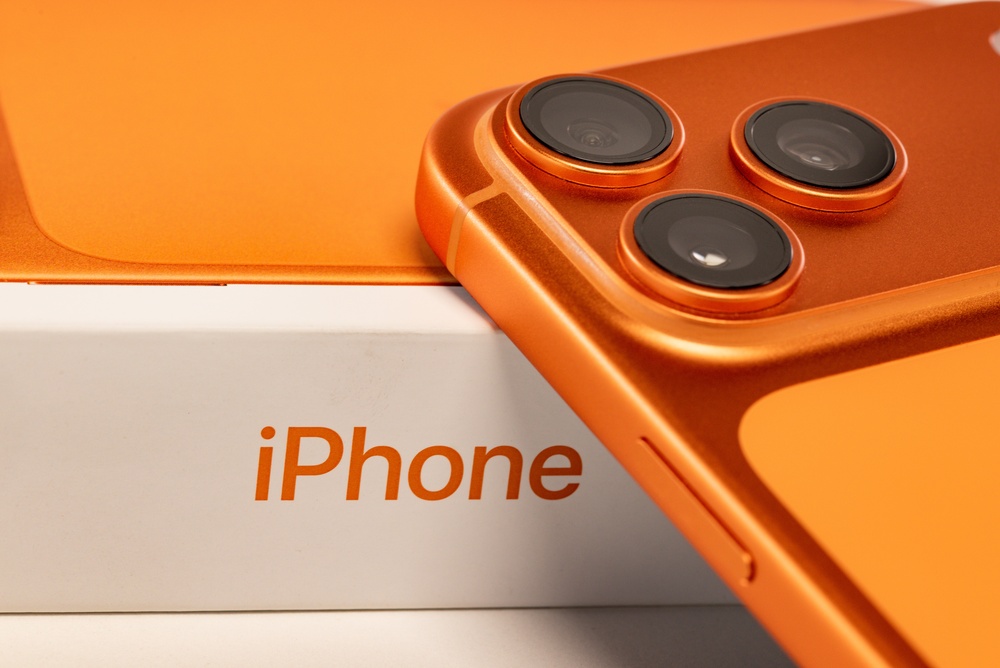
TradingKey - Apple ( AAPL) has officially implemented its largest global hardware price hike in recent years, raising prices across the board for the entire Mac series, iPad, and other products.
As a bellwether of the global consumer electronics industry, Apple's direct passing of skyrocketing supply chain costs to consumers sent shockwaves through the market, causing its stock to slide over 5% at one point on Thursday, marking its largest single-day drop since February.
As of press time, Apple was down 4.78% to $279.15.
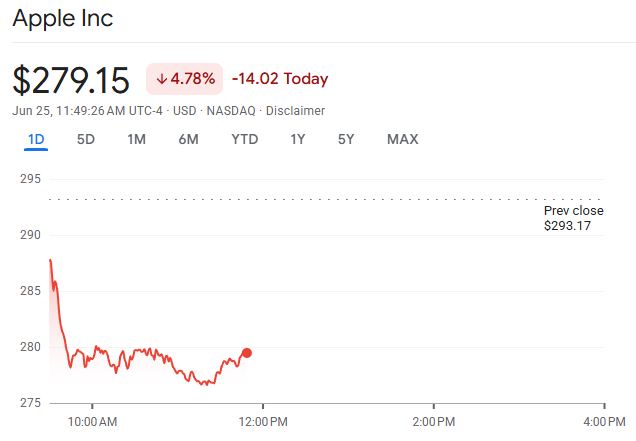
[Source: Google Finance]
The magnitude of this price adjustment for core products
Mac product line
MacBook Air 512GB: $1,099 → $1,299, up $200.
14-inch MacBook Pro 1TB: $1,699 → $1,999, up $300; 16-inch MacBook Pro prices up by as much as $500.
Entry-level MacBook Neo: $599 → $699, up $100.
iPad product line
iPad Air: $599 → $749, up 25%;
11-inch iPad Pro: $999 → $1,199;
Entry-level iPad rises from $349 to $449.
Other hardware
Vision Pro rises by $200, with smart home devices like HomePod and Apple TV seeing concurrent price increases.
Reasons for the decline in Apple's stock price
The market generally believes that Apple's price increases will directly weaken the price-to-performance ratio of its products. Among them, the audience for Macs and iPads includes a large number of students and users with inelastic office needs, and a price hike of around 20% will delay replacement cycles and reduce the willingness of entry-level users to purchase. This will lead to a decline in hardware shipments, directly weighing on overall revenue.
Counterpoint estimates that if costs continue to be passed on across the entire product line, the average price of devices will generally rise by $150 to $200, with high-memory models facing a larger impact.
In addition, even if costs are passed on through price increases, they will not fully cover the losses from rising chip prices. Apple previously relied on long-term supply chain agreements to lock in prices and large-scale centralized procurement to hedge costs; now that low-priced inventory is depleted, combined with simultaneous price hikes in TSMC's foundry services and structural components, multiple costs are compounding.
In the short term, price increases cannot fully cover the incremental chip expenditures. Institutions predict that the company's hardware gross margin will decline by 20 to 30 basis points, weakening the elasticity of earnings growth.
However, JPMorgan still believes the market is overstating the cost impact, noting that Apple has multiple means to hedge against silicon inflation.
The firm stated that memory chips bring an incremental cost of over $100 per iPhone, but Apple can save $40 through global components procurement bargaining; vertical integration, such as self-developed modems and reduced reliance on Qualcomm chips, can save another $15. It only needs to raise the average price by about $50 (a mid-single-digit increase) to absorb the remaining costs, putting only a slight pressure of 30 basis points on the gross margin, with the overall company profitability facing only a 20-basis-point negative impact, making the impact manageable.
JPMorgan predicts that the iPhone 18 series will only see a price increase of about $50, far below the market's pessimistic expectations; Apple can shift the pressure of significant price hikes to the new foldable iPhone category while maintaining moderate price adjustments for standard iPhones to balance sales volume and profits.
Currently, Wall Street analysts have an average target price of $314.85 for Apple, with a street-high target of $400, corresponding to a maximum market capitalization of nearly $5.9 trillion. If the narrative of 'AI + foldable screens' materializes, Apple is expected to challenge the $6 trillion market value range.
This content was translated using AI and reviewed for clarity. It is for informational purposes only.
Recommended Articles





Comments (0)
Click the $ button, enter the symbol, and select to link a stock, ETF, or other ticker.