


New Space King vs. EV Giant: Musk’s SpaceX and Tesla, Which Is the Better Investment?



AI Podcast


On June 12, SpaceX debuted on the Nasdaq, achieving a $1.77 trillion valuation and briefly exceeding $2.7 trillion in market cap. While Tesla operates as a mature EV entity transitioning toward AI and robotics to offset hardware margin pressure, SpaceX functions as a high-growth monopoly in space infrastructure and telecommunications. SpaceX’s significant capital expenditures lead to net losses, yet its market pricing reflects immense long-term expectations. Tesla offers established profitability for pragmatic growth investors, whereas SpaceX presents a high-risk, high-reward opportunity for those seeking exposure to its unique, absolute market dominance.
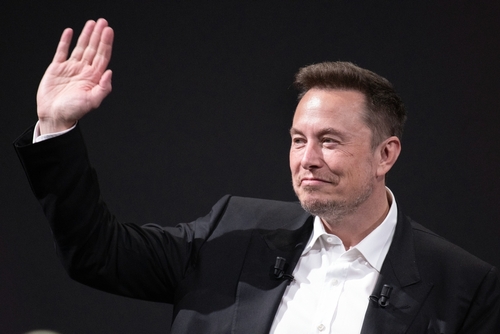
TradingKey - On June 12, Elon Musk's aerospace company, SpaceX (SPCX), officially debuted on the Nasdaq, completing the largest IPO in history by raising $75 billion at a listing valuation of $1.77 trillion. Post-listing, SpaceX's share price surged past the $200 mark, with its market capitalization briefly exceeding $2.7 trillion, overtaking Amazon to become the world's fifth-largest publicly traded company.
Unlike SpaceX's stock price, which continues to reach record highs, the share price of Musk's other company, Tesla ( TSLA ), has been fluctuating around $400. This disparity has not only captured the market's attention but has also sparked comparisons between the two. Faced with these two behemoths under Musk, which one is truly more worthy of your investment?
Tesla: A Mature "EV Giant"
Tesla is a mature giant that has built a solid stronghold in the EV market, but is eager to prove that it is an "AI company" rather than a "pure automaker." According to Counterpoint's latest data, Tesla's market share in the battery electric vehicle (BEV) market is approximately 13%, which is 2% higher than BYD's, ranking first globally.
However, Tesla is facing an intense global price war (especially from Chinese automakers), which has squeezed its hardware gross margin. Faced with this dilemma, Tesla is forced to transition toward a new ecosystem centered on AI computing power, Full Self-Driving (FSD), and energy storage.
In May 2026, Tesla officially confirmed that its FSD system supports the Chinese market, with full regulatory approval expected in Q3 2026. Furthermore, Tesla expects its capital expenditures for the full year of 2026 to exceed $25 billion, the majority of which is being funneled into expanding its AI infrastructure to pave the way for the mass production of the Cybercab (Robotaxi) and the Optimus humanoid robot. Notably, Tesla's energy storage deployment in the first quarter reached a record 8.8 GWh, and the gross margin of its energy storage business climbed to an all-time high of 39.5%.
SpaceX: The Wild "New King of Space"
SpaceX was originally just a "rocket launch company" founded in 2002, with its business primarily comprising three major segments: commercial rocket launches, Starlink, and Starship. However, with Musk's merger of xAI and acquisition of Cursor, SpaceX has evolved into a super-monopoly spanning telecommunications, computing power, and space infrastructure.
Over the past year, SpaceX's total annual revenue reached $18.67 billion, with Starlink contributing $11.4 billion, accounting for as much as 61%. However, SpaceX's massive capital expenditures resulted in a net loss. According to financial data, SpaceX's capital expenditures reached $20.7 billion, with over $10 billion flowing into AI, while R&D spending on Starship consumed approximately $3 billion.
Although SpaceX lost $4.28 billion in the first quarter of 2026 alone, the market has assigned it a price-to-sales ratio of over 90 times and a market capitalization of up to $2.6 trillion, meaning that expectations for the next 10 years have already been "priced in" ahead of time, which is the crazy part. On June 14, Musk was even more outspoken, stating that SpaceX's revenue could reach $1 trillion by 2030, representing 53 times its 2025 level.
Tesla vs. SpaceX: Which is the Better Investment?
Although both Tesla and SpaceX were founded by Elon Musk, they differ significantly in their positioning, core business, and financial status, as outlined below:
Tesla | SpaceX | |
|---|---|---|
Industry Positioning | Mature EV giant ➔ Transitioning to AI and robotics | Absolute monopoly and the new king of space |
Primary Revenue Sources | EV sales, energy storage systems, and FSD software subscriptions | Starlink subscriptions, commercial rocket launches, and defense contracts |
AI Industry Prospects | Dojo supercomputer, Robotaxi, and Optimus robot | xAI, Cursor, building "space-orbit AI data centers", and Starship autonomous navigation |
Financials & Gross Margins | Following intense competition in the EV market, hardware gross margins are under pressure; now relying on AI software to boost profit margins | Overall still in an expansionary loss phase, but Starlink's cash flow has turned positive |
Listing Status | Mature and stable public company | Just completed the largest IPO in history on June 12 |
Market Cap | Approximately $1.5 trillion | Approximately $2.6 trillion |
As we can see, Tesla has survived its toughest "production hell" and the "brink of bankruptcy," and now possesses healthy cash flow and solid profitability, making it more suitable for pragmatic growth investors. On the other hand, SpaceX enjoys global "uniqueness" and "absolute monopoly power," with no other company on Earth capable of competing with its launch costs, though it may face risks of valuation correction, making it more suitable for investors with a high risk tolerance. Therefore, deciding whether to invest in SpaceX or Tesla depends on one's own risk appetite.
This content was translated using AI and reviewed for clarity. It is for informational purposes only.
Recommended Articles





Comments (1)
Click the $ button, enter the symbol, and select to link a stock, ETF, or other ticker.