


Can't Buy Anthropic, What Will the Market Buy? AI Stocks Worth Buying Before the Anthropic IPO



AI Podcast


Anthropic’s confidential S-1 filing signals an impending IPO at a valuation nearing $1 trillion, yet limited retail access and high valuations present significant risks. Investors should prioritize "shadow stocks" and infrastructure partners over direct bets on a single model developer. Strategic exposure via Amazon and Google offers diversified equity stakes, while Broadcom and CoreWeave provide leverage on necessary computing demand. Furthermore, integrating Claude into enterprise workflows via Salesforce and Palantir creates high-barrier, defensible moats. Focusing on these AI value chain nodes provides a more predictable, risk-adjusted path to capturing long-term growth versus the concentrated risks of an AI unicorn.
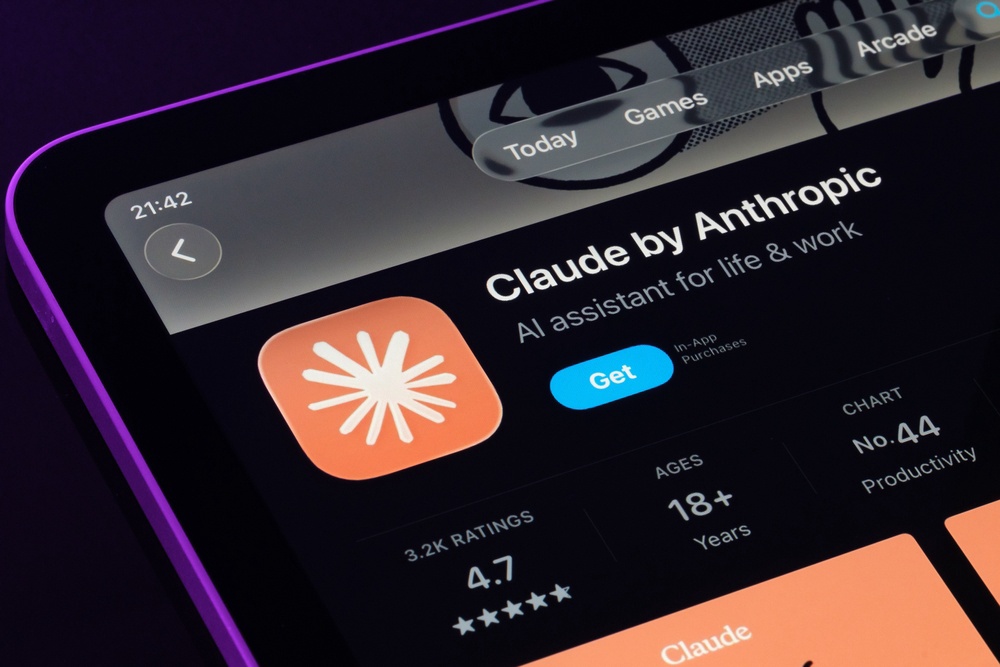
TradingKey - As an AI super-unicorn with a valuation nearing $1 trillion, Anthropic's path to going public has constantly captured the attention of global capital markets.
On June 1, Anthropic, a star player in the AI sector, announced that it has confidentially filed its S-1 registration statement with the U.S. Securities and Exchange Commission (SEC), officially initiating the IPO process. The tech company, renowned for its Claude large language model, is expected to list on the U.S. stock market this autumn, and this confidential filing undoubtedly represents a major step forward in its timeline to go public.
Even more strikingly, just a week before filing for its IPO, Anthropic completed a massive $65 billion Series H funding round, which propelled its post-money valuation to $965 billion.
However, for retail investors, this capital feast seems out of reach. A confidential S-1 filing means retail investors cannot participate in the early subscription phase; even by the time of the official listing, the crowding-out effect from institutional allocations will make it difficult for ordinary investors to secure a piece of the pie.
In this capital carnival of the AI giant, everyday investors seem shut out behind closed doors, left to watch the opportunity slip away.
Are there other avenues in the public markets to capture the spillover opportunities from Claude's rising valuation? Can investors indirectly benefit from this technological revolution by investing in other segments of the AI value chain? These questions are increasingly becoming the focal point for everyday investors.
I. Buy Shadow Stocks - Amazon, Google, Zoom
Tracing Anthropic's capitalization process, this AI unicorn has successfully completed seven funding rounds from Series A to Series G since its inception. Following the closing of its Series G round, its post-money valuation has climbed to approximately $380 billion, building a stellar lineup of shareholders.
The specific ownership structure reveals that Amazon leads the tech giants with a 9% stake, followed closely by GIC (8%), Microsoft (7%), Coatue (6%), Google (6%), and Nvidia (5%), while the founding team and the employee option pool account for 21% and 19%, respectively. This diversified capital backing not only paves the way for its IPO but has also spawned a group of highly valuable "shadow stocks" in the secondary market.
As the tech giant with the highest ownership stake in Anthropic, Amazon ( AMZN) is undoubtedly one of the largest beneficiaries of this listing. In addition to directly holding a 9% stake in Anthropic, Amazon has established a deep partnership with Anthropic through AWS (Amazon Web Services).
This means that regardless of how Anthropic fares in the model race, Amazon can secure stable and massive cash flows through AWS and its custom AI chips (Trainium). This business model of "offense through equity appreciation and defense through computing infrastructure monopoly" provides risk-mitigation capabilities unmatched by any single AI company.
In the fierce war of AI large language models, betting on a single company carries extremely high risk. Google ( GOOGL) provides investors with an ingenious "dual-track arbitrage" play.
Investing in Anthropic is a single-track bet, whereas buying Google is equivalent to acquiring exposure to both Anthropic's equity (6%) and the growth option of its proprietary Gemini large model at the cost of a single asset.
Also worth mentioning is Zoom ( ZM )'s investment in Anthropic was not particularly large, but even after subsequent rounds of dilution, the book value of this stake has reached the level of billions of dollars.
Compared to Zoom's own market capitalization of approximately $29 billion, this single investment represents 7% to 15%—or even more—of its market value. For giants like Amazon and Google, billions of dollars in unrealized gains are merely a non-core item in financial reports, barely moving their valuation frameworks.
But for Zoom, this is enough to become a key variable for the market to re-evaluate its asset value—when Anthropic debuts on public markets at a valuation nearing a trillion dollars, the long-overlooked equity investment on Zoom's balance sheet will suddenly become impossible to ignore.
II. AI Hardware and Infrastructure - Broadcom, CoreWeave
Setting one's sights on the underlying compute supply chain supporting Claude may be a more robust capital allocation strategy than directly participating in its IPO. After all, no matter how the technical pathways of large AI models iterate, the massive demand for computing power remains an unavoidable, rigid cost.
Broadcom ( AVGO) is unique because it stands at the intersection of Anthropic's deepening partnership with Google. Under the latest agreement, starting in 2027, Anthropic will receive large-scale AI computing power support based on Google's TPU processors and provided by Broadcom; these chips will be used directly for training and inference of the Claude model.
As a key chip and networking supplier behind Google's TPU ecosystem, the incremental revenue Broadcom derives from this order has far greater elasticity relative to its own revenue size than the elasticity Nvidia gains from GPU orders—Nvidia's revenue base is already so massive that orders from any single customer can hardly move its growth rate significantly.
Meanwhile, Broadcom's custom chip business is in a high-speed ramp-up phase, and Anthropic's TPU demand fits perfectly onto this growth curve.
At the same time, CoreWeave ( CRWV) as a representative of the 'neo-cloud,' does not offer a full suite of cloud services like AWS and Azure, but instead is highly focused on high-density computing power leasing specifically for AI training and inference scenarios.
Its multi-year agreement reached with Anthropic in April 2026 means that Claude's production-grade workloads will run directly on CoreWeave's platform. Compared with traditional cloud providers, CoreWeave is much smaller, so the boost to its revenue from Anthropic's computing orders will be significantly amplified.
More importantly, CoreWeave's close relationship with Nvidia allows it to get priority access to the latest GPUs—a supply-side advantage that in itself is a moat amid the ongoing shortage of AI computing power. As Claude's inference demand continues to climb with the expansion of enterprise customers, CoreWeave, as the direct host, has far clearer certainty in earnings growth than chip foundries that only benefit indirectly.
III. AI Software Competitors - Salesforce, Palantir
The value logic of enterprise software platforms is entirely different from that of equity shadow stocks or computing power ecosystem stocks—it depends on whether Claude can be embedded into daily enterprise workflows, transforming model capabilities into the platform's own growth engine.
Salesforce ( CRM )'s advantage lies in its capture of both 'equity revaluation' and 'business synergy.' It holds a stake in Anthropic through its venture capital arm and has long integrated Claude deeply into its own CRM ecosystem, covering core scenarios like sales automation, customer service, and data analytics.
This means that as Claude's capabilities iterate, Salesforce does not need to adapt from scratch. Its enterprise customers can directly invoke more powerful AI capabilities within their existing workflows, an 'integration-as-delivery' model that gives it a shorter path to monetization than SAP or ServiceNow.
On the other hand, Palantir ( PLTR )'s value lies not in corporate office scenarios, but in high-security level distribution within government, intelligence, and defense sectors. In 2024, Palantir, Anthropic, and AWS entered into a three-way partnership to integrate the Claude model into the Palantir AIP platform, directly serving U.S. intelligence and defense agencies. Subsequently, Anthropic joined Palantir's FedStart program, helping Claude enter government departments under FedRAMP High and DoD IL5 standards.
The barriers to entry for this channel are extremely high—compliance thresholds and switching costs for government clients are far greater than those for enterprise clients. Once Claude is embedded into defense and intelligence workflows via Palantir's platform, its moat in this scenario is not just a matter of 'user-friendly functionality' like Salesforce's advantage, but a lock-in at the level of being the 'sole compliant option.'
Within Anthropic's overall enterprise distribution landscape, the government track represented by Palantir is almost impossible for other platforms to replicate.
Summary
While Anthropic's IPO is undoubtedly a landmark event of the century in the AI sector, for investors seeking stable returns, a direct bet on this single-model company with a valuation approaching a trillion dollars is not the optimal strategy. An excessively high IPO valuation not only prices in future growth expectations prematurely, but also forces investors to solely shoulder the massive uncertainties of intensifying competition and continuous cash burn in the general large language model race.
By contrast, investing in key nodes of its value chain offers a superior risk-reward profile. Buying companies like Amazon, Broadcom, and Salesforce is a wager on the certainty of the broader AI industry—regardless of whether Claude ultimately delivers on expectations, the demand for computing power will not vanish, and the transition toward intelligent enterprise software will not slow down. The former strategy requires simultaneously betting correctly on the technical roadmap, profitability, and valuation logic, whereas the latter only requires believing in a trend. Capturing the long-term compounding benefits of the AI era with lower risk exposure and a more predictable path to profitability is what everyday investors truly need. In the capital markets game, certainty itself commands a premium.
This content was translated using AI and reviewed for clarity. It is for informational purposes only.
Recommended Articles









Comments (0)
Click the $ button, enter the symbol, and select to link a stock, ETF, or other ticker.