


Is Buying a SpaceX ETF Worth the Risk?—And What's the Best Investment Pre-SpaceX IPO?



AI Podcast


Investors are seeking pre-IPO exposure to SpaceX via ETFs. Funds like Baron Partners (BPTIX), Baron First Principles (RONB), ERShares Private-Public Crossover (XOVR), and Tema Space Innovators (NASA) have seen significant inflows. However, large inflows can dilute SpaceX's weight within these funds. Destiny Tech100 (DXYZ) offers the most direct exposure, holding SpaceX as its largest position. Investors should consider the current SpaceX weight, implied valuation, and other portfolio holdings. The "scarcity value" of pre-IPO exposure will vanish once SpaceX begins trading publicly.
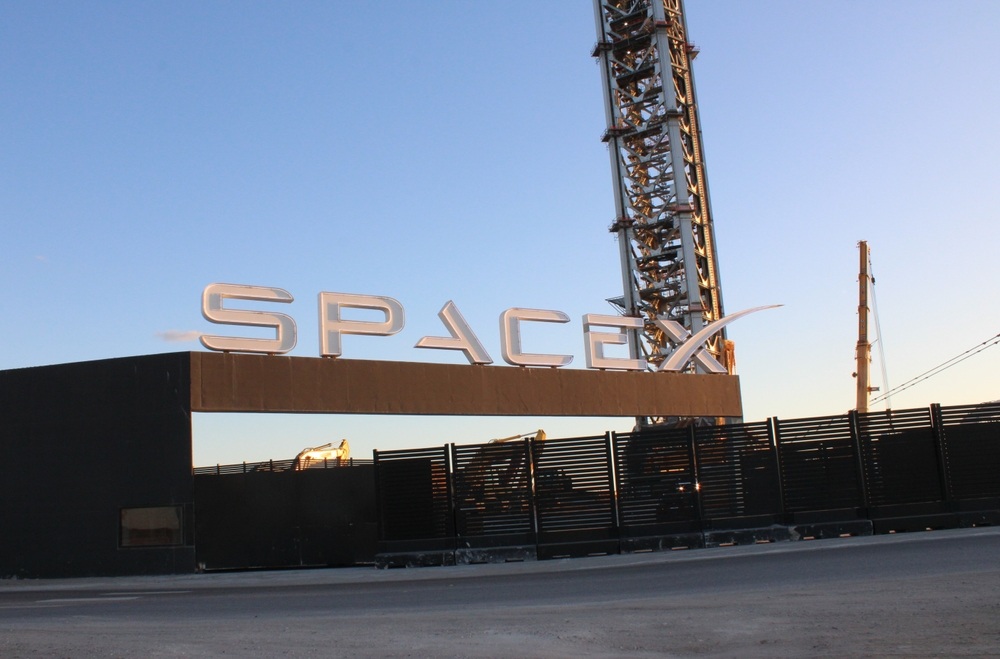
TradingKey - Investors are rushing to own a piece of SpaceX prior to the SpaceX IPO. In May 2026, a combined $7.9 billion in net inflows went into four ETFs that already hold private shares—Baron Partners (BPTIX), Baron First Principles (RONB), ERShares Private-Public Crossover (XOVR), and Tema Space Innovators (NASA). That tide of money represents genuine enthusiasm, but it also brings up a more difficult question: If you want to get some exposure to SpaceX, is purchasing a SpaceX ETF a smart move?
What ETF Actually Owns SpaceX?
Several vehicles now disclose exposure to SpaceX, but the paths are not the same. As of April 30, 2026, Baron Partners (BPTIX) is a mutual fund that had about 31.7% of its net assets in SpaceX. That's a high single-position weight for a diversified fund, but it was before a torrent of about $3.8 billion in new cash came to push total assets to nearly $16.6 billion by the end of May. Since it is difficult to add quickly to private stakes, that asset growth likely diluted SpaceX’s percentage weight, even if the dollar amount of the stake remained comparable.
Among ETFs, the Baron First Principles ETF (RONB) revealed a SpaceX weighting just under 1.9% with an internal mark reflecting an aggregate SpaceX valuation of c. $1.25 trillion as of late May. The ERShares Private-Public Crossover ETF (XOVR) also has a greater SpaceX weight (14.4%) and an implied valuation at close to $1.55 trillion. The Tema Space Innovators ETF (NASA) revealed a mid-single-digit weighting of roughly 6.5% with an implied valuation of around $1.51 trillion. Put in simplest terms, a lower internal valuation mark can mean more potential upside if the stock lists higher, but these marks can and do shift as new information arises prior to the SpaceX IPO.
The KraneShares Public-Private AI & Technology ETF (AGIX) went another way. Following the strategic combination of SpaceX and Elon Musk’s xAI that injected assets from xAI into SpaceX, AGIX's previously owned xAI shares—roughly 3.38% of the portfolio as of February 2, 2026—were swapped into new SpaceX equity. AGIX also made a third SpaceX investment in May; as of May 29, SpaceX accounted for around 2.09% of the AGIX portfolio. That’s significant exposure, but it’s in the low single digits.
Finally, Destiny Tech100 (DXYZ) is a publicly traded closed-end fund that has a somewhat similar feel to an ETF when viewed on the exchange, but it is different in its structure. It holds pre-IPO positions in a number of high-profile private companies, including SpaceX, OpenAI, Anthropic, and Stripe. For investors who want the clearest path to buying SpaceX in the public markets before the company lists, DXYZ is the clear winner: SpaceX comprises roughly 16.2% of the fund, its largest position.
Why a SpaceX ETF May Not Be the Best Way to Bet on SpaceX
Purchasing an ETF based on a single holding is always a blunt instrument, and with SpaceX it is even blunter. The yield you can expect from any SpaceX ETF on the way to that first trade will be made up of two shifting factors: How big SpaceX is in the fund at any given moment, and how the valuation of SpaceX moves before and at the IPO.
Asset flows distort the first input. Against that background of a fixed amount of private SpaceX shares belonging to the ETF, when money comes pouring in a flood wave into that ETF, the SpaceX weight tends to fall. Suppose a fund is holding at a 10% weight $200 million of SpaceX. If assets increase from $2.0 billion to $2.5 billion on new inflows, that same SpaceX position now accounts for 7.5% of the fund. That lower weight dampens both the upside and downside impact—of whatever SpaceX does at the IPO. This is not hypothetical. Just that is what we saw across the ETFs that took in the $7.9 billion surge in May.
Valuation marks add a second complexity to the input. Although RONB, XOVR, and NASA revealed a range of implied valuations in late May, these marks can be revised by the managers as more guidance on the SpaceX IPO is received. A lower starting mark offers more upside on paper if the stock comes out high, but that cushion can evaporate overnight if the fund raises its internal valuation prior to trading. You're not just betting on SpaceX; you're also betting on when and how a manager updates its mark-to-model.
There's also a timing issue that investors simply overlook. The "scarcity value" of a SpaceX ETF—the ability to offer pre-IPO exposure—vanishes once SpaceX starts trading. That means anyone can buy the stock directly. And if some current buyers are just parking money in these vehicles to wait out the listing, redemptions can come after day one.
Is It Time to Buy a SpaceX ETF Now?
Start with your objective. DXYZ has the largest disclosed weight, but that exposure is entangled in a closed-end structure that currently trades at a steep premium to net asset value. Premiums can vanish if enthusiasm evaporates, or the SpaceX IPO disappoints, converting a tailwind into a headwind—even if the underlying holdings do fine.
For more of a thematic play on the broader space economy that happens to include SpaceX, NASA offers a diversified approach with a mid-single-digit SpaceX weight, but most of the portfolio likely dominates outcomes and it has already run hard.
If you are seeking a smaller, cleaner sleeve of exposure tied to SpaceX's private valuation, that's RONB and XOVR, though they couldn't be more different as entry points. RONB's weight toward the end of May near 1.9% and lower implied valuation suggest more theoretical upside to the first print, yet the small weight means the impact may be modest and the fund can still re-mark before the SpaceX IPO. XOVR’s weight around 14.4% has a lot more punch but its implied valuation was higher so there is less cushion if the listing comes in soft.
AGIX provides a somewhat unique way to play the SpaceX/xAI partnership, but its current exposure is in the low single digits, so the rest of its AI portfolio will determine returns.
If you choose to go ahead, know three things before you press buy: The current SpaceX weight in the fund, the most recent implied valuation baked into the fund's mark, and what else in the portfolio is most likely to drive returns if SpaceX's weight is smaller than you think.
Recommended Articles








Comments (0)
Click the $ button, enter the symbol, and select to link a stock, ETF, or other ticker.