


SpaceX IPO Dual Boost. FTSE Russell Amends Admission Rules, U.S. Space Force $2.29 Billion Order Lands Simultaneously



AI Podcast


SpaceX secured a $2.29 billion U.S. Space Force contract for its Space Data Network backbone and a major deal with American Airlines for Starlink on aircraft. Concurrently, FTSE Russell introduced a fast-track rule for large IPOs, enabling quicker index inclusion. These developments are viewed as significant preparatory steps for SpaceX's anticipated record-breaking IPO, with investor expectations high. The rule change by FTSE Russell, mirroring Nasdaq and S&P Dow Jones, aims to enhance index representativeness, though it raises volatility concerns for passive funds. SpaceX's potential $1.75 trillion valuation would make it a core index holding.
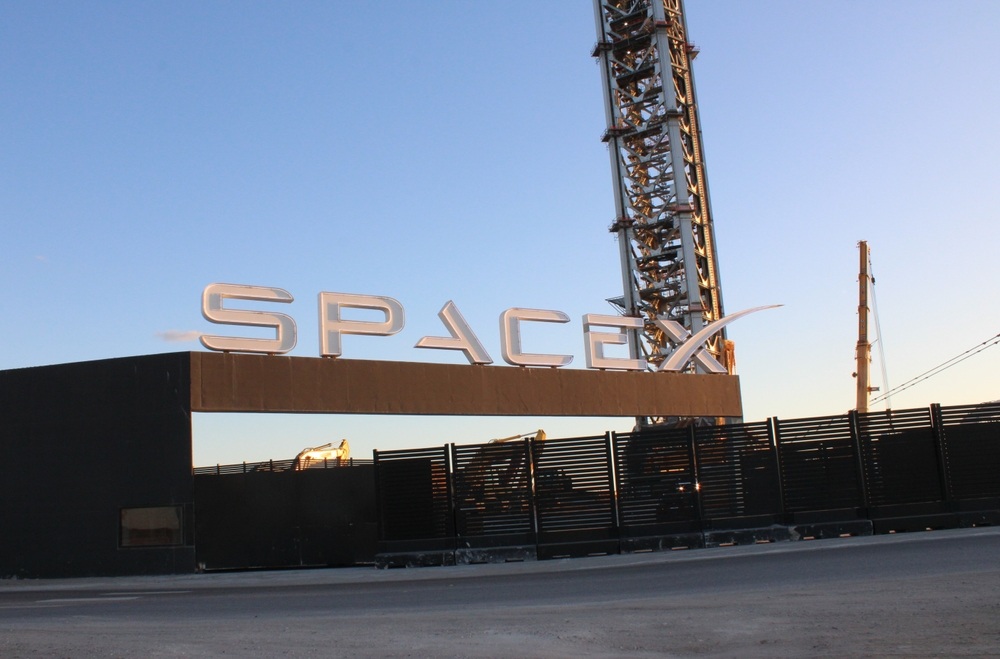
TradingKey - At a critical juncture as SpaceX gears up for history's largest IPO, the U.S. Space Force and global index giant FTSE Russell released major positive developments on the same day, injecting dual momentum into the star aerospace company's path toward going public.
The U.S. Space Force announced a $2.29 billion military satellite communications contract for SpaceX, while FTSE Russell adjusted its index inclusion rules to create a fast-track for large IPOs; both moves are widely viewed as significant groundwork for SpaceX's listing.
Since SpaceX officially filed its prospectus with the SEC last Wednesday, investor expectations for this record-breaking IPO have surged to a peak.
Secured $2.29 billion military contract
The U.S. Space Force announced Tuesday that it has awarded SpaceX a $2.29 billion fixed-price, non-traditional contract to build the Space Data Network backbone—a highly resilient network architecture capable of providing the military with high-capacity, low-latency data transmission services.
The U.S. Space Force explicitly requires SpaceX to deliver a fully operational prototype system by the end of 2027. Notably, the network will perform a critical strategic function by providing near-real-time communication channels for data transmission from missile warning and tracking sensors to interceptors—a capability viewed as a core pillar of the Trump administration's "Golden Dome" missile defense initiative.
Colonel Ryan Frazier, the Space Force acting acquisition executive overseeing the project, stated, "The Space Data Network backbone fully integrates innovations from the commercial sector, establishing a solid foundation for space mission data transmission and significantly enhancing the mission efficiency of warfighters."
In terms of technical architecture, the Space Data Network backbone is a distributed Low Earth Orbit (pLEO) satellite constellation that will work in tandem with the Space Development Agency's "Transport Layer" system to form a unified satellite communications architecture, providing critical data transmission support for various current and future Department of Defense missions.
The Pentagon revealed that, in addition to SpaceX, the Space Force plans to identify more contractors this summer to be responsible for satellite manufacturing and the construction of other network components.
SpaceX CEO Elon Musk subsequently emphasized on social media that this military project will be implemented by "Starshield," its military satellite communications system, which operates completely independently of the civilian "Starlink" system.
Notably, SpaceX also secured a major network contract from American Airlines on Tuesday. American Airlines issued a statement on Tuesday saying the company plans to install Starlink on more than 500 narrow-body aircraft starting in the first quarter of 2027. As of now, Starlink has reached partnership agreements with more than 30 airlines, including United Airlines, Southwest Airlines, Hawaiian Airlines, airBaltic, and the Lufthansa Group.
FTSE Russell Adjusts Index Rules
Furthermore, FTSE Russell announced adjustments to its index inclusion rules on Tuesday evening, opening a fast-track entry for large IPO companies. This move is widely seen by the market as clearing institutional hurdles for SpaceX's upcoming record-breaking IPO.
Under the new rules, companies with an investable market capitalization exceeding the threshold of the Russell US Top 500 Index post-IPO will automatically qualify for inclusion on their fifth trading day, whereas previously, such companies had to wait for a quarterly review to enter the index system.
Arne Noack, Head of Equities and Multi-Asset Indices, Americas at FTSE Russell, stated, "The fast-track mechanism allows the index to reflect significant market changes more timely and enhances its representativeness."
In fact, FTSE Russell is not the first index provider to adjust its rules. Nasdaq shortened the waiting period for IPO inclusion from three months to 15 days earlier this year, and S&P Dow Jones Indices is currently evaluating similar rule revision proposals.
More than $30 trillion in assets globally are benchmarked against various indices. These rule adjustments will directly impact the investment rhythm of passive funds, but have also raised concerns among some investors that including new stocks too quickly could increase volatility risks for passive funds, forcing them to build positions before market pricing has fully matured.
FTSE Russell's rule revision specifically clarifies that investable market capitalization will be calculated based on the number of free-float shares at the time of the IPO and the closing price on the first day of listing.
As early as February this year, FTSE Russell consulted the market on this proposal and evaluated current free-float and voting rights requirements. SpaceX happens to meet these new regulations—according to FTSE Russell's estimates, its investable market capitalization is approximately $70 billion, far exceeding the $17.5 billion inclusion threshold for the Russell 500 Index and the $13.5 billion fast-track standard for the FTSE Global Equity Index Series.
This means that after its listing, SpaceX will be quickly included in US domestic indices such as the Russell 50, Russell 200, and Russell 1000, as well as global index systems like the FTSE GEIS and FTSE World Index. The market expects that SpaceX's valuation could reach $1.75 trillion post-listing, making it a core heavyweight stock within these indices.
The US IPO market is expected to see explosive growth this year, with star tech companies such as OpenAI and Anthropic preparing for their listings, and SpaceX is undoubtedly the most high-profile focus.
According to reports, SpaceX plans to list as early as June 12, with the roadshow starting on June 4 and the share offering likely to be completed on June 11. FTSE Russell's rule adjustment will allow global investors to participate in this aerospace giant's capital feast more quickly, but it also places higher demands on market pricing efficiency and liquidity.
This content was translated using AI and reviewed for clarity. It is for informational purposes only.
Recommended Articles







Comments (0)
Click the $ button, enter the symbol, and select to link a stock, ETF, or other ticker.