


Kospi Gaps Down Over 4%, Kioxia Tumbles Over 7%, SK Hynix and SoftBank Slide Over 5%



AI Podcast


During Asian trading hours on October 30, South Korean and Japanese stock markets opened sharply lower, with the KOSPI plunging 4.1% and the Nikkei 225 falling 1.47%. Major tech stocks like SK Hynix, Kioxia, and SoftBank suffered heavy losses. The sell-off was triggered by disappointing U.S. tech earnings—specifically Alphabet's slowing cloud growth and massive capital expenditures—raising Wall Street concerns over AI infrastructure returns. This heavily impacted regional HBM suppliers. Furthermore, approaching U.S. midterm elections on November 3 heighten risk aversion, prompting investors to control short-term leverage amidst elevated market volatility.

TradingKey - KOSPI gapped down 4.1% to lose the 5,700 level, while Kioxia dropped over 7%, and SK Hynix and SoftBank plunged more than 5%.
During Asian trading hours on October 30, stock markets in South Korea and Japan both opened sharply lower, hit by earnings reports from major U.S. tech stocks and profit-taking pressure, staging a high-level pullback after gapping down. The KOSPI plunged 4.1% to trade at 5,694.44 points; Samsung Electronics fell 2.59% to 226,000 KRW; and SK Hynix dropped 5.7% to 1,439,000 KRW.
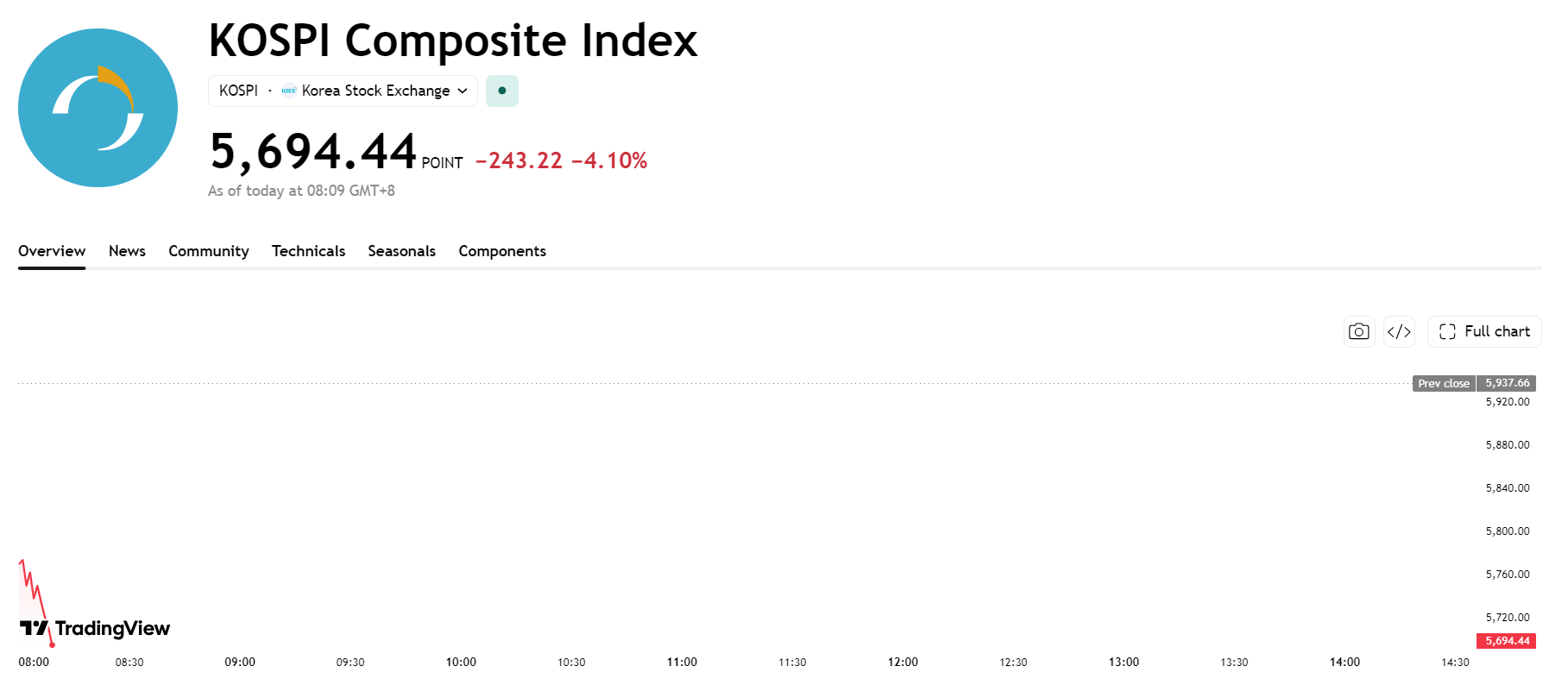
KOSPI Index Chart, Source: TradingView
The Nikkei 225 Index opened lower and continued to slide, falling 1.47% to 63,707.87 points; Kioxia plunged 7.1% to 13,490 JPY; and SoftBank dropped 5.46% to 4,505 JPY.
Alphabet's Q3 capital expenditure (CapEx) reached $22.8 billion, but revenue growth at Google Cloud slowed to 22%, triggering a post-earnings stock plunge of nearly 13%. Wall Street harbored collective skepticism over whether massive GPU/TPU procurement and data center investments like Microsoft's can be translated into free cash flow in a timely manner, weighing on valuation multiples across the global AI supply chain.
As absolute monopolists in the global HBM market, South Korea's SK Hynix and Samsung Electronics rely heavily on the CapEx budgets of Google, Microsoft, Meta, and other tech giants. When Wall Street began punishing tech giants with excessively high CapEx, the market grew concerned that CSP giants might slow the expansion pace of AI computing infrastructure before 2027, which in turn could impact subsequent HBM4 order pricing and premium power—a factor that directly battered Asian stock markets at today's open.
In addition, with the U.S. midterm election voting day approaching on November 3, global capital markets may maintain a relatively high risk-averse turnover rate during today's trading session, and investors are advised to control short-term leverage ratios.
This content was translated using AI and reviewed for clarity. It is for informational purposes only.
Recommended Articles





Comments (0)
Click the $ button, enter the symbol, and select to link a stock, ETF, or other ticker.