


SK Hynix Reaches Tentative Labor Deal as Average Performance Bonus Could Exceed $500,000



AI Podcast


On August 19 Asia-Pacific time, SK Hynix and its union reached a tentative agreement on 2026 wage negotiations, ending a deadlock over record bonus allocations driven by AI chip demand. Management previously sought to pay partial bonuses in restricted stock and adjust payouts during loss-making years, sparking fierce pushback. While the truce temporarily eases labor tensions, the dispute highlights the friction between semiconductor cyclicality and employee demands for immediate cash returns. This outcome averts near-term operational disruption, though potential spillover effects on other South Korean conglomerates and foreign investor sentiment require ongoing vigilance amid a recent stock pullback.
TradingKey - On August 19 Asia-Pacific time, SK Hynix (SKHY)'s 2026 wage negotiations, which had previously reached a deadlock over a record bonus allocation scheme, saw a key turning point. According to South Korean media reports, the union and management have reached a tentative agreement, bringing a temporary end to the weeks-long tug-of-war.
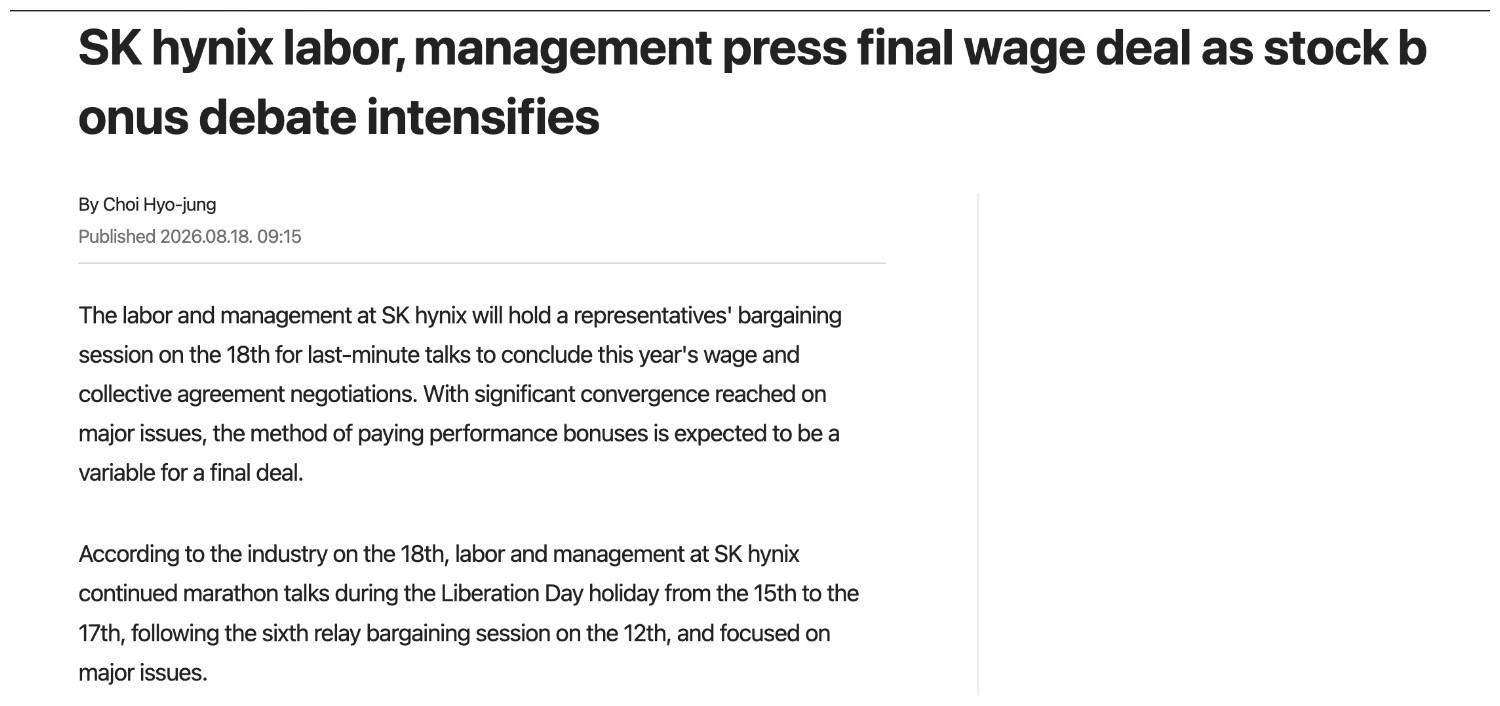
[Source: ChosunBiz]
The cause of this turmoil was a labor-management agreement reached by both sides last year. SK Hynix committed to allocating 10% of its annual operating profit as the funding pool for performance bonuses, while abolishing the previous payout cap of "no more than 1,000% of base salary." Set to remain in place for 10 years, this system is known externally as the "N% performance bonus" system.
Benefiting from the boom in AI chip demand, SK Hynix's full-year operating profit for this year is estimated at around 250 trillion to 270 trillion Korean won (approximately $169 billion to $185 billion). Based on this agreement, each employee could receive an average performance bonus of about 700 million to 800 million Korean won.
However, before the huge bonuses were paid out, management proposed an adjustment plan: paying part of the bonuses in stock with a lock-up period, while reserving the right to adjust bonus amounts during loss-making years. This proposal triggered a strong backlash from the union, which argued that the plan undermined the spirit and fundamental direction of last year's agreement. During multiple rounds of negotiations from July to early August, both sides clashed fiercely, with the union at one point indicating it would take necessary action.
Details of the tentative agreement have not yet been disclosed, but the two sides making peace has temporarily eased market concerns over tense labor-management relations among major South Korean conglomerates.
Analysts believe that the essence of this dispute is a mismatch between the strong cyclicality of the semiconductor industry and employees' immediate demands for high returns. Management hoped to retain key talent and ease cash payout pressures using stock, but in the highly volatile semiconductor sector, employees place greater value on locked-in actual gains. This tentative agreement demonstrates, at the very least, that both sides made concessions during a window of "historic profitability," reaching a temporary balance.
The impact of this dispute is not limited to SK Hynix alone. If its bonus plan becomes a benchmark for labor-management negotiations at other major corporations, the spillover effect warrants vigilance. Some analyses point out that foreign investors may re-evaluate the necessity of investing in South Korea as a result.
As of press time, SK Hynix's South Korean stock price fell to 1.521 million Korean won, down 8.51%, representing a pullback of over 40% from its June high.
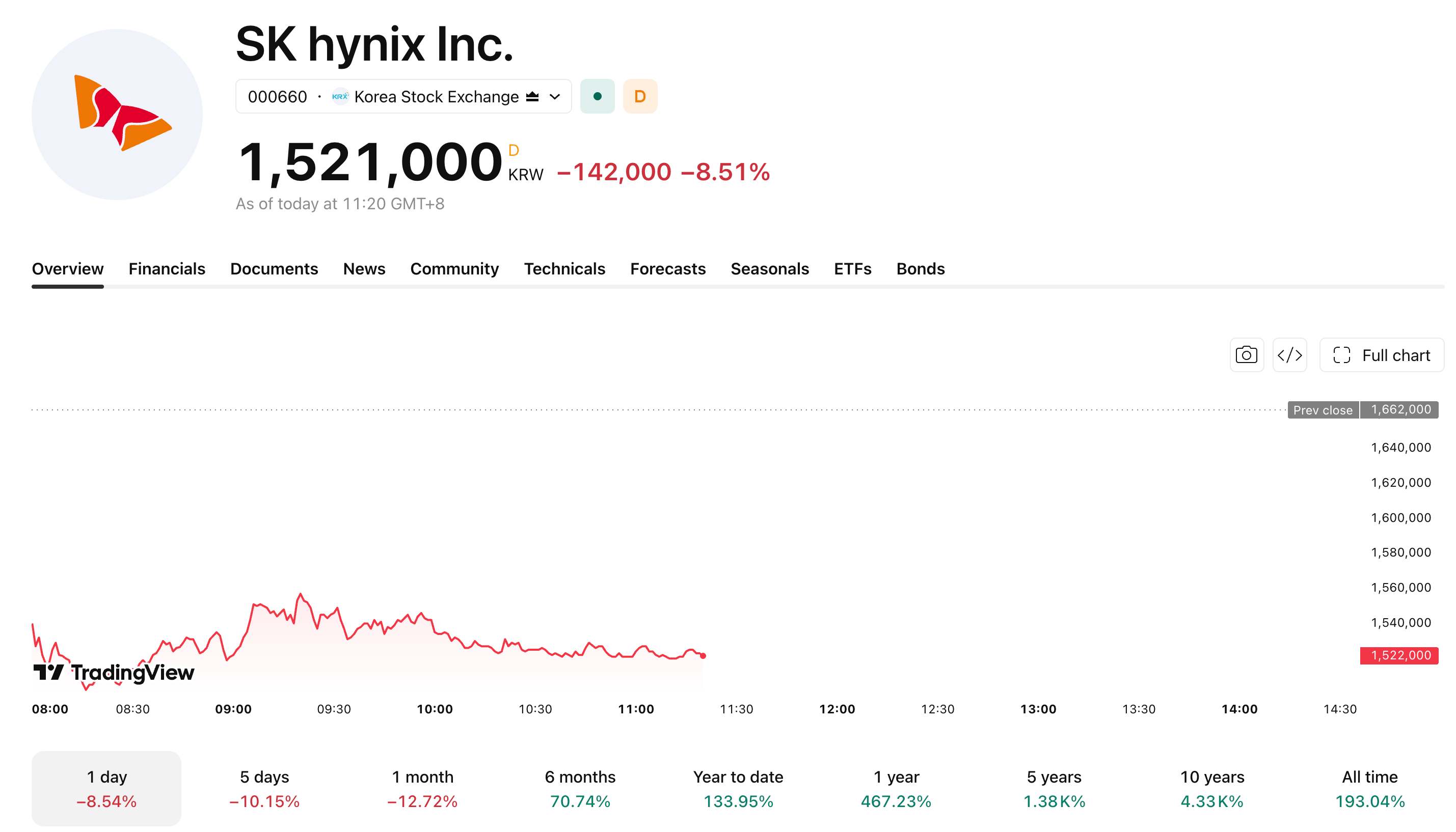
[Source: TradingView]
This content was translated using AI and reviewed for clarity. It is for informational purposes only.
Recommended Articles







Comments (0)
Click the $ button, enter the symbol, and select to link a stock, ETF, or other ticker.