


Japan, South Korea Stocks Diverge in Early Trade as Kospi Rises Over 2%, SK Hynix Jumps Over 6%, Nikkei 225 Drops 0.8%



AI Podcast


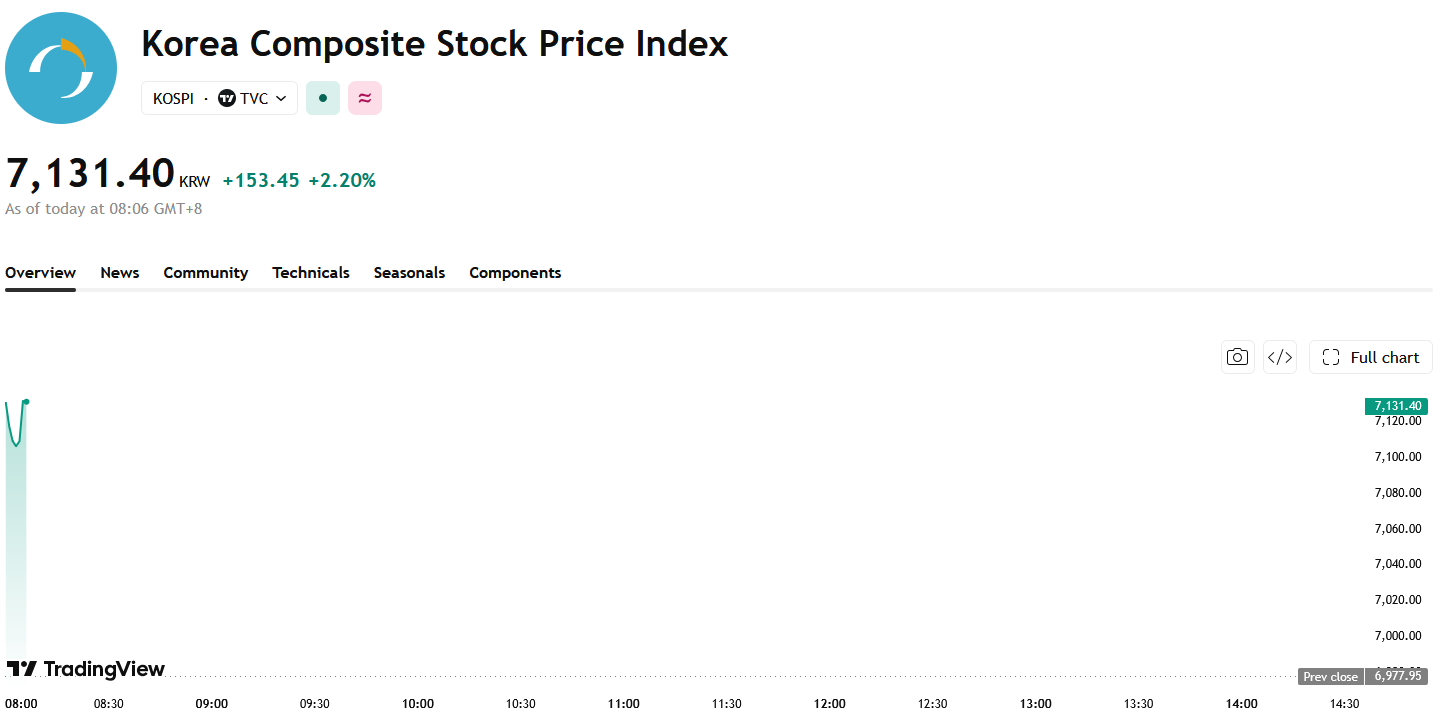
On August 18, Japanese and South Korean stock markets diverged. South Korea’s KOSPI rose 2.2% to 7,131.40 points, driven by strong semiconductor gains, including a 6.38% surge in SK Hynix. Conversely, Japan’s Nikkei 225 fell 0.81% to 68,658.17 points amid broader market pressure, despite active tech stocks like SoftBank Group. Overnight U.S. indices closed lower, though the Philadelphia Semiconductor Index rebounded 1.6%. Meanwhile, geopolitical risks weighed on global sentiment as U.S.–Iran negotiations expired without a final agreement, raising concerns over potential escalation in the Middle East.

TradingKey - On August 18, Japanese and South Korean stock markets diverged in early trading. The South Korean Composite Stock Price Index (KOSPI) opened higher and expanded its gain to 2.2%, standing at 7,131.40 points; Japan's Nikkei 225 Index (JPN225) came under pressure and moved lower, down 0.81% at 68,658.17 points in recent trading.
Source: TradingView
South Korea's semiconductor sector continued to lead gains, with Samsung Electronics rising 3.46% to 284,000 won (about $201) and SK Hynix surging 6.38% to 1,750,000 won, serving as the main driving force behind the KOSPI's strength.
Japanese tech stocks were also active, with Kioxia rising 1.76% to 62,930 yen (about $395) and SoftBank Group gaining 3.89% to 6,115 yen, as AI and memory-related stocks extended their strong momentum.
Overnight, the three major U.S. stock indices closed lower across the board, with the S&P 500 Index dropping 0.52% to 7,745.06 points, the Dow Jones Industrial Average falling 0.51% to 53,459.78 points, and the Nasdaq Composite Index slipping 0.32% to 26,644.91 points.
However, the semiconductor sector bucked the trend and rebounded, with the Philadelphia Semiconductor Index rising about 1.6%. Memory chip stocks performed particularly well, with SanDisk (SNDK) surging nearly 9%, and Western Digital (WDC) rising over 5%, providing positive guidance for Asian semiconductor stocks.
Meanwhile, uncertainty surrounding the situation in the Middle East continues to weigh on global market sentiment. U.S. President Donald Trump stated that the U.S. does not seek to extend the memorandum of understanding reached with Iran. The previously set 60-day negotiation period expired on August 17, but a final agreement has yet to be reached. Iran warned that if diplomatic efforts fail to make progress, it could further escalate tensions in the Strait of Hormuz and the broader Middle East region.
This content was translated using AI and reviewed for clarity. It is for informational purposes only.
Recommended Articles









Comments (0)
Click the $ button, enter the symbol, and select to link a stock, ETF, or other ticker.