


Samsung Electronics Announces It Will Establish Robotics Division, May Add New Long-Term Growth Engine, Samsung Shares Rise Over 5%



AI Podcast


On July 21, Samsung Electronics established the RX (Robotics eXperience) division, reporting directly to the CEO to accelerate robotics commercialization. By integrating R&D with its AI, hardware, and global sales ecosystem, Samsung aims to deploy robotics across manufacturing, logistics, and home services. While the move signals a transition toward independent operations, near-term revenue impact remains limited. Following the announcement, stock prices rose over 5% as markets welcomed the strategic diversification. However, long-term valuation depends on successful product launches and achieving profitability, as the business currently remains in a capital-intensive investment phase.

TradingKey - On July 21, Samsung Electronics announced the establishment of RX, its robotics business division, fully named "Robotics eXperience." The new division will report directly to the company's CEO and will be responsible for formulating mid-to-long-term robotics business strategies, researching and developing core technologies, and promoting product commercialization, while expanding Samsung's robotics R&D capabilities in South Korea and overseas.
This organizational adjustment shows that Samsung is pushing its robotics business further from the technology R&D stage toward independent operations and commercial implementation. As early as 2025, Samsung established the Future Robotics Office reporting directly to the CEO and increased its stake in South Korean robotics company Rainbow Robotics to 35%, becoming its largest shareholder. The two parties plan to combine Samsung's strengths in artificial intelligence, software, and global sales channels with Rainbow Robotics' technology in humanoid and collaborative robots to accelerate the development of advanced robots.
In terms of application scenarios, Samsung's robotics business is expected to cover fields such as smart manufacturing, logistics and transportation, industrial inspection, and home services. The company previously proposed to transform its global manufacturing bases into "AI-driven factories" by 2030, and gradually introduce humanoid, logistics, and assembly robots to enhance production efficiency, safety, and automation.
For Samsung Electronics, the establishment of the RX division may have a limited direct contribution to revenue and profit in the short term, but it will help integrate scattered R&D resources and accelerate the transition of robotics products from laboratories to actual orders. If Samsung can leverage its chips, sensors, AI models, home appliances, and smartphone ecosystem to create synergies, the robotics business could become a new growth engine in the future, following semiconductors and consumer electronics.
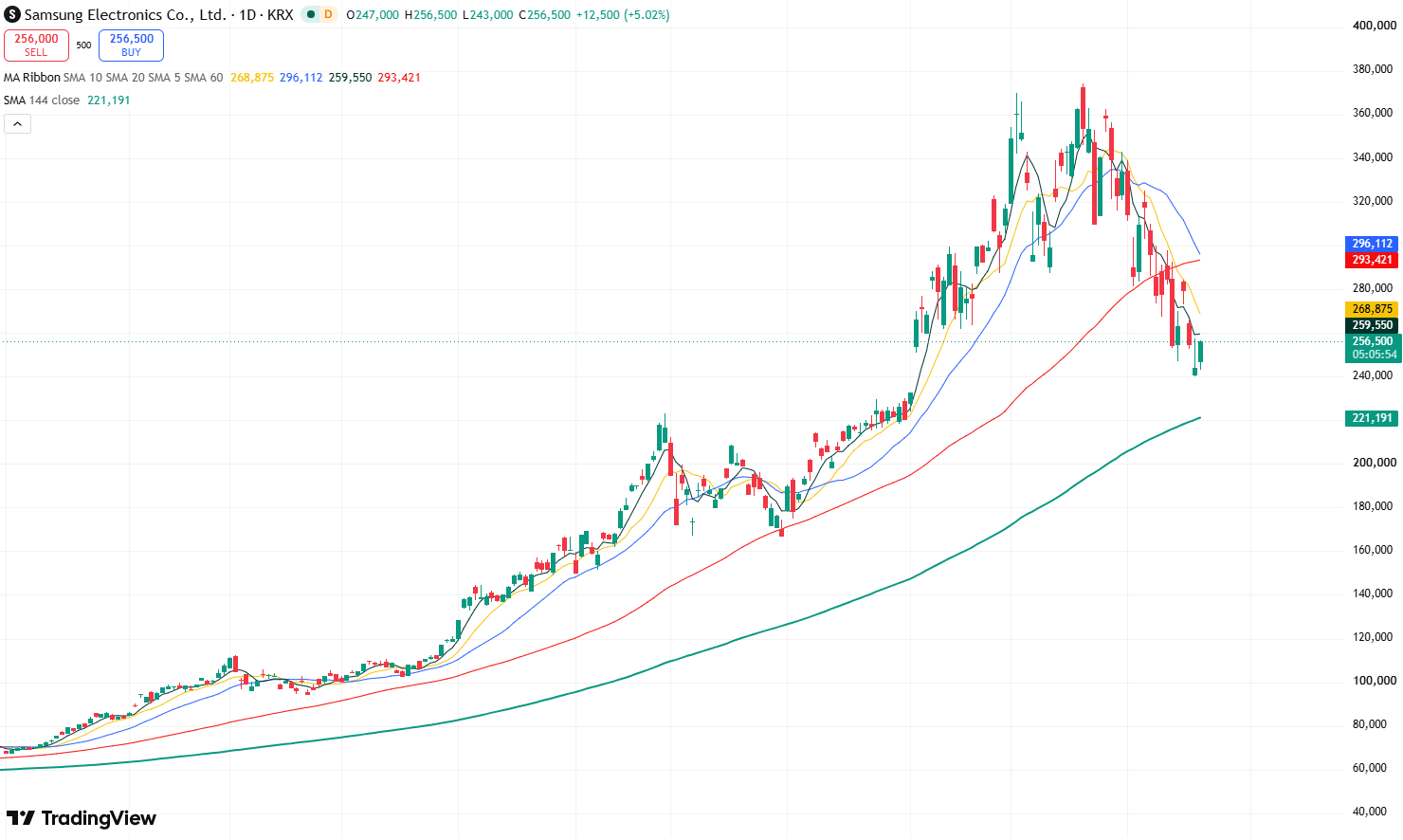
Samsung Electronics daily stock chart, Source: TradingView
In terms of the stock price, the establishment of the new division is expected to bolster market expectations for Samsung's artificial intelligence and business diversification strategies. Following the announcement, Samsung's stock price rose over 5% today. However, the robotics business is still in the investment phase, and whether its valuation can be sustained in the long run will depend on product launch timelines, commercial order scales, and when the related business becomes profitable.
This content was translated using AI and reviewed for clarity. It is for informational purposes only.
Recommended Articles










Comments (0)
Click the $ button, enter the symbol, and select to link a stock, ETF, or other ticker.